
Comparison Smart Watch X6 vs Smart Watch EX18
Add to comparison | 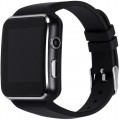 | 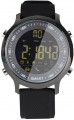 |
|---|---|---|
| Smart Watch X6 | Smart Watch EX18 | |
from £12.44 | Outdated Product | |
| User reviews | ||
| TOP sellers | ||
| Type | watch phone | smartwatch |
| Interface | Bluetooth v3.0 | Bluetooth v4.0 |
Telephony | ||
| SIM card support | micro-SIM | |
| Calls and alerts | notifications sound signal vibration built-in microphone built-in speaker | notifications vibration |
Sports and tourism | ||
| Possible measurements | number of steps distance traveled calories burned activity time | number of steps distance traveled calories burned activity time |
| Navigation | GPS module | |
Display | ||
| Type | colour | monochrome |
| Size | 1.54 " | 1.1 " |
| Bezel-less |  |  |
Hardware | ||
| RAM | 256 MB | |
| Memory storage | 128 MB | |
| Extra features | accelerometer camera | accelerometer |
Power source | ||
| Source of power | Li-Ion | Li-Ion |
| Battery capacity | 350 mAh | |
Case and strap | ||
| Material | metal | metal |
| Strap | non-removable | non-removable |
| Strap Options | rubber/silicone | rubber/silicone milanese bracelet |
| Clasp options | classic buckle | |
General | ||
| Dimensions (without strap) | 45x43x12 mm | |
| Weight | 60 g | |
| Color | ||
| Added to E-Catalog | january 2018 | december 2017 |


Compare Smart Watch X6 and EX18
You may be interested in
Smart Watch X6 often compared


Glossary
Type
— Smartwatch. A wristwatch gadget designed to be used in conjunction with a smartphone, usually with a Bluetooth connection. Such a watch can be used to receive notifications of incoming calls or messages, to control various smartphone features; and the most advanced models even allow the installation of their own applications and differ from watch-phones only in the inability to make calls on their own. In turn, the difference from fitness trackers (see below) lies primarily in a more traditional design and broader specialization: smartwatches often have fitness sensors and support specialized data collecting, but their use is not limited to this.
— Watch-phone. Smartwatch with its own mobile communication module. Such devices are capable of making calls, sending messages, and in most cases even using the mobile Internet without connecting to a smartphone or other external device. However, a Bluetooth headset may be required for voice convenience, and smartphone connectivity is also available on many models. The specific features of such gadgets can be different, it should be specified separately.
— Fitness tracker. Specialized wearable gadgets designed mainly for sports. Typically, such a gadget has a long and narrow body, the width of which may not exceed the width of the strap; this arrangement is considered the mo...st convenient in view of the application. As for the features, fitness trackers mainly record various data about the state of the body and health of the user, ranging from heart rate to blood oxygen levels, sleep phases, and other specific parameters. In addition, traditional features such as call or SMS notifications can also be provided, but in this case they are of secondary importance. Displays in fitness trackers are usually the simplest, and in some models there is no screen at all — it is still more convenient to view detailed data on physical activity in the application on a smartphone.
— Beacon for children. Wearable devices to ensure the safety of children; most often — a specialized type of watch-phone (see above). The beacon performs primarily two main features: it allows parents to control where the child is, and provides communication between the child and the parent (including in emergency situations). Specific features may vary, for more details see "Parental Control". In addition, the design often provides for other features of smartwatches — from an alarm clock and time display to a pedometer, heart rate monitor and other special data collecting.
— For animals. Gadgets designed for pets — primarily dogs. Such a device is usually attached to a collar and can perform quite a variety of features: a beacon that transmits data about the location of the pet, a “calling card” with the owner’s contact information, and even a fitness tracker that tracks the activity of the animal and allows you to monitor its health.
— Smart glasses. Wearable smart gadgets made in the form of glasses. Usually, a camera is built into the frame of such a gadget, and the display is located opposite one of the user's eyes. Initially, smart glasses were considered quite a promising development, but in fact, for a number of reasons, they did not gain popularity, and nowadays they are almost never used.
— Watch-phone. Smartwatch with its own mobile communication module. Such devices are capable of making calls, sending messages, and in most cases even using the mobile Internet without connecting to a smartphone or other external device. However, a Bluetooth headset may be required for voice convenience, and smartphone connectivity is also available on many models. The specific features of such gadgets can be different, it should be specified separately.
— Fitness tracker. Specialized wearable gadgets designed mainly for sports. Typically, such a gadget has a long and narrow body, the width of which may not exceed the width of the strap; this arrangement is considered the mo...st convenient in view of the application. As for the features, fitness trackers mainly record various data about the state of the body and health of the user, ranging from heart rate to blood oxygen levels, sleep phases, and other specific parameters. In addition, traditional features such as call or SMS notifications can also be provided, but in this case they are of secondary importance. Displays in fitness trackers are usually the simplest, and in some models there is no screen at all — it is still more convenient to view detailed data on physical activity in the application on a smartphone.
— Beacon for children. Wearable devices to ensure the safety of children; most often — a specialized type of watch-phone (see above). The beacon performs primarily two main features: it allows parents to control where the child is, and provides communication between the child and the parent (including in emergency situations). Specific features may vary, for more details see "Parental Control". In addition, the design often provides for other features of smartwatches — from an alarm clock and time display to a pedometer, heart rate monitor and other special data collecting.
— For animals. Gadgets designed for pets — primarily dogs. Such a device is usually attached to a collar and can perform quite a variety of features: a beacon that transmits data about the location of the pet, a “calling card” with the owner’s contact information, and even a fitness tracker that tracks the activity of the animal and allows you to monitor its health.
— Smart glasses. Wearable smart gadgets made in the form of glasses. Usually, a camera is built into the frame of such a gadget, and the display is located opposite one of the user's eyes. Initially, smart glasses were considered quite a promising development, but in fact, for a number of reasons, they did not gain popularity, and nowadays they are almost never used.
Interface
The primary way to connect a wrist gadget with external devices. For smartwatches and fitness bands (see "Type"), it is assumed to be connected to a smartphone or tablet, while in the case of watch-phones, it's usually about headsets.
— Bluetooth. A wireless technology for direct communication between various devices. There are different versions that indicate the device's capabilities.
— Bluetooth. A wireless technology for direct communication between various devices. There are different versions that indicate the device's capabilities.
- — 5.0. The fifth generation of Bluetooth was released in 2016. The key innovation in version 5.0 was expanding the capabilities related to the "Internet of Things." For example, the Bluetooth Low Energy protocol introduced the ability to double data transfer speed (up to 2 Mbps) at the cost of reducing range, as well as quadruple the range at the cost of reducing speed; additionally, several improvements were introduced concerning simultaneous operation with a large number of connected devices.
- — v 5.1. An update of the version v 5.0 described above. In addition to general improvements in connection quality and reliability, this update implemented an interesting feature such as determining the direction from which the Bluetooth signal comes. This makes it possible to determine the location of connected devices with centimeter accuracy.
- — v 5.2. The update following 5.1 of the fifth-generation Bluetooth. The main innovations in this version included several security improvements, additional optimization of power consumption in LE mode, and a new audio signal format for synchronizing parallel playback on multiple devices.
- — v 5.3.... The Bluetooth v 5.3 wireless communication protocol was introduced in early 2022. Innovations included speeding up the process of coordinating the communication channel between the controller and the device, implementing a feature for rapid switching between low-duty cycle and high-speed modes, improved bandwidth and connection stability by reducing susceptibility to interference. In the event of unexpected interference in Low Energy mode, the procedure for selecting a communication channel for switching is sped up. There were no fundamental innovations in protocol 5.3; however, it is evident that there are several qualitative improvements.
- — v 5.4. The standard generation approved in 2023, which became an intermediate step before Bluetooth 6. The main innovation was the introduction of the PAwR (Periodic Advertising with Responses) mode, allowing watches and other devices to exchange data in large sensor networks with minimal power consumption. Also added was the Encrypted Advertising Data mechanism, enhancing protection against eavesdropping and packet forgery, which is important when using watches for contactless keys or payments. Compared to earlier versions 5.2 and 5.3, Bluetooth 5.4 focuses on security, energy efficiency, and operation in a "noisy" radio environment. In real-world use, this is manifested in more stable data transmission from sensors (heart rate, steps, sleep), battery savings with constant phone connection, and the reliability of functions like notifications or fitness tracking even with many connected devices around.
- — v 6.0. Bluetooth 6 has been officially approved by Bluetooth SIG and offers a number of significant benefits in smartwatches compared to version 5.4. Thanks to the improved Channel Sounding system and LE Audio optimization, such devices maintain connections faster and more stably, determine the distance to the smartphone more accurately (to centimeters), lose frames less frequently during calls or Auracast broadcasts, and provide longer battery life. In practice, this manifests in functions like unlocking a laptop upon approach, precise indoor watch search, reliable operation of heart rate sensors and sports sensors, as well as stable calls even in crowded gyms.
Naturally, to utilize all the capabilities of a particular Bluetooth version, it must be supported not only by the gadget itself but also by the smartphone/tablet to which it is connected.
SIM card support
Type of SIM card for which the gadget is designed. SIM cards are required for mobile communication modules, which are mainly found in watch phones and children's beacons (see "Type"). And their types can be:
— Micro-SIM. Reduced in size and improved, in comparison with the obsolete mini-SIM, a variety of SIM-cards: the dimensions were reduced to 15x12 mm, while the amount of built-in memory and the overall functionality of the chip were slightly expanded.
— Nano-SIM. The newest and smallest variety of replaceable SIM-cards: it has dimensions of only 12x9 mm.
It is worth noting that nowadays, most mobile operators sell SIM cards that are compatible with all three types of slots at once: the chip itself has a nano-SIM format, and such a card can be installed in a micro-SIM or mini-SIM slot using an adapter frame. So paying attention to the type of SIM card makes sense, first of all, if you already have a "sim card" of a strictly defined format and you do not want to change it.
A separate variety is represented by e-SIM(Embedded SIM) — non-removable modules that need to be programmed for a particular mobile operator. On the one hand, this creates some inconvenience: to change the number, changing the SIM card can be easier than reconfiguring the e-SIM. On the other hand, e-SIMs are more compact and...better suited for wearable gadgets, and when you change your number, you do not need to spend money on buying a new card. The compatibility of such a module with the network of a particular operator should be specified separately.
— Micro-SIM. Reduced in size and improved, in comparison with the obsolete mini-SIM, a variety of SIM-cards: the dimensions were reduced to 15x12 mm, while the amount of built-in memory and the overall functionality of the chip were slightly expanded.
— Nano-SIM. The newest and smallest variety of replaceable SIM-cards: it has dimensions of only 12x9 mm.
It is worth noting that nowadays, most mobile operators sell SIM cards that are compatible with all three types of slots at once: the chip itself has a nano-SIM format, and such a card can be installed in a micro-SIM or mini-SIM slot using an adapter frame. So paying attention to the type of SIM card makes sense, first of all, if you already have a "sim card" of a strictly defined format and you do not want to change it.
A separate variety is represented by e-SIM(Embedded SIM) — non-removable modules that need to be programmed for a particular mobile operator. On the one hand, this creates some inconvenience: to change the number, changing the SIM card can be easier than reconfiguring the e-SIM. On the other hand, e-SIMs are more compact and...better suited for wearable gadgets, and when you change your number, you do not need to spend money on buying a new card. The compatibility of such a module with the network of a particular operator should be specified separately.
Calls and alerts
Types of notifications, as well as basic voice communication features supported by the gadget.
- Notifications. In classic smart watches and fitness trackers, the specific functionality of such notifications can be different – from a regular sound or vibration signal to the ability to display on the screen and even respond. But in any case, such notifications are often more noticeable to the user than the own signal from a smartphone located deep in a pocket or bag.
— Voice control. The ability to control the device through voice commands. In order for a smartwatch or fitness tracker to perform some simple feature, it is enough to say its name aloud.
— Voice assistant. In watches with voice assistant support, the level of user interaction with the device is displayed in a new qualitative way. The most popular virtual assistants are Google Assistant and Amazon Alexa. In Apple devices, the role of an assistant is performed by Apple Siri, in Samsung wearable gadgets — a virtual assistant Bixby. Unlike the voice control function, the assistant does not just turn on this or that feature, but allows you to perform certain operations in applications that require feedback.
— Sound signal. The ability to give sound signals using the built-in speaker. This feature will be useful primarily in situations where the gadget is not on hand — for example, if it is used as an ala...rm clock and is removed at night.
— Vibration. Vibration signal similar to that used in mobile phones. In wearable gadgets, such a signal is especially convenient due to the fact that the device is constantly in contact with the wearer's skin, so that the vibration is perfectly felt — and regardless of the level of noise around. In addition, vibration mode is also useful in quiet environments where a loud sound signal is undesirable.
— Built-in microphone. Own microphone built into the body of the device. Such equipment can be used for different purposes, depending on the type and features of the gadget. First of all, voice communication is impossible without a microphone. Another feature for which a microphone is required is the voice assistant (see above). And in children's smartwatches, it may be possible to remotely turn on the microphone from the parent gadget and listen to what is happening around the child; see the relevant paragraph below for details.
— Speakerphone(speaker). The ability to work the gadget in hands-free mode, using the built-in speaker and microphone for conversation. In a conventional smartwatch (see "Type"), this feature allows you to talk through the watch without removing the smartphone from your pocket; in watch-phones, speakerphone allows you to do so without headphones and headsets, and for children's smartwatches, this feature is almost mandatory. However the volume of the built-in speaker is usually low, so in a noisy environment its power may not be enough.
- Notifications. In classic smart watches and fitness trackers, the specific functionality of such notifications can be different – from a regular sound or vibration signal to the ability to display on the screen and even respond. But in any case, such notifications are often more noticeable to the user than the own signal from a smartphone located deep in a pocket or bag.
— Voice control. The ability to control the device through voice commands. In order for a smartwatch or fitness tracker to perform some simple feature, it is enough to say its name aloud.
— Voice assistant. In watches with voice assistant support, the level of user interaction with the device is displayed in a new qualitative way. The most popular virtual assistants are Google Assistant and Amazon Alexa. In Apple devices, the role of an assistant is performed by Apple Siri, in Samsung wearable gadgets — a virtual assistant Bixby. Unlike the voice control function, the assistant does not just turn on this or that feature, but allows you to perform certain operations in applications that require feedback.
— Sound signal. The ability to give sound signals using the built-in speaker. This feature will be useful primarily in situations where the gadget is not on hand — for example, if it is used as an ala...rm clock and is removed at night.
— Vibration. Vibration signal similar to that used in mobile phones. In wearable gadgets, such a signal is especially convenient due to the fact that the device is constantly in contact with the wearer's skin, so that the vibration is perfectly felt — and regardless of the level of noise around. In addition, vibration mode is also useful in quiet environments where a loud sound signal is undesirable.
— Built-in microphone. Own microphone built into the body of the device. Such equipment can be used for different purposes, depending on the type and features of the gadget. First of all, voice communication is impossible without a microphone. Another feature for which a microphone is required is the voice assistant (see above). And in children's smartwatches, it may be possible to remotely turn on the microphone from the parent gadget and listen to what is happening around the child; see the relevant paragraph below for details.
— Speakerphone(speaker). The ability to work the gadget in hands-free mode, using the built-in speaker and microphone for conversation. In a conventional smartwatch (see "Type"), this feature allows you to talk through the watch without removing the smartphone from your pocket; in watch-phones, speakerphone allows you to do so without headphones and headsets, and for children's smartwatches, this feature is almost mandatory. However the volume of the built-in speaker is usually low, so in a noisy environment its power may not be enough.
Navigation
This block contains both various navigation systems ( GPS, Galileo) and auxiliary features for them ( aGPS, GPS tracking, maps, compass, altimeter , barometer). More about them:
— GPS module. GPS satellite navigation module built right into the watch/tracker. The initial purpose of such a module is to determine the current geographic coordinates; but how this information will be used depends on the specific type and model of the gadget. For example, in some devices GPS is used only for measuring the distance traveled and/or speed of movement, while more advanced models support full navigation and are equipped with built-in maps. In addition, this feature is almost mandatory in children's beacons (see "Type") — it is GPS that is responsible for determining the location of the child.
— aGPS. An auxiliary feature that allows you to speed up the start of the main GPS receiver. To work for its main purpose, such a receiver must update data on the location of navigation satellites; Obtaining this data in the classical way, directly from the satellites themselves, can take quite a long time (up to several minutes). This is especially true for the so-called "cold start" — when the receiver starts up after a long break in opera...tion, and the data stored in it has become completely outdated. aGPS (Assisted GPS) allows you to receive up-to-date service information from a mobile operator — from the nearest base station (this feature is supported by most operators nowadays). This can greatly speed up the startup process.
— GLONASS. This system is a Russian alternative to the American GPS. However it provides somewhat less accuracy, so GLONASS support is usually provided in addition to the GPS module. Simultaneous use of two systems, in turn, improves positioning accuracy.
— Galileo. European satellite navigation system, created as an alternative to the American GPS. Note that it is under the control of civilian departments, not the military. With a full fleet of 24 active satellites, the system gives an accuracy of up to 1 m in public mode and up to 20 cm with the GHA service. Working in conjunction with GPS, the Galileo system provides a more accurate position measurement, especially in densely populated areas.
— Maps. The feature of displaying topographic maps of the area with heights, relief and types of vegetation on the clock screen. Preinstalled maps are used for visual GPS navigation without being tied to a smartphone. Often, the ability to display maps is implemented in tactical smartwatches with a focus on tourism.
— GPS tracking. Many watches with the possibility of laying routes have the feature of guiding by the GPS track. At the same time, the wearable gadget acts as a navigator around the area, showing the route on the screen and suggesting where it is necessary to turn in one direction or another. Some smartwatches with a pronounced touristic bias also have a “Return Route” programme that allows you to go back along an already traveled route. In GPS tracker mode, trackpoints are usually recorded automatically based on the selected fixing interval. You can also mark a track point manually at any time.
— Compass. A classic compass is a device that indicates the direction to the cardinal points. Wearable gadgets usually use an electronic compass — a miniature magnetic sensor, the data from which, if necessary, are displayed on the display.
— Altimeter. A feature that allows you to determine the current altitude of the user's location. Note that the principle and format of the altimeter may be different. So, some models use barometer data for height measurements, others use information from a GPS sensor; the height itself can be determined relative to sea level, relative to some reference point, or in any of these ways, at the choice of the user. These details should be clarified separately.
— Barometer. A feature that allows you to determine the current atmospheric pressure. One of the applications of the barometer is weather forecasting: for example, a sharp drop in pressure usually signals the approach of bad weather. In addition, information from this sensor can be used to operate the altimeter (see above); and even if the gadget does not have an altimeter, the height difference between two points on the ground can be easily calculated from the pressure difference between them.
— GPS module. GPS satellite navigation module built right into the watch/tracker. The initial purpose of such a module is to determine the current geographic coordinates; but how this information will be used depends on the specific type and model of the gadget. For example, in some devices GPS is used only for measuring the distance traveled and/or speed of movement, while more advanced models support full navigation and are equipped with built-in maps. In addition, this feature is almost mandatory in children's beacons (see "Type") — it is GPS that is responsible for determining the location of the child.
— aGPS. An auxiliary feature that allows you to speed up the start of the main GPS receiver. To work for its main purpose, such a receiver must update data on the location of navigation satellites; Obtaining this data in the classical way, directly from the satellites themselves, can take quite a long time (up to several minutes). This is especially true for the so-called "cold start" — when the receiver starts up after a long break in opera...tion, and the data stored in it has become completely outdated. aGPS (Assisted GPS) allows you to receive up-to-date service information from a mobile operator — from the nearest base station (this feature is supported by most operators nowadays). This can greatly speed up the startup process.
— GLONASS. This system is a Russian alternative to the American GPS. However it provides somewhat less accuracy, so GLONASS support is usually provided in addition to the GPS module. Simultaneous use of two systems, in turn, improves positioning accuracy.
— Galileo. European satellite navigation system, created as an alternative to the American GPS. Note that it is under the control of civilian departments, not the military. With a full fleet of 24 active satellites, the system gives an accuracy of up to 1 m in public mode and up to 20 cm with the GHA service. Working in conjunction with GPS, the Galileo system provides a more accurate position measurement, especially in densely populated areas.
— Maps. The feature of displaying topographic maps of the area with heights, relief and types of vegetation on the clock screen. Preinstalled maps are used for visual GPS navigation without being tied to a smartphone. Often, the ability to display maps is implemented in tactical smartwatches with a focus on tourism.
— GPS tracking. Many watches with the possibility of laying routes have the feature of guiding by the GPS track. At the same time, the wearable gadget acts as a navigator around the area, showing the route on the screen and suggesting where it is necessary to turn in one direction or another. Some smartwatches with a pronounced touristic bias also have a “Return Route” programme that allows you to go back along an already traveled route. In GPS tracker mode, trackpoints are usually recorded automatically based on the selected fixing interval. You can also mark a track point manually at any time.
— Compass. A classic compass is a device that indicates the direction to the cardinal points. Wearable gadgets usually use an electronic compass — a miniature magnetic sensor, the data from which, if necessary, are displayed on the display.
— Altimeter. A feature that allows you to determine the current altitude of the user's location. Note that the principle and format of the altimeter may be different. So, some models use barometer data for height measurements, others use information from a GPS sensor; the height itself can be determined relative to sea level, relative to some reference point, or in any of these ways, at the choice of the user. These details should be clarified separately.
— Barometer. A feature that allows you to determine the current atmospheric pressure. One of the applications of the barometer is weather forecasting: for example, a sharp drop in pressure usually signals the approach of bad weather. In addition, information from this sensor can be used to operate the altimeter (see above); and even if the gadget does not have an altimeter, the height difference between two points on the ground can be easily calculated from the pressure difference between them.
Type
The type of display installed in the watch/bracelet.
— Colour. Such displays are often found in classic smartwatches and are almost mandatory for watch phones (see "Type"). They allow you to display a wide variety of types of information — not only numbers or indicators, but also pictures, videos, web pages, etc. Among the shortcomings of colour displays in this case are high power consumption (which negatively affects the battery life of the device), as well as a rather high cost.
— Monochrome. There are two types of screens in this category. The first is single-colour displays, like those sometimes found on miniature MP3 players. They are significantly inferior in versatility to full-colour versions and can display only text and simple graphics, but they are cheaper and consume less power. This option is found among fitness trackers (see "Type"). Another variety of "monochrome" is e-ink, "electronic paper", known primarily from electronic books. Such displays can even be used in smartwatches — in addition to the actual colour, they are inferior to the colour versions only in the refresh rate, while consuming much less energy. The main disadvantage of e-ink is the rather high cost.
— Is absent. The complete absence of a display is typical primarily for fitness trackers (see "Type"): the main purpose of such accessories is to collect inform...ation, and other methods are often enough for notifications — the simplest light indicators, sound signals, vibration, etc. Another specific type of non-display device is the smartwatch in the form of a conventional "hand watch" supplemented with indicators on the dial and/or other means of notification.
— Colour. Such displays are often found in classic smartwatches and are almost mandatory for watch phones (see "Type"). They allow you to display a wide variety of types of information — not only numbers or indicators, but also pictures, videos, web pages, etc. Among the shortcomings of colour displays in this case are high power consumption (which negatively affects the battery life of the device), as well as a rather high cost.
— Monochrome. There are two types of screens in this category. The first is single-colour displays, like those sometimes found on miniature MP3 players. They are significantly inferior in versatility to full-colour versions and can display only text and simple graphics, but they are cheaper and consume less power. This option is found among fitness trackers (see "Type"). Another variety of "monochrome" is e-ink, "electronic paper", known primarily from electronic books. Such displays can even be used in smartwatches — in addition to the actual colour, they are inferior to the colour versions only in the refresh rate, while consuming much less energy. The main disadvantage of e-ink is the rather high cost.
— Is absent. The complete absence of a display is typical primarily for fitness trackers (see "Type"): the main purpose of such accessories is to collect inform...ation, and other methods are often enough for notifications — the simplest light indicators, sound signals, vibration, etc. Another specific type of non-display device is the smartwatch in the form of a conventional "hand watch" supplemented with indicators on the dial and/or other means of notification.
Size
The size of the display installed in the gadget; for round screens, respectively, the diameter is indicated.
A larger screen, on the one hand, is more convenient to use, on the other hand, it significantly affects the dimensions of the entire device, which is especially critical for wearable gadgets. Therefore, manufacturers choose the display size in accordance with the purpose and functionality of each specific model — so that there is enough space on the screen and the device itself is not too bulky.
It is also worth mentioning that screens with a similar size may have different aspect ratios. For example, traditional smartwatches are usually equipped with square or round panels, while in fitness trackers, screens are often made elongated in height.
A larger screen, on the one hand, is more convenient to use, on the other hand, it significantly affects the dimensions of the entire device, which is especially critical for wearable gadgets. Therefore, manufacturers choose the display size in accordance with the purpose and functionality of each specific model — so that there is enough space on the screen and the device itself is not too bulky.
It is also worth mentioning that screens with a similar size may have different aspect ratios. For example, traditional smartwatches are usually equipped with square or round panels, while in fitness trackers, screens are often made elongated in height.
Bezel-less
Bezel-less are displays in which the case or bezel does not occupy the usable area of the front panel, or it is minimized. In terms of design, bezels have both pros and cons. One of the most important reasons for adding substantial bezels to your screen is physical protection. The bezel-less display is very easy to scratch or damage when dropped. On the other hand, the frame takes up space on the screen, and this is one of the reasons why the frames in modern smartwatches are minimized, making the gadget more compact and stylish.
RAM
The amount of random access memory (RAM) installed in the gadget.
This parameter is one of the key ones for the overall performance of the system: the more RAM, the faster the device works, the easier it is to handle tasks with high hardware requirements and the wider the set of applications that the gadget is able to run. Note that a large amount of RAM can compensate for even a relatively weak CPU. At the same time, you need to remember that different operating systems (see above) have different requirements for RAM and features of its use; therefore, only models on the same software platform can be compared by this indicator.
This parameter is one of the key ones for the overall performance of the system: the more RAM, the faster the device works, the easier it is to handle tasks with high hardware requirements and the wider the set of applications that the gadget is able to run. Note that a large amount of RAM can compensate for even a relatively weak CPU. At the same time, you need to remember that different operating systems (see above) have different requirements for RAM and features of its use; therefore, only models on the same software platform can be compared by this indicator.