
Comparison ADA CUBE 2-360 BASIC EDITION vs ADA CUBE 360 ULTIMATE EDITION
Add to comparison | 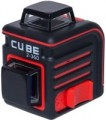 | 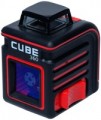 |
|---|---|---|
| ADA CUBE 2-360 BASIC EDITION | ADA CUBE 360 ULTIMATE EDITION | |
| Outdated Product | Outdated Product | |
| User reviews | ||
| TOP sellers | ||
| Type | laser level | laser level |
| Suitable for | 360° area | 360° area |
Specs | ||
| Measurement range | 20 m | 20 m |
| Measurement range (with receiver) | 70 m | 70 m |
| Accuracy | 0.3 mm/m | 0.3 mm/m |
| Self-leveling angle | 4 ° | 4 ° |
| Operating temperature | -5 – 45 °C | -5 – 45 °C |
| Tripod thread | 1/4" | 1/4" |
Laser characteristics | ||
| Diode emission | 635 nm | 635 nm |
| Laser colour | red | red |
| Laser class | 2 | 2 |
| Vertical projections | 1 | 1 |
| Beam angle (vertical) | 360 ° | 110 ° |
| Horizontal projections | 1 | 1 |
| Beam angle (horizontal) | 360 ° | 360 ° |
Features | ||
| Compensator locking |  | |
General | ||
| IP protection rating | 54 | 54 |
| Power source | 3xAA | 3xAA |
| Operating time | 15 h | 15 h |
| In box | non chargeable batteries | holder tripod case / pouch non chargeable batteries glasses |
| Dimensions | 95x95x65 mm | 95x95x65 mm |
| Weight | 390 g | 390 g |
| Added to E-Catalog | august 2015 | august 2015 |


Compare ADA CUBE 2-360 BASIC EDITION and CUBE 360 ULTIMATE EDITION
You may be interested in
My comparisons
ADA CUBE 2-360 BASIC EDITION often compared


ADA CUBE 360 ULTIMATE EDITION often compared

Glossary
Beam angle (vertical)
The sweep angle in the vertical plane provided by the level emitter. If there are several such radiators (for example, on both sides of the case), this parameter is given for each of them separately.
The sweep angle is, in fact, the coverage angle, that is, the width of the sector captured by the emitter when the line is formed. The wider this angle, the more convenient the device is to use, the lower the likelihood that the device will have to be moved up and down to build a line. On the other hand, a larger sweep angle (at the same range) requires more power — and this, accordingly, affects the cost and power consumption.
The sweep angle is, in fact, the coverage angle, that is, the width of the sector captured by the emitter when the line is formed. The wider this angle, the more convenient the device is to use, the lower the likelihood that the device will have to be moved up and down to build a line. On the other hand, a larger sweep angle (at the same range) requires more power — and this, accordingly, affects the cost and power consumption.
In box
— holder. Devices for fixing the level / range finder on various surfaces. Such a device differs from a tripod primarily in its small size — within a couple of tens of centimeters. On the other hand, most holders allow you to install the device not only on horizontal, but also on vertical surfaces — for example, walls (and some are exclusively wall-mounted). Anyway, this function greatly expands the installation possibilities.
— Receiver. laser radiation supplied with the device. This device is usually equipped with laser levels, less often with rangefinders, and it is not required at all for optical instruments. The main purpose of the receiver is situations where the laser mark is not visible to the naked eye — for example, at a long distance or in bright light. More details on the features of its application are described above in the paragraph “Measurement range (with receiver)”.
— Tripod. Most modern instruments have a standard size thread and can be used with any suitable tripod. On the other hand, a complete tripod is most often specially designed for a certain model and optimally matches it in terms of general characteristics. In addition, this configuration option relieves you of the need to look for and purchase a suitable tripod yourself.
— Case / case. The main function of these devices is to protect...the device from bumps, scratches, dirt, temperature changes and other adverse effects; for this, of course, improvised means can also be used, but specialized protection is usually both more convenient and more reliable. In addition, almost all cases and most covers greatly simplify the transportation of the tool — in particular, due to the fact that they can also be used for complete accessories.
— Remote control. Among rangefinders and optical levels, this function is practically not found, because. working with them involves the constant stay of the device in the hands of the operator. But for laser levels that require you to regularly move from the device to the surface to be marked and back, the remote control can be a very useful addition — due to the fact that it minimizes such movements. For example, after marking the "front of work" on the wall according to the projection from the level, you do not have to approach the device to turn it off — just give a command from the remote control. At short distances, the savings in time and effort may not be so obvious, but over large areas, they can become quite noticeable.
— Receiver. laser radiation supplied with the device. This device is usually equipped with laser levels, less often with rangefinders, and it is not required at all for optical instruments. The main purpose of the receiver is situations where the laser mark is not visible to the naked eye — for example, at a long distance or in bright light. More details on the features of its application are described above in the paragraph “Measurement range (with receiver)”.
— Tripod. Most modern instruments have a standard size thread and can be used with any suitable tripod. On the other hand, a complete tripod is most often specially designed for a certain model and optimally matches it in terms of general characteristics. In addition, this configuration option relieves you of the need to look for and purchase a suitable tripod yourself.
— Case / case. The main function of these devices is to protect...the device from bumps, scratches, dirt, temperature changes and other adverse effects; for this, of course, improvised means can also be used, but specialized protection is usually both more convenient and more reliable. In addition, almost all cases and most covers greatly simplify the transportation of the tool — in particular, due to the fact that they can also be used for complete accessories.
— Remote control. Among rangefinders and optical levels, this function is practically not found, because. working with them involves the constant stay of the device in the hands of the operator. But for laser levels that require you to regularly move from the device to the surface to be marked and back, the remote control can be a very useful addition — due to the fact that it minimizes such movements. For example, after marking the "front of work" on the wall according to the projection from the level, you do not have to approach the device to turn it off — just give a command from the remote control. At short distances, the savings in time and effort may not be so obvious, but over large areas, they can become quite noticeable.