
Comparison Suunto M5 vs Suunto M2
Add to comparison | 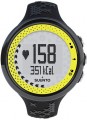 | 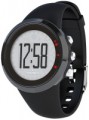 |
|---|---|---|
| Suunto M5 | Suunto M2 | |
from £135.35 | from £99.00 | |
| TOP sellers | ||
The cardio transmitter is included. Recommendation for optimal intensity and duration of training. Recovery time recommendation after exercise. The absence of the Russian language. Pairing your device with an optional Suunto POD (Suunto Foot POD, GPS POD or Bike POD) allows you to get additional speed and distance information during your workout. | The cardio transmitter is included. Real-time display of heart rate and calories burned. Automatic switching between three heart rate zones. Low battery warning. The absence of the Russian language. | |
| Device type | heart rate monitor | heart rate monitor |
| Mount | on the wrist | on the wrist |
| Heart rate sensor | external | external |
Specs | ||
| Display shape | round | round |
| Display | monochrome | monochrome |
| Possible measurements | pulse rate calories burned | pulse rate calories burned |
| Features | watches alarm clock calendar | watches alarm clock calendar |
More features | ||
| Individual settings | gender age weight growth individual training area | age weight individual training area |
| Data transfer | ANT+ | ANT+ |
General | ||
| Source of power | battery | battery |
| Water protection | + | + |
| Waterproof | 30 m | 30 m |
| Built-in memory |  |  |
| PC connection | | |
| Dimensions | 44x44x13 mm | 44x44x13 mm |
| Weight | 40 g | 40 g |
| Color | ||
| Added to E-Catalog | december 2014 | december 2014 |


Compare Suunto M5 and M2
You may be interested in
Suunto M5 often compared

Suunto M2 often compared


Glossary
Individual settings
Personalized settings enable users to tailor the device to their individual characteristics. Modern fitness devices often incorporate the following customization options:
— Gender. Ability to set the gender of the user. With the same age, height and weight, the male and female bodies still differ in metabolic characteristics, optimal heart rate values and some other significant parameters.
— Age. Ability to set the user's age. This indicator primarily affects the general condition of the body and its ability to endure high loads (although these points also depend on other factors, ranging from physique to physical fitness, previous diseases, etc.).
— Weight. The option to input user weight is used in calculating optimal heart rate, energy expenditure, and fat burned (refer to "Possible measurements"). When combined with height, it provides insights into physique specifics and the need for weight management.
— Height. Ability to set the user's height. This indicator is practically not used on its own — it is usually used in combination with weight (see above) when determining physique. In addition, some pedometers (see “Type”) can calculate stride length from height data (although this setting is more common, see below).
— Step length. Ability to manually set the user's average step length. The main scope of this data is the calculation of the distance traveled in pedometers (see "Possible measurements")....
— Individual training area. Users can manually define an individual training zone, specifying the desirable heart rate range during exercise, with a warning signal for exceeding it. While many fitness gadgets can automatically calculate an optimal range based on workout goals and individual settings, certain situations, such as recovery after illness or exceptional physical fitness, may require specific considerations. Some devices with a heart rate monitor function enable users to manually set a personalized training zone, factoring in all relevant parameters.
— Gender. Ability to set the gender of the user. With the same age, height and weight, the male and female bodies still differ in metabolic characteristics, optimal heart rate values and some other significant parameters.
— Age. Ability to set the user's age. This indicator primarily affects the general condition of the body and its ability to endure high loads (although these points also depend on other factors, ranging from physique to physical fitness, previous diseases, etc.).
— Weight. The option to input user weight is used in calculating optimal heart rate, energy expenditure, and fat burned (refer to "Possible measurements"). When combined with height, it provides insights into physique specifics and the need for weight management.
— Height. Ability to set the user's height. This indicator is practically not used on its own — it is usually used in combination with weight (see above) when determining physique. In addition, some pedometers (see “Type”) can calculate stride length from height data (although this setting is more common, see below).
— Step length. Ability to manually set the user's average step length. The main scope of this data is the calculation of the distance traveled in pedometers (see "Possible measurements")....
— Individual training area. Users can manually define an individual training zone, specifying the desirable heart rate range during exercise, with a warning signal for exceeding it. While many fitness gadgets can automatically calculate an optimal range based on workout goals and individual settings, certain situations, such as recovery after illness or exceptional physical fitness, may require specific considerations. Some devices with a heart rate monitor function enable users to manually set a personalized training zone, factoring in all relevant parameters.
Built-in memory
The device has its own built-in memory.
Almost every sophisticated electronic device has a certain amount of memory, but here we specifically refer to permanent memory. This type of memory is ideal for long-term data storage, ensuring information is retained even during power outages. Its presence enables the device to operate autonomously, storing training logs, individual settings, and other essential data without the need for communication with other devices.
Almost every sophisticated electronic device has a certain amount of memory, but here we specifically refer to permanent memory. This type of memory is ideal for long-term data storage, ensuring information is retained even during power outages. Its presence enables the device to operate autonomously, storing training logs, individual settings, and other essential data without the need for communication with other devices.
PC connection
The device has the capability to connect to a PC, typically through a wired USB interface. This connection serves an auxiliary role, occurring outside of workout sessions, such as between workouts. It is utilized for various purposes, including saving collected data on a computer, adjusting settings, updating firmware, etc. The specific functionalities depend on the model of the heart rate monitor or pedometer.