
Comparison DJI Goggles RE vs DJI Goggles
Add to comparison | 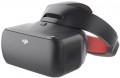 | 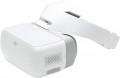 |
|---|---|---|
| DJI Goggles RE | DJI Goggles | |
| Outdated Product | from £229.00 | |
| TOP sellers | ||
Antenna included for signal amplification in 5.8 GHz mode It is forbidden to use the antenna in 2.4 GHz mode | Viewing the picture from the camera on board the quadcopter in the first person. High resolution image. Controlling the camera by turning the head. Touchpad on the right side of the case. | |
| Device type | FPV goggles | FPV goggles |
| Purpose (compatibility) | quadcopter (drone) | quadcopter (drone) |
Specs | ||
| Screen resolution | 1920x1080 px | 1920x1080 px |
| Field of view | 85 ° | 85 ° |
| Refresh rate | 60 fps | 60 fps |
| Accelerometer |  | |
| Gyroscope | | |
| Proximity sensor | | |
| Lens distance adjusting | | |
| Pupillary distance adjustment | |  |
General | ||
| Control | push-button | push-button |
| Material | plastic | plastic |
| Dimensions (HxWxD) | 255x205x92 mm | 255x205x92 mm |
| Weight | 502 g | 500 g |
| Added to E-Catalog | february 2018 | september 2017 |


Compare DJI Goggles RE and Goggles
You may be interested in
DJI Goggles RE often compared


DJI Goggles often compared


Glossary
Pupillary distance adjustment
The ability to adjust the interpupillary distance of glasses — that is, the distance between the centers of two lenses. To do this, the lenses are mounted on movable mounts that allow them to be moved to the right / left. The meaning of this feature is that for normal viewing, the centers of the lenses must be opposite the user's pupils — and for different people, the distance between the pupils is also different. Accordingly, this setting will be useful anyway, but it is especially important for users of a large or petite physique, whose interpupillary distance is noticeably different from the average.
At the same time, there is a fairly significant number of glasses that do not have this function. They can be divided into three categories. The first is devices where the lack of adjustment for the interpupillary distance is compensated in one way or another (for example, by a special form of lenses that does not require adjustment). The second is models where this adjustment is not needed in principle (in particular, some augmented reality glasses). And the third — the simplest and cheapest solutions, where additional adjustments were abandoned to reduce the cost.
At the same time, there is a fairly significant number of glasses that do not have this function. They can be divided into three categories. The first is devices where the lack of adjustment for the interpupillary distance is compensated in one way or another (for example, by a special form of lenses that does not require adjustment). The second is models where this adjustment is not needed in principle (in particular, some augmented reality glasses). And the third — the simplest and cheapest solutions, where additional adjustments were abandoned to reduce the cost.