
Comparison Zhiyun Evolution vs FeiYu Tech G4
Add to comparison |  | 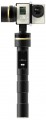 |
|---|---|---|
| Zhiyun Evolution | FeiYu Tech G4 | |
from $239.96 | from £949.00 | |
| TOP sellers | ||
| Type | for action camera GoPro, Xiaomi Yi | for action camera GoPro HERO4, HERO3+, HERO3 |
Gimbal specifications | ||
| Max. load | 0.2 kg | |
| Rotation angle | 320° | ±160° |
| Tilt angle | 320° | ±160° |
| Bank angle | 270° | ±50° |
| Max. controlled speed | 150 °/sec | |
Battery | ||
| Battery model | 18650 | 2x18350 |
| Battery life | 15 h | |
| Power bank function |  |  |
| Removable battery | | |
Shooting features | ||
| Camera control | joystick | joystick |
| Functions | camera position fixing | camera position fixing axis lock |
| Shooting modes | tracking mode inversion mode | tracking mode inversion mode |
General | ||
| Dimensions (folded) | 279x96x88 mm | 238.9x92.3x79 mm |
| Weight | 310 g | 265 g |
| Added to E-Catalog | february 2017 | november 2016 |


Compare Zhiyun Evolution and FeiYu Tech G4
You may be interested in
Glossary
Type
— For smartphone. Mount for using a smartphone as a camera. Most often it is a kind of clamp, in which the body of the device is tightly clamped. Such clamps usually have a fairly wide range of adjustment for the width of the phone, which allows you to use this type of stabiliser with most modern smartphones, regardless of the diagonal. And some models can even work with compact digital cameras.
— For camera. Attachments designed for use with full-size cameras — SLR and mirrorless (MILC). Such cameras are quite large and have a thread mount for a tripod. All these features are taken into account in the design of the stabiliser.
— For action cameras. Stabilisers designed for action cameras — compact cameras used mainly for shooting dynamic scenes like sports, skiing, cycling, etc. Such devices, by definition, are designed for use in rather extreme activities, including surfing, skiing, paragliding, etc. However, the specific features of different stabilisers may be different, so before buying it's ok to clarify this matter separately. Note that instead of the general name “for action camera”, the stabiliser specifications may contain the names of specific models of action cameras for which the device is designed.
— With camera. Stabilizers equipped with their own cameras. These are integrated directly int...o the stabilizer's construction, eliminating the need for external devices for filming. Moreover, such models are inherently optimized for working with the built-in camera — at the very least, the user doesn't have to deal with balancing the load on the stabilizer's head. Note that the ability to remove and replace the camera with another is usually not provided, although there are occasional exceptions to this rule.
— For camera. Attachments designed for use with full-size cameras — SLR and mirrorless (MILC). Such cameras are quite large and have a thread mount for a tripod. All these features are taken into account in the design of the stabiliser.
— For action cameras. Stabilisers designed for action cameras — compact cameras used mainly for shooting dynamic scenes like sports, skiing, cycling, etc. Such devices, by definition, are designed for use in rather extreme activities, including surfing, skiing, paragliding, etc. However, the specific features of different stabilisers may be different, so before buying it's ok to clarify this matter separately. Note that instead of the general name “for action camera”, the stabiliser specifications may contain the names of specific models of action cameras for which the device is designed.
— With camera. Stabilizers equipped with their own cameras. These are integrated directly int...o the stabilizer's construction, eliminating the need for external devices for filming. Moreover, such models are inherently optimized for working with the built-in camera — at the very least, the user doesn't have to deal with balancing the load on the stabilizer's head. Note that the ability to remove and replace the camera with another is usually not provided, although there are occasional exceptions to this rule.
Max. load
The maximum weight that the stabiliser is designed to carry.
This is the maximum weight of the camera with all accessories allowed for this model.
This is the maximum weight of the camera with all accessories allowed for this model.
Rotation angle
The range of rotation angles supported by the steadicam.
In this case, it means turning the camera to the right or left, without tilting back and forth.
In this case, it means turning the camera to the right or left, without tilting back and forth.
Tilt angle
The range of forward-backwards tilt angles relative to the vertical position supported by the stabiliser.
It can be written in different ways.
The simplest option is when one angle value is indicated in the characteristics. This may mean that the camera can deviate from the neutral position in both directions by the same angle, which is half the range.
Another option is used when the angles of tilt forward and backward are not the same. In such cases, the horizontal position of the camera on a vertical steadicam is taken as zero, the “-” sign indicates the maximum angle of camera deflection back, lens up, and the “+” sign — forward, lens down.
It can be written in different ways.
The simplest option is when one angle value is indicated in the characteristics. This may mean that the camera can deviate from the neutral position in both directions by the same angle, which is half the range.
Another option is used when the angles of tilt forward and backward are not the same. In such cases, the horizontal position of the camera on a vertical steadicam is taken as zero, the “-” sign indicates the maximum angle of camera deflection back, lens up, and the “+” sign — forward, lens down.
Bank angle
The range of roll angles (to the side) supported by the stabiliser.
Can be recorded in two ways (See "Tilt angle")
Can be recorded in two ways (See "Tilt angle")
Max. controlled speed
The maximum controlled speed supported by the stabiliser is, in fact, the highest speed of rotation of the camera along one axis or another, provided by the device. This is the maximum rotation speed of the entire structure, at which the stabiliser automation can provide effective stabilisation along the corresponding axis (that is, keep the camera stationary).
This item is directly related to the purpose of the stabiliser — for shooting while hiking or cycling on flat terrain, a high stabilization speed is hardly necessary, but during surfing, acrobatic aerobatics and other similar activities, the “slow” stabiliser often turns out to be ineffective.
This item is directly related to the purpose of the stabiliser — for shooting while hiking or cycling on flat terrain, a high stabilization speed is hardly necessary, but during surfing, acrobatic aerobatics and other similar activities, the “slow” stabiliser often turns out to be ineffective.
Battery model
Model of the battery used in the stabiliser. This information is not very important when choosing: if you wish, knowing the battery model, you can find detailed information about it. However, the key characteristics of the battery are usually given in general information about the stabiliser. Nevertheless, model information can be useful if you plan to purchase an additional battery, or if you already have a battery and you need to evaluate its compatibility with the device.
Battery life
The maximum length of time the device will work before it needs its battery to be recharged. It is worth considering that the manufacturer indicates the maximum time, which does not correspond to real indicators due to the conditions and intensity of use.
Power bank function
The ability of stabiliser to work steadicam in power bank mode — an external battery for various portable devices. It allows the device to share its energy with the phone, and the recording is not yet over.