
Comparison NAD M3 vs Yamaha A-S3000
Add to comparison | 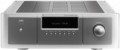 | 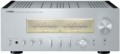 |
|---|---|---|
| NAD M3 | Yamaha A-S3000 | |
from $5,687.00 | from £1,200.00 | |
| TOP sellers | ||
| Device type | integrated amplifier | integrated amplifier |
| Element base | transistor | transistor |
| Toroidal transformer |  | |
Amplifier parameters | ||
| Number of channels | 2 | 2 |
| Frequency range | 20 – 20000 Hz | 20 – 20000 Hz |
| Power per channel (8Ω) | 180 W | 100 W |
| Power per channel (4Ω) | 150 W | |
| Signal to noise ratio | 107 dB | 103 dB |
| Signal to noise ratio (Phono MM/MC) | 93/85 dB | |
| Damping factor | 150 | 250 |
| Harmonic distortion | 0.004 % | 0.025 % |
Channel sensitivity / impedance | ||
| Balanced XLR input | 120 kOhm | 200 mV 100 kOhm |
| Line input | 150 kOhm | 200 mV 47 kOhm |
| Main input | 1 В 47 kOhm | |
| Phono MM/MC | 2.5/0.1 mV 47/0.05 kOhm | |
| REC output | 200 mV 1.5 kOhm | |
| Preout | 1000 mV 1.5 kOhm | |
Connectors | ||
| Inputs | RS-232 control input (IR) | Phono control input (IR) |
| To amplifier (Main) | RCA | RCA |
| RCA | 6 pairs | 4 pairs |
| XLR (balanced) | 2 шт | 4 шт |
| Trigger | 1 шт | |
| Outputs | Pre-Amp control output (IR) | Pre-Amp control output (IR) |
| For acoustics | 4 шт | 4 шт |
| REC (to recorder) | 1 pairs | 1 pairs |
| Trigger output | 1 шт | 1 шт |
| On headphones | 6.35 mm (Jack) | |
| Front panel | display | dial indicators headphone output |
Features | ||
| Adjustments | bass control treble adjustment balance adjustment level adjustment | bass control treble adjustment balance adjustment level adjustment |
| More features | By-pass/Direct auto power off additional speaker connect Bi-Wiring external devices control | By-pass/Direct auto power off ММ phono stage MC phono stage additional speaker connect Bi-Wiring external devices control |
General | ||
| Remote control | | |
| Chassis material | copper | |
| PSU | internal | internal |
| Power consumption | 350 W | |
| Standby consumption | 0.3 W | |
| Dimensions (WxDxH) | 386x435x135 mm | 435x464x180 mm |
| Weight | 23.5 kg | 24.6 kg |
| Color | ||
| Added to E-Catalog | july 2015 | may 2014 |


Compare NAD M3 and Yamaha A-S3000
Amplifiers NAD M3 and Yamaha A-S3000 have a similar transistor base and toroidal transformers, but differ in power and sound quality. NAD M3 offers 180 W per channel at 8 ohms and a better signal-to-noise ratio of 107 dB, making it preferable for demanding audiophiles. Meanwhile, the Yamaha A-S3000 has a power of 100 W per channel at 8 ohms and 150 W at 4 ohms, as well as a lower signal-to-noise ratio of 103 dB. In terms of connectors, Yamaha offers more balanced inputs (4 pcs) and a phono preamp for MM and MC, which may be important for vinyl enthusiasts. Both devices have similar adjustment and control functions, but the NAD M3 stands out with a higher damping factor (150 versus 250 for Yamaha).
You may be interested in
Yamaha A-S3000 often compared


Glossary
Power per channel (8Ω)
The nominal sound power output by the amplifier per channel when operating with a load having a dynamic resistance (impedance) of 8 ohms. In our catalog, this parameter is indicated for the mode when all channels of the amplifier work under load (see "Number of channels"); in the presence of unused channels, the rated power may be slightly higher, but this mode cannot be called standard.
Rated power can be simply described as the highest output signal power at which the amplifier is able to work stably for a long time (at least an hour) without negative consequences. These are average figures, because in fact, the audio signal is by definition unstable, and individual level jumps can significantly exceed the rated power. However, it is she who is the main basis for assessing the overall loudness of the sound.
This indicator also determines which speakers can be connected to the amplifier: their rated power should not be lower than that of the amplifier.
According to the laws of electrodynamics, with different dynamic load resistance, the output power of the amplifier will also be different. In modern speakers, the standard values \u200b\u200bare 8, 6, 4 and 2 Ohms, and power levels are indicated for them.
Rated power can be simply described as the highest output signal power at which the amplifier is able to work stably for a long time (at least an hour) without negative consequences. These are average figures, because in fact, the audio signal is by definition unstable, and individual level jumps can significantly exceed the rated power. However, it is she who is the main basis for assessing the overall loudness of the sound.
This indicator also determines which speakers can be connected to the amplifier: their rated power should not be lower than that of the amplifier.
According to the laws of electrodynamics, with different dynamic load resistance, the output power of the amplifier will also be different. In modern speakers, the standard values \u200b\u200bare 8, 6, 4 and 2 Ohms, and power levels are indicated for them.
Power per channel (4Ω)
The nominal sound power output by the amplifier per channel when a load with a dynamic resistance (impedance) of 4 ohms is connected to it. See Power per Channel (8Ω) for more information on power rating and its relationship to impedance.
Signal to noise ratio
In itself, the signal-to-noise ratio is the ratio of the level of pure sound produced by the amplifier to the level of extraneous noise that occurs during its operation. This parameter is the main indicator of the overall sound quality — and very clear, because. its measurement takes into account almost all the noise that affects the sound in normal operating conditions. A level of 70 – 80 dB in modern amplifiers can be considered acceptable, 80 – 90 dB is not bad, and for advanced audiophile-class devices, a signal-to-noise ratio of at least 100 dB is considered mandatory.
If the specifications do not specify for which output the signal-to-noise ratio is indicated, it usually means its value for the linear input (see "RCA (par)"). This is quite enough to evaluate the quality of the device for this parameter. However, some manufacturers indicate it for other inputs — Main, Phono; see below for more on this.
If the specifications do not specify for which output the signal-to-noise ratio is indicated, it usually means its value for the linear input (see "RCA (par)"). This is quite enough to evaluate the quality of the device for this parameter. However, some manufacturers indicate it for other inputs — Main, Phono; see below for more on this.
Signal to noise ratio (Phono MM/MC)
signal-to-noise ratio when the amplifier is driven through the Phono input. This interface is for connecting turntables; its features are described in the “Inputs” section below, and for the meaning of any signal-to-noise ratio, see the corresponding section above.
Damping factor
The damping factor describes the quality of interaction between the amplifier and the speaker system connected to it.
Due to the design features, any speaker is prone to the occurrence of so-called parasitic oscillations — oscillations that continue after the main impulse from the amplifier has ceased (similar to how a string continues to vibrate after a pluck). This phenomenon has a negative effect on sound quality, and manufacturers use various means to reduce it to an absolute minimum; suppression of parasitic oscillations is called damping.
The most effective type of damping is electrical, by reducing the output impedance of the amplifier. The lower this resistance, the better the amplifier keeps the speakers from unnecessary vibrations. To evaluate this effect, they introduced the concept of “damping factor” (damping factor) — the ratio of the load resistance (impedance) to the output resistance of the amplifier. The minimum value of such a coefficient for Hi-Fi class equipment is 20; indicators at the level of 100 – 120 can be called good, and among the Hi-End segment there are numbers of the order of several thousand.
At the same time, it is worth noting that when increasing to three-digit numbers, the original meaning of this parameter is, in fact, lost, and other points appear. The most important of them from a practical point of view is that models with a high damping factor are very demanding on the quality of the connection to t...he speakers — the high resistance of cables and connectors can negate the damping properties of the amplifier itself. There are other nuances associated with this indicator (in particular, recommendations for choosing an amplifier and speakers for each other); they are described in detail in specialized sources.
Due to the design features, any speaker is prone to the occurrence of so-called parasitic oscillations — oscillations that continue after the main impulse from the amplifier has ceased (similar to how a string continues to vibrate after a pluck). This phenomenon has a negative effect on sound quality, and manufacturers use various means to reduce it to an absolute minimum; suppression of parasitic oscillations is called damping.
The most effective type of damping is electrical, by reducing the output impedance of the amplifier. The lower this resistance, the better the amplifier keeps the speakers from unnecessary vibrations. To evaluate this effect, they introduced the concept of “damping factor” (damping factor) — the ratio of the load resistance (impedance) to the output resistance of the amplifier. The minimum value of such a coefficient for Hi-Fi class equipment is 20; indicators at the level of 100 – 120 can be called good, and among the Hi-End segment there are numbers of the order of several thousand.
At the same time, it is worth noting that when increasing to three-digit numbers, the original meaning of this parameter is, in fact, lost, and other points appear. The most important of them from a practical point of view is that models with a high damping factor are very demanding on the quality of the connection to t...he speakers — the high resistance of cables and connectors can negate the damping properties of the amplifier itself. There are other nuances associated with this indicator (in particular, recommendations for choosing an amplifier and speakers for each other); they are described in detail in specialized sources.
Harmonic distortion
This indicator describes the amount of non-linear distortion introduced by the amplifier into the processed signal. Such distortions are not necessarily perceived as extraneous noise, but they degrade the quality of the sound anyway — for example, they can make it more deaf. It is almost impossible to avoid them, but it can be reduced to levels inaudible to the human ear.
As a result, the harmonic distortion factor (harmonics) is one of the main parameters describing the overall sound quality in Hi-Fi and Hi-End amplifiers. The lower it is, the clearer the sound. Hundredths of a percent are considered a good indicator for modern amplifiers, thousandths and below are excellent. The exceptions are tube and hybrid models, for which rather high harmonic coefficients are allowed; see "Element base" for more details.
As a result, the harmonic distortion factor (harmonics) is one of the main parameters describing the overall sound quality in Hi-Fi and Hi-End amplifiers. The lower it is, the clearer the sound. Hundredths of a percent are considered a good indicator for modern amplifiers, thousandths and below are excellent. The exceptions are tube and hybrid models, for which rather high harmonic coefficients are allowed; see "Element base" for more details.
Balanced XLR input
The sensitivity and dynamic impedance of the amplifier when a signal is applied to the balanced XLR input.
Under the sensitivity of any input (except optical) is meant the lowest signal voltage at this input, at which the amplifier is able to provide normal nominal power values (see "Power per channel (8Ω)"). This parameter determines, first of all, the requirements for the signal source. On the one hand, the voltage provided by this source must not be lower than the input sensitivity of the amplifier, otherwise the latter simply will not give the claimed characteristics. However, a significant excess in voltage should not be allowed, otherwise the sound will begin to be distorted. More detailed recommendations on choosing an amplifier by sensitivity are described in special sources.
For any input other than optical, it is believed that the higher this indicator, the less distortion the amplifier introduces into the signal. The minimum level of input impedance in modern models is considered to be 10 kOhm, and in high-end devices it can reach several hundred kOhm.
Under the sensitivity of any input (except optical) is meant the lowest signal voltage at this input, at which the amplifier is able to provide normal nominal power values (see "Power per channel (8Ω)"). This parameter determines, first of all, the requirements for the signal source. On the one hand, the voltage provided by this source must not be lower than the input sensitivity of the amplifier, otherwise the latter simply will not give the claimed characteristics. However, a significant excess in voltage should not be allowed, otherwise the sound will begin to be distorted. More detailed recommendations on choosing an amplifier by sensitivity are described in special sources.
For any input other than optical, it is believed that the higher this indicator, the less distortion the amplifier introduces into the signal. The minimum level of input impedance in modern models is considered to be 10 kOhm, and in high-end devices it can reach several hundred kOhm.
Line input
The sensitivity and dynamic impedance of the amplifier when a signal is applied to the RCA line input.
Under the sensitivity of any input (except optical) is meant the lowest signal voltage at this input, at which the amplifier is able to provide normal nominal power values (see "Power per channel (8Ω)"). This parameter determines, first of all, the requirements for the signal source. On the one hand, the voltage provided by this source must not be lower than the input sensitivity of the amplifier, otherwise the latter simply will not give the claimed characteristics. However, a significant excess in voltage should not be allowed, otherwise the sound will begin to be distorted. More detailed recommendations on choosing an amplifier by sensitivity are described in special sources.
For any input other than optical, it is believed that the higher this indicator, the less distortion the amplifier introduces into the signal. The minimum level of input impedance in modern models is considered to be 10 kOhm, and in high-end devices it can reach several hundred kOhm.
Under the sensitivity of any input (except optical) is meant the lowest signal voltage at this input, at which the amplifier is able to provide normal nominal power values (see "Power per channel (8Ω)"). This parameter determines, first of all, the requirements for the signal source. On the one hand, the voltage provided by this source must not be lower than the input sensitivity of the amplifier, otherwise the latter simply will not give the claimed characteristics. However, a significant excess in voltage should not be allowed, otherwise the sound will begin to be distorted. More detailed recommendations on choosing an amplifier by sensitivity are described in special sources.
For any input other than optical, it is believed that the higher this indicator, the less distortion the amplifier introduces into the signal. The minimum level of input impedance in modern models is considered to be 10 kOhm, and in high-end devices it can reach several hundred kOhm.
Main input
The sensitivity and dynamic impedance of the amplifier when a signal is applied to the Main input.
Under the sensitivity of any input (except optical) is meant the lowest signal voltage at this input, at which the amplifier is able to provide normal nominal power values (see "Power per channel (8Ω)"). This parameter determines, first of all, the requirements for the signal source. On the one hand, the voltage provided by this source must not be lower than the input sensitivity of the amplifier, otherwise the latter simply will not give the claimed characteristics. However, a significant excess in voltage should not be allowed, otherwise the sound will begin to be distorted. More detailed recommendations on choosing an amplifier by sensitivity are described in special sources.
For any input other than optical, it is believed that the higher this indicator, the less distortion the amplifier introduces into the signal. The minimum level of input impedance in modern models is considered to be 10 kOhm, and in high-end devices it can reach several hundred kOhm.
Under the sensitivity of any input (except optical) is meant the lowest signal voltage at this input, at which the amplifier is able to provide normal nominal power values (see "Power per channel (8Ω)"). This parameter determines, first of all, the requirements for the signal source. On the one hand, the voltage provided by this source must not be lower than the input sensitivity of the amplifier, otherwise the latter simply will not give the claimed characteristics. However, a significant excess in voltage should not be allowed, otherwise the sound will begin to be distorted. More detailed recommendations on choosing an amplifier by sensitivity are described in special sources.
For any input other than optical, it is believed that the higher this indicator, the less distortion the amplifier introduces into the signal. The minimum level of input impedance in modern models is considered to be 10 kOhm, and in high-end devices it can reach several hundred kOhm.