
Comparison Gorenje K 62 CLI ivory vs Gorenje K 53 INI ivory
Add to comparison | 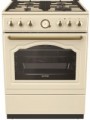 | 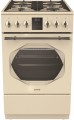 |
|---|---|---|
| Gorenje K 62 CLI ivory | Gorenje K 53 INI ivory | |
| Outdated Product | Outdated Product | |
| TOP sellers | ||
| Hob type | gas | gas |
| Burner controls | rotary knobs | rotary knobs |
| Design | retro | retro |
Oven | ||
| Oven type | electric | electric |
| Oven capacity | 71 L | 70 L |
| Max. temperature | 275 °C | 275 °C |
| Features | thermostat timer convection electric grill oven lighting | thermostat timer convection electric grill oven lighting |
| Oven cleaning | steam cleaning | steam cleaning |
| Guides | frame | frame |
| Number of glass in door | 2 | 2 |
| Door closer |  |  |
Hob | ||
| Hob material | enamel | enamel |
| Number of gas burners | 4 | 4 |
| Turbo burners | 1 | |
| Burner grates | cast iron | cast iron |
More features | ||
| Gas control | hob | hob |
| Auto ignition | hob | hob |
| Automatic switch-off | ovens | |
More specs | ||
| Energy class | A | |
| Dimensions (HxWxD) | 85x60x60 cm | 85x50x59 cm |
| Color | ||
| Added to E-Catalog | august 2019 | april 2018 |


Compare Gorenje K 62 CLI and K 53 INI
You may be interested in
My comparisons
Gorenje K 62 CLI often compared


Gorenje K 53 INI often compared
Glossary
Oven capacity
It is the volume of the oven provided in the stove. It s the maximum volume of products that can be placed in it without compromising work efficiency. Accordingly, a larger oven is useful for large volumes of cooking; on the other hand, such a capacity will significantly affect the price and dimensions of the stove.
If you buy a regular household stove with 4 burners and do not plan to cook a lot in the oven, you can not pay much attention to this parameter. The capacity of the oven is usually enough for most simple tasks like cooking a pie or baking chicken. But for more serious tasks, a larger oven may be required. Detailed recommendations on volumes can be found in special sources.
If there is an additional chamber (see below), this paragraph usually indicates only the volume of the main oven.
If you buy a regular household stove with 4 burners and do not plan to cook a lot in the oven, you can not pay much attention to this parameter. The capacity of the oven is usually enough for most simple tasks like cooking a pie or baking chicken. But for more serious tasks, a larger oven may be required. Detailed recommendations on volumes can be found in special sources.
If there is an additional chamber (see below), this paragraph usually indicates only the volume of the main oven.
Door closer
Such a device is responsible for pulling the door when closing and, in some models when opening. The idea is that the user does not need to close/open the door completely — pull it to the right place, and then the door will be "picked up" by the door closer and smoothly brought to a fully open or closed state. Such a system eliminates the risk of leaving the oven not completely closed and prolongs the life span of the device.
Turbo burners
The number of gas burners in which the flame is located not in one, as in standard burners, but in two (or three) rows — in other words, in the form of two (three) rings, one inside the other. Such burners have more power than traditional single-row ones and heat the bottom of the pan more evenly, which can be especially useful when frying. On the other hand, the need for such a heating mode arises quite rarely, and much more gas is consumed than during the operation of a classic burner. As a result, even in advanced stoves, the number of turbo burners rarely exceeds 1.
Automatic switch-off
The type of automatic switch-off provided in the design of the stove.
Auto-off can be provided for the hob(hob), for the oven, or for both at once, regardless of whether the hob and oven are gas or electric. This function is implemented through a timer, after which the device turns off.
Auto-off can be provided for the hob(hob), for the oven, or for both at once, regardless of whether the hob and oven are gas or electric. This function is implemented through a timer, after which the device turns off.
Energy class
The energy class describes the overall efficiency of the cooker in terms of energy consumption. Note that we are not talking about actual consumption (see "Connected load" for details), but about the efficiency of the stove, about the efficiency of using the energy that it consumes.
This indicator is especially important for models with at least one electric burner or electric oven/grill. But, if we are talking about a purely gas stove, you can not pay much attention to the energy consumption class. Electricity in such models is spent only on additional functions like auto-ignition or oven lighting,
Initially, the classes were marked in Latin letters from A(the most economical) and then alphabetically in order of decreasing efficiency — B, C, D ... Later, improved classes A+, A++ appeared; the more pluses, the higher the efficiency. Today, energy consumption in class A can be called medium, and in a lower class — high. The maximum indicator found in modern stoves is A++; if we are talking about a model with an electric burner, such a stove is usually expensive, but it pays off by saving electricity during use.
This indicator is especially important for models with at least one electric burner or electric oven/grill. But, if we are talking about a purely gas stove, you can not pay much attention to the energy consumption class. Electricity in such models is spent only on additional functions like auto-ignition or oven lighting,
Initially, the classes were marked in Latin letters from A(the most economical) and then alphabetically in order of decreasing efficiency — B, C, D ... Later, improved classes A+, A++ appeared; the more pluses, the higher the efficiency. Today, energy consumption in class A can be called medium, and in a lower class — high. The maximum indicator found in modern stoves is A++; if we are talking about a model with an electric burner, such a stove is usually expensive, but it pays off by saving electricity during use.