
Comparison Philips 276E8VJSB 27 " black vs Samsung U28E590D 28 "
Add to comparison | 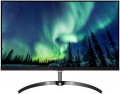 | 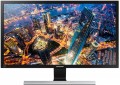 |
|---|---|---|
| Philips 276E8VJSB 27 " black | Samsung U28E590D 28 " | |
from £1,440.00 | from £277.07 | |
| User reviews | ||
| TOP sellers | ||
Fast matrix response time. High maximum brightness. AMD FreeSync technology. Low power consumption (30W). Small viewing angles. There are no built-in speakers. | ||
| Product type | monitor | monitor |
| Size | 27 " | 28 " |
Screen | ||
| Panel type | IPS | TN+film |
| Surface treatment | anti-glare | matte |
| Resolution | 3840x2160 (16:9) | 3840x2160 (16:9) |
| FPS | 60 Hz | 60 Hz |
| Pixel size | 0.16 mm | 0.16 mm |
| Response time (GtG) | 5 ms | 1 ms |
| Vertical viewing angle | 178 ° | 160 ° |
| Horizontal viewing angle | 178 ° | 170 ° |
| Brightness | 350 cd/m² | 370 cd/m² |
| Static contrast | 1 000:1 | 1 000:1 |
| Dynamic Contrast | 20 000 000:1 | 100 000 000:1 |
| Colour depth | 8-bit + FRC (1.07B Colors) | |
| Colour space (NTSC) | 91 % | 72 % |
| Colour space (sRGB) | 109 % | 100 % |
Connection | ||
| Video transmission | DisplayPort v1.2 2xHDMI v2.0 | DisplayPort v1.2 2xHDMI v2.0 |
| Connectors (optional) | mini-Jack output (3.5 mm) | mini-Jack output (3.5 mm) |
Features | ||
| Features | PBP (Picture by Picture) Flicker-Free | PBP (Picture by Picture) Flicker-Free AMD FreeSync |
General | ||
| Wall mount | VESA 75x75mm | |
| Power consumption | 20 W | 30 W |
| Dimensions (WxHxD) | 613x466x189 mm | 660.9x468.5x187.1 mm |
| Weight | 4.84 kg | 5.28 kg |
| Color | ||
| Added to E-Catalog | january 2019 | september 2015 |


Compare Philips 276E8VJSB and Samsung U28E590D
You may be interested in
Philips 276E8VJSB often compared


Samsung U28E590D often compared


Glossary
Size
Diagonal size of the monitor matrix, in inches.
This parameter is one of the most important for any screen — it determines the total size of its working area. In general, it is believed that larger monitors are more comfortable: a large screen allows you to see a large fragment of text, images, etc. without having to scroll the "picture". On the other hand, the diagonal directly affects the dimensions, weight and cost of the monitor. In addition, it is worth remembering that screens with the same diagonal can have different aspect ratios and different specializations: for example, widescreen models are convenient for playing games and watching movies, while classic 4:3 or 5:4 solutions are preferable for working with documents. Now there are monitors of different diagonals on the market, among them the most popular are: 19–20", 22", 23 – 24", 25 – 26", 27 – 28", 29 – 30", 32", 34" and more.
This parameter is one of the most important for any screen — it determines the total size of its working area. In general, it is believed that larger monitors are more comfortable: a large screen allows you to see a large fragment of text, images, etc. without having to scroll the "picture". On the other hand, the diagonal directly affects the dimensions, weight and cost of the monitor. In addition, it is worth remembering that screens with the same diagonal can have different aspect ratios and different specializations: for example, widescreen models are convenient for playing games and watching movies, while classic 4:3 or 5:4 solutions are preferable for working with documents. Now there are monitors of different diagonals on the market, among them the most popular are: 19–20", 22", 23 – 24", 25 – 26", 27 – 28", 29 – 30", 32", 34" and more.
Panel type
The panel type determines the technology used to build a monitor’s screen and how it renders color, contrast, viewing angles, black levels, and response time. This parameter has a noticeable impact on how the monitor is used.
— TN+film. A TN+film panel is designed for fast pixel response and is found in inexpensive or older gaming monitors. It is chosen when minimal latency is important, for example in fast-paced online games, but it falls behind IPS, VA, and OLED in color reproduction and viewing angles.
— *VA. A VA panel is characterized by high static contrast, so dark scenes look deeper than on most IPS monitors. This is a good choice for movies, gaming, evening work, and multimedia, especially if rich black levels are important without switching to OLED. The main drawback of VA is possible smearing of dark objects in motion, so for shooters and fast-paced games, it is better to consider not only the stated milliseconds but also real-world reviews of the specific model.
— IPS. An IPS panel maintains color and brightness well when viewed from different angles, making it suitable for workspaces, study, gaming, and amateur image editing. It is one of the most balanced options when you need an everyday monitor without a clear bias toward movies or esports. In terms of black depth, IPS usually loses to VA and OLED, so in a dark room, black may look...more like dark gray.
— OLED .An OLED panel consists of self-emissive pixels that can switch off completely to display black. As a result, the monitor delivers maximum contrast, very fast response, and expressive HDR, which is especially noticeable in games, movies, and dark scenes. The limitation of OLED is the risk of burn-in from static elements such as taskbars, logos, and software interfaces, so these models require more careful use for continuous office work.
In addition, the main panel types can be enhanced, namely by being equipped with miniature LEDs or an additional quantum-dot layer.
— Mini LED. An enhanced backlighting system for LCD monitors in which a large number of small LEDs are used instead of conventional LEDs. This backlighting allows individual areas of the screen to be dimmed more precisely, so HDR scenes look more contrast-rich and blacks appear deeper than on ordinary IPS or VA monitors with basic backlighting. For example, Mini LED is especially useful for gaming, movies, and HDR content, but quality depends heavily on the number of dimming zones and the settings of the specific model.
— Quantum dots (QD). Quantum-dot technology adds a special color layer to the screen, making red, green, and other saturated shades purer. It can be found in different types of monitors: QD-IPS, QD-VA, QD-OLED. In practice, this is useful for HDR, gaming, movies, and image editing where a wide color gamut is important, but the QD label itself does not guarantee accurate factory calibration.
— TN+film. A TN+film panel is designed for fast pixel response and is found in inexpensive or older gaming monitors. It is chosen when minimal latency is important, for example in fast-paced online games, but it falls behind IPS, VA, and OLED in color reproduction and viewing angles.
— *VA. A VA panel is characterized by high static contrast, so dark scenes look deeper than on most IPS monitors. This is a good choice for movies, gaming, evening work, and multimedia, especially if rich black levels are important without switching to OLED. The main drawback of VA is possible smearing of dark objects in motion, so for shooters and fast-paced games, it is better to consider not only the stated milliseconds but also real-world reviews of the specific model.
— IPS. An IPS panel maintains color and brightness well when viewed from different angles, making it suitable for workspaces, study, gaming, and amateur image editing. It is one of the most balanced options when you need an everyday monitor without a clear bias toward movies or esports. In terms of black depth, IPS usually loses to VA and OLED, so in a dark room, black may look...more like dark gray.
— OLED .An OLED panel consists of self-emissive pixels that can switch off completely to display black. As a result, the monitor delivers maximum contrast, very fast response, and expressive HDR, which is especially noticeable in games, movies, and dark scenes. The limitation of OLED is the risk of burn-in from static elements such as taskbars, logos, and software interfaces, so these models require more careful use for continuous office work.
In addition, the main panel types can be enhanced, namely by being equipped with miniature LEDs or an additional quantum-dot layer.
— Mini LED. An enhanced backlighting system for LCD monitors in which a large number of small LEDs are used instead of conventional LEDs. This backlighting allows individual areas of the screen to be dimmed more precisely, so HDR scenes look more contrast-rich and blacks appear deeper than on ordinary IPS or VA monitors with basic backlighting. For example, Mini LED is especially useful for gaming, movies, and HDR content, but quality depends heavily on the number of dimming zones and the settings of the specific model.
— Quantum dots (QD). Quantum-dot technology adds a special color layer to the screen, making red, green, and other saturated shades purer. It can be found in different types of monitors: QD-IPS, QD-VA, QD-OLED. In practice, this is useful for HDR, gaming, movies, and image editing where a wide color gamut is important, but the QD label itself does not guarantee accurate factory calibration.
Surface treatment
Modern monitors can use displays with both glossy and matte screen surfaces. A matte surface is in some cases more preferable due to the fact that on a glossy screen, when exposed to bright light, noticeable glare appears, sometimes interfering with viewing. On the other hand, glossy screens offer better picture quality, higher brightness, and richer colours.
Due to the development of technology, monitors with a special anti-glare coating have appeared on the market, which, while maintaining all the advantages of a glossy screen, creates significantly less visible glare in bright ambient light.
Due to the development of technology, monitors with a special anti-glare coating have appeared on the market, which, while maintaining all the advantages of a glossy screen, creates significantly less visible glare in bright ambient light.
Response time (GtG)
The time each individual pixel on the monitor takes to switch from one state to another. The lower the response time, the faster the matrix responds to the control signal, resulting in less delay and better image quality in dynamic scenes.
Note that in this case, the gray-to-gray method is used (the time it takes to switch from 10% gray to 90% gray). Pay attention to this parameter if the monitor is specifically purchased for fast-paced games, movie watching, or other applications involving quick screen movements. However, there’s no need to chase the fastest models. It’s not often possible to discern the difference between 1 ms and 5 ms. For most scenarios, monitors with a 4 ms response time will suffice. In any case, it’s best to rely on live impressions for a true comparison.
Note that in this case, the gray-to-gray method is used (the time it takes to switch from 10% gray to 90% gray). Pay attention to this parameter if the monitor is specifically purchased for fast-paced games, movie watching, or other applications involving quick screen movements. However, there’s no need to chase the fastest models. It’s not often possible to discern the difference between 1 ms and 5 ms. For most scenarios, monitors with a 4 ms response time will suffice. In any case, it’s best to rely on live impressions for a true comparison.
Vertical viewing angle
This parameter determines in which sector in the vertical plane relative to the monitor screen the user's eyes must be in order to see pure, undistorted colours on the screen. For example, a viewing angle of 170° means that the width of such a sector is 170°; the middle of the field of view, usually, is a line perpendicular to the screen. The larger the vertical viewing angle, the higher or lower relative to eye level you can place the monitor without tilting it.
Horizontal viewing angle
This setting determines in which sector of the horizontal plane relative to the monitor screen the user's eyes must be in order to see pure, undistorted colours on the screen. For example, a viewing angle of 170° means that the width of such a sector is 170°; the middle of the field of view, usually, is a line perpendicular to the screen. The larger the horizontal viewing angle, the more aside from it the observer can sit; large viewing angles are especially useful when there are several people behind the monitor at once, for example, when watching a movie.
Brightness
The maximum brightness provided by the monitor screen.
Choosing a monitor with high brightness is especially important if the device is going to be used in bright ambient light — for example, if the workplace is exposed to sunlight. A dim image can be "dampened" by such lighting, making work uncomfortable. In other conditions, the high brightness of the screen is very tiring for the eyes.
Most modern monitors give out about 200 – 400 cd / m2 — this is usually quite enough even in the sun. However, there are also higher values: for example, in LCD panels (see "Type") the brightness can reach several thousand cd/m2. This is necessary taking into account the specifics of such devices — the image must be clearly visible from a long distance.
Choosing a monitor with high brightness is especially important if the device is going to be used in bright ambient light — for example, if the workplace is exposed to sunlight. A dim image can be "dampened" by such lighting, making work uncomfortable. In other conditions, the high brightness of the screen is very tiring for the eyes.
Most modern monitors give out about 200 – 400 cd / m2 — this is usually quite enough even in the sun. However, there are also higher values: for example, in LCD panels (see "Type") the brightness can reach several thousand cd/m2. This is necessary taking into account the specifics of such devices — the image must be clearly visible from a long distance.
Dynamic Contrast
Dynamic contrast provided by the monitor screen.
Dynamic contrast refers to the difference between the brightest white at maximum backlight intensity and the deepest black at minimum backlight. In this way, this indicator differs from static contrast, which is indicated with a constant backlight level (see above). Dynamic contrast ratio can be expressed in very impressive numbers (in some models — more than 100,000,000: 1). However, in fact, these figures are poorly correlated with what the viewer sees: it is almost impossible to achieve such a difference within one frame. Therefore, dynamic contrast is most often more of an advertising than a practically significant indicator, it is often indicated precisely in order to impress an inexperienced buyer. At the same time, we note that there are "smart" backlight technologies that allow you to change its brightness in certain areas of the screen and achieve a higher contrast in one frame than the claimed static one; these technologies are found mostly in premium monitors.
Dynamic contrast refers to the difference between the brightest white at maximum backlight intensity and the deepest black at minimum backlight. In this way, this indicator differs from static contrast, which is indicated with a constant backlight level (see above). Dynamic contrast ratio can be expressed in very impressive numbers (in some models — more than 100,000,000: 1). However, in fact, these figures are poorly correlated with what the viewer sees: it is almost impossible to achieve such a difference within one frame. Therefore, dynamic contrast is most often more of an advertising than a practically significant indicator, it is often indicated precisely in order to impress an inexperienced buyer. At the same time, we note that there are "smart" backlight technologies that allow you to change its brightness in certain areas of the screen and achieve a higher contrast in one frame than the claimed static one; these technologies are found mostly in premium monitors.
Colour depth
The colour depth supported by the monitor.
This parameter characterizes the number of shades that the screen can display. And here it is worth recalling that the image in modern monitors is based on 3 basic colours — red, green, blue (RGB scheme). And the number of bits is indicated not for the entire screen, but for each base colour. For example, 6 bits (the minimum colour depth for modern monitors) means that the screen is capable of producing 2 ^ 6, that is, 64 shades of red, green and blue; the total number of shades will be 64 * 64 * 64 = 262,144 (0.26 million). An 8-bit colour depth (256 shades for each base colour) already gives a total of 16.7 million colours; and the most advanced modern monitors support 10-bit colour, allowing you to work with more than a billion shades.
Screens with support for FRC technology are worth a special mention; nowadays, you can find models marked " 6 bit + FRC " and " 8 bit + FRC ". This technology was developed to improve picture quality in situations where the incoming video signal has a greater colour depth than the screen, such as when 10-bit video is fed to an 8-bit matrix. If such a screen supports FRC, the picture on it will be noticeably better than on a regular 8-bit monitor (although somewhat worse than on a full-fledged 10-bit monitor, but “8 bit + FRC” screens are much...cheaper).
High colour depth is important primarily for professional graphics and other tasks that require high colour fidelity. On the other hand, such features significantly affect the cost of the monitor. In addition, it is worth remembering that the quality of colour reproduction depends not only on the colour depth, but also on other parameters — in particular, colour gamut (see below).
This parameter characterizes the number of shades that the screen can display. And here it is worth recalling that the image in modern monitors is based on 3 basic colours — red, green, blue (RGB scheme). And the number of bits is indicated not for the entire screen, but for each base colour. For example, 6 bits (the minimum colour depth for modern monitors) means that the screen is capable of producing 2 ^ 6, that is, 64 shades of red, green and blue; the total number of shades will be 64 * 64 * 64 = 262,144 (0.26 million). An 8-bit colour depth (256 shades for each base colour) already gives a total of 16.7 million colours; and the most advanced modern monitors support 10-bit colour, allowing you to work with more than a billion shades.
Screens with support for FRC technology are worth a special mention; nowadays, you can find models marked " 6 bit + FRC " and " 8 bit + FRC ". This technology was developed to improve picture quality in situations where the incoming video signal has a greater colour depth than the screen, such as when 10-bit video is fed to an 8-bit matrix. If such a screen supports FRC, the picture on it will be noticeably better than on a regular 8-bit monitor (although somewhat worse than on a full-fledged 10-bit monitor, but “8 bit + FRC” screens are much...cheaper).
High colour depth is important primarily for professional graphics and other tasks that require high colour fidelity. On the other hand, such features significantly affect the cost of the monitor. In addition, it is worth remembering that the quality of colour reproduction depends not only on the colour depth, but also on other parameters — in particular, colour gamut (see below).