
Comparison HP 25mx 25 " vs HP 25x 25 " black
Add to comparison | 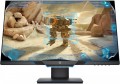 | 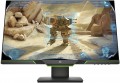 |
|---|---|---|
| HP 25mx 25 " | HP 25x 25 " black | |
from £313.71 | from £219.68 | |
| TOP sellers | ||
Freesync support. Ergonomic stand. Large supply of brightness. Slim bezel with backlight. | Freesync support. Ergonomic stand. Large supply of brightness. Slim bezel with backlight. | |
| Product type | gaming | gaming |
| Size | 25 " | 25 " |
Screen | ||
| Panel type | TN+film | TN+film |
| Surface treatment | anti-glare | anti-glare |
| Resolution | 1920x1080 (16:9) | 1920x1080 (16:9) |
| FPS | 144 Hz | 144 Hz |
| Pixel size | 0.28 mm | 0.28 mm |
| Response time (GtG) | 1 ms | 1 ms |
| Vertical viewing angle | 160 ° | 160 ° |
| Horizontal viewing angle | 170 ° | 170 ° |
| Brightness | 400 cd/m² | 400 cd/m² |
| Static contrast | 1 000:1 | 1 000:1 |
| Dynamic Contrast | 12 000 000:1 | |
| Colour depth | 8-bit (16.7M Colors) | 8-bit (16.7M Colors) |
Connection | ||
| Video transmission | DisplayPort HDMI | DisplayPort HDMI |
Features | ||
| Features | Flicker-Free AMD FreeSync Premium NVIDIA G-Sync Compatible | Flicker-Free AMD FreeSync Premium NVIDIA G-Sync Compatible |
| Portrait pivot |  | |
| Height adjustment | | |
General | ||
| Wall mount | VESA 100x100mm | VESA 100x100mm |
| Power consumption | 24 W | 22 W |
| Dimensions (WxHxD) | 557x493x206 mm | 557x493x206 mm |
| Weight | 4.3 kg | 5.72 kg |
| Color | ||
| Added to E-Catalog | june 2019 | april 2019 |


Compare HP 25mx and 25x
You may be interested in
My comparisons
HP 25mx often compared

HP 25x often compared

Glossary
Dynamic Contrast
Dynamic contrast provided by the monitor screen.
Dynamic contrast refers to the difference between the brightest white at maximum backlight intensity and the deepest black at minimum backlight. In this way, this indicator differs from static contrast, which is indicated with a constant backlight level (see above). Dynamic contrast ratio can be expressed in very impressive numbers (in some models — more than 100,000,000: 1). However, in fact, these figures are poorly correlated with what the viewer sees: it is almost impossible to achieve such a difference within one frame. Therefore, dynamic contrast is most often more of an advertising than a practically significant indicator, it is often indicated precisely in order to impress an inexperienced buyer. At the same time, we note that there are "smart" backlight technologies that allow you to change its brightness in certain areas of the screen and achieve a higher contrast in one frame than the claimed static one; these technologies are found mostly in premium monitors.
Dynamic contrast refers to the difference between the brightest white at maximum backlight intensity and the deepest black at minimum backlight. In this way, this indicator differs from static contrast, which is indicated with a constant backlight level (see above). Dynamic contrast ratio can be expressed in very impressive numbers (in some models — more than 100,000,000: 1). However, in fact, these figures are poorly correlated with what the viewer sees: it is almost impossible to achieve such a difference within one frame. Therefore, dynamic contrast is most often more of an advertising than a practically significant indicator, it is often indicated precisely in order to impress an inexperienced buyer. At the same time, we note that there are "smart" backlight technologies that allow you to change its brightness in certain areas of the screen and achieve a higher contrast in one frame than the claimed static one; these technologies are found mostly in premium monitors.
Power consumption
Rated power consumption of the monitor. Usually, this item indicates the maximum power that the device can consume during normal operation — that is, the energy consumption at maximum brightness, the highest volume of the built-in acoustics, etc. Actual power consumption can be noticeably lower, however, when choosing, it is still best to focus on the value stated in the specifications.
In general, the lower the power consumption, the more economical the device in terms of electricity consumption (ceteris paribus). In addition, this characteristic can be useful when selecting an uninterruptible power supply for a PC and in other specific situations when it is necessary to accurately determine the power consumption of equipment.
In general, the lower the power consumption, the more economical the device in terms of electricity consumption (ceteris paribus). In addition, this characteristic can be useful when selecting an uninterruptible power supply for a PC and in other specific situations when it is necessary to accurately determine the power consumption of equipment.