
Comparison Powercom BNT-400AP 400 VA vs Powercom WAR-400A 400 VA
Add to comparison | 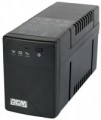 | 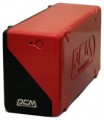 |
|---|---|---|
| Powercom BNT-400AP 400 VA | Powercom WAR-400A 400 VA | |
from $54.00 | from $39.00 | |
| User reviews | ||
| TOP sellers | ||
| Type | smart | smart |
| Form factor | standard (Tower) | standard (Tower) |
| Operating time (100% load) | 5 min | 5 min |
| Operating time (50% load) | 7 min | |
| Switching to battery | 4 ms | 4 ms |
Input | ||
| Input voltage | 1 phase (230V) | 1 phase (230V) |
| Input voltage range | 165-275 В | 162-253 В |
| Max. current | 4 А | 4 А |
| Bypass (direct connection) | in absent | in absent |
Output | ||
| Output voltage | 1 phase (230V) | 1 phase (230V) |
| Peak output power | 400 VA | 400 VA |
| Rated output power | 240 W | 200 W |
| Output waveform | similar to a sinusoid (approximated) | similar to a sinusoid (approximated) |
| Output frequency | 50-60 Hz | 50-60 Hz |
| Reserved C13/C14 connectors | 2 | 2 |
Battery | ||
| Number of batteries | 1 | 1 |
| Total battery capacity | 4.5 Ah | 5 Ah |
| Full charge time | 360 min | 360 min |
Protection | ||
| Protection | short circuit protection overload protection noise filtering data line protection sound alarm | short circuit protection overload protection noise filtering data line protection sound alarm |
| Fuse | melting | melting |
| Surge protection | 460 J | 460 J |
| Control interfaces | USB type B | |
General | ||
| Operating temperature | 0 – 40 °C | 0 – 40 °C |
| Noise level | 40 dB | 40 dB |
| Dimensions (HxWxD) | 135x97x320 mm | 125x91x254 mm |
| Weight | 6.4 kg | 4.25 kg |
| Added to E-Catalog | april 2012 | april 2012 |


Compare Powercom BNT-400AP and WAR-400A
You may be interested in
Powercom BNT-400AP often compared


Powercom WAR-400A often compared
Glossary
Operating time (50% load)
UPS continuous operation time from a fully charged battery when connected to a load with a power equal to half the output power of the UPS (maximum or effective, depending on the type of load, see below for details). The operating time with such a load is much longer than for a full load, and even in the simplest models it can reach 20-30 minutes.
Input voltage range
In this case, the input voltage range is implied, in which the UPS is able to supply a stable voltage to the load only due to its own regulators, without switching to the battery. For redundant UPSs (see "Type") this range is quite small, approximately 190 to 260 V; for interactive and especially inverter ones, it is much wider. Some UPS models allow you to manually set the input voltage range.
Rated output power
The effective output power of the UPS is, in fact, the maximum active power of the load that can be connected to the device.
Active power is consumed directly for the operation of the device; it is expressed in watts. In addition to it, most AC devices also consume reactive power, which is "wasted" (relatively speaking) is spent by coils and capacitors. Apparent power (denoted in volt-amperes) is precisely the sum of active and reactive power; it is this characteristic that should be used in accurate electrical calculations. See "Maximum output power" for details; here we note that when selecting a UPS for a relatively simple application, it is quite possible to use only effective power. This is at least easier than converting the watts claimed in the characteristics of the connected devices into full power volt-amps.
The most modest modern "uninterruptibles" give out less than 500 watts. 501 – 1000 W can be considered an average value, 1.1 – 2 kW is above average, and in the most powerful models this figure exceeds 2 kW and can reach very impressive values (up to 1000 kW or more in some industrial class UPS).
Active power is consumed directly for the operation of the device; it is expressed in watts. In addition to it, most AC devices also consume reactive power, which is "wasted" (relatively speaking) is spent by coils and capacitors. Apparent power (denoted in volt-amperes) is precisely the sum of active and reactive power; it is this characteristic that should be used in accurate electrical calculations. See "Maximum output power" for details; here we note that when selecting a UPS for a relatively simple application, it is quite possible to use only effective power. This is at least easier than converting the watts claimed in the characteristics of the connected devices into full power volt-amps.
The most modest modern "uninterruptibles" give out less than 500 watts. 501 – 1000 W can be considered an average value, 1.1 – 2 kW is above average, and in the most powerful models this figure exceeds 2 kW and can reach very impressive values (up to 1000 kW or more in some industrial class UPS).
Total battery capacity
The capacity of the battery installed in the UPS. For models with multiple batteries, this is both the total working capacity and the capacity of each individual battery: the batteries in such devices are usually connected in series, so that their total capacity corresponds to the capacity of each individual cell.
Theoretically, a higher battery capacity means the ability to power loads of a given capacity for longer. However, in fact, this parameter is more of a reference than practically significant. The fact is that the actual amount of energy stored by the battery depends not only on the capacity in amp-hours, but also on the voltage in volts; this voltage is often not specified in the characteristics, despite the fact that for accurate calculations it must be known. So when choosing, you should focus on more "close to life" characteristics — first of all, on the directly claimed operating time in different modes (see above).
Theoretically, a higher battery capacity means the ability to power loads of a given capacity for longer. However, in fact, this parameter is more of a reference than practically significant. The fact is that the actual amount of energy stored by the battery depends not only on the capacity in amp-hours, but also on the voltage in volts; this voltage is often not specified in the characteristics, despite the fact that for accurate calculations it must be known. So when choosing, you should focus on more "close to life" characteristics — first of all, on the directly claimed operating time in different modes (see above).
Control interfaces
Many modern UPSs can be connected to a computer or other special devices. This provides advanced options for monitoring the parameters of the UPS and managing its functions: without leaving the computer, you can monitor the battery status, network parameters, load, enable special modes, apply automatic adjustment, etc. Such a connection can be made according to the following standards:
— RS-232. It's a COM port. Initially designed to connect various peripherals to a computer. Today it is also quite widespread, however, due to its relatively large size, it is installed mainly on stationary PCs.
— USB. A universal port for connecting various peripherals to a computer, the most popular interface of this kind today — at least one USB port has an absolute majority of computers and laptops.
-LAN. A port used to connect to wired computer networks. Models with this interface can often be connected as a network device, which allows, if necessary, to control them from any computer on this network.
— SmartSlot. A slot in the UPS case for installing expansion cards (SmartSlot cards). The development of APC, is used mainly in the devices of its production. Such cards can provide a very diverse set of features: additional connection ports beyond the standard ones (for example, a LAN control port), a web managemen...t interface, support for SNMP, Secure HTTP and other protocols, connection of temperature / humidity sensors, and much more. To date, a wide range of cards is being produced, making it easy to choose a set of additional functions depending on the specific situation. Most UPS models have one SmartSlot, but if necessary, you can use a special expander and install two cards, and the largest models can have two slots as standard.
— "Dry contact". In uninterruptible power supplies, the term "dry contact" refers to a professional interface used to transfer data on the operation of the UPS to specialized external equipment. Such an interface usually has a whole set of contacts (on the order of 10), often in the form of terminals. And the scheme of its operation can be simply described as follows: when certain parameters are reached, the control relay closes or opens a given set of “dry contacts”, on the basis of which the control device receives information about one or another parameter of the UPS operation.
— RS-232. It's a COM port. Initially designed to connect various peripherals to a computer. Today it is also quite widespread, however, due to its relatively large size, it is installed mainly on stationary PCs.
— USB. A universal port for connecting various peripherals to a computer, the most popular interface of this kind today — at least one USB port has an absolute majority of computers and laptops.
-LAN. A port used to connect to wired computer networks. Models with this interface can often be connected as a network device, which allows, if necessary, to control them from any computer on this network.
— SmartSlot. A slot in the UPS case for installing expansion cards (SmartSlot cards). The development of APC, is used mainly in the devices of its production. Such cards can provide a very diverse set of features: additional connection ports beyond the standard ones (for example, a LAN control port), a web managemen...t interface, support for SNMP, Secure HTTP and other protocols, connection of temperature / humidity sensors, and much more. To date, a wide range of cards is being produced, making it easy to choose a set of additional functions depending on the specific situation. Most UPS models have one SmartSlot, but if necessary, you can use a special expander and install two cards, and the largest models can have two slots as standard.
— "Dry contact". In uninterruptible power supplies, the term "dry contact" refers to a professional interface used to transfer data on the operation of the UPS to specialized external equipment. Such an interface usually has a whole set of contacts (on the order of 10), often in the form of terminals. And the scheme of its operation can be simply described as follows: when certain parameters are reached, the control relay closes or opens a given set of “dry contacts”, on the basis of which the control device receives information about one or another parameter of the UPS operation.