
Comparison Grundfos JP Basic 4 PT vs Grundfos JP Basic 3 PT
Add to comparison | 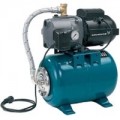 | 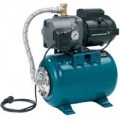 |
|---|---|---|
| Grundfos JP Basic 4 PT | Grundfos JP Basic 3 PT | |
from $197.04 up to $260.00 | from $179.80 up to $235.84 | |
| User reviews | ||
| TOP sellers | ||
| Suitable for | clean water | clean water |
Specs | ||
| Maximum performance | 3600 L/h | 3600 L/h |
| Maximum head | 50 m | 47 m |
| Max. pressure | 3 bar | 3 bar |
| Pump type | centrifugal | centrifugal |
| Suction type | self-priming | self-priming |
| Suction height | 7 m | 7 m |
| Maximum liquid temperature | 40 °С | 40 °С |
| Volume of water pressure tank | 24 L | 24 L |
| Suction system | single-stage | single-stage |
| Outlet size | 1" | 1" |
| Inlet hole size | 1" | 1" |
Engine | ||
| Maximum power | 1100 W | 850 W |
| Power source | electric | electric |
| Mains voltage | 230 В | 230 В |
General specs | ||
| Country of origin | Denmark | Denmark |
| Pump housing material | cast iron | cast iron |
| Impeller / auger material | plastic | plastic |
| Water pressure tank material | steel | steel |
| Dimensions | 543x305x509 mm | 543x305x509 mm |
| Weight | 20.5 kg | 19 kg |
| Added to E-Catalog | november 2014 | november 2014 |


Compare Grundfos JP Basic 4 PT and JP Basic 3 PT
You may be interested in
Grundfos JP Basic 3 PT often compared


Glossary
Maximum head
The maximum head generated by the pump. This parameter is most often indicated in meters, by the height of the water column that the unit can create — in other words, by the height to which it can supply water. You can estimate the pressure created by the pump using a simple formula: every 10 m of head corresponds to a pressure of 1 bar.
It is worth choosing a pump according to this parameter, taking into account the height to which it should supply water, as well as adjusting for losses and the need for pressure in the water supply. To do this, it is necessary to determine the difference in height between the water level and the highest point of water intake, add another 10 to 30 m to this figure (depending on the pressure that needs to be obtained in the water supply), and multiply the result by 1.1 — this will be the minimum pressure required.
It is worth choosing a pump according to this parameter, taking into account the height to which it should supply water, as well as adjusting for losses and the need for pressure in the water supply. To do this, it is necessary to determine the difference in height between the water level and the highest point of water intake, add another 10 to 30 m to this figure (depending on the pressure that needs to be obtained in the water supply), and multiply the result by 1.1 — this will be the minimum pressure required.
Maximum power
Rated power of the pump motor. The more powerful the engine, the higher the performance of the unit, usually, the greater the pressure, suction height, etc. Of course, these parameters largely depend on other features (primarily the pump type, see above); but models similar in design can be compared in terms of power.
Note that high power, usually, increases the size, weight and cost of the pump, and also implies high costs of electricity or fuel (see "Power source"). Therefore, it is worth choosing a pump according to this parameter taking into account the specific situation; more detailed recommendations can be found in special sources.
Note that high power, usually, increases the size, weight and cost of the pump, and also implies high costs of electricity or fuel (see "Power source"). Therefore, it is worth choosing a pump according to this parameter taking into account the specific situation; more detailed recommendations can be found in special sources.