
Comparison Optoma ML1050ST vs Optoma ML1500e
Add to comparison | 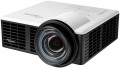 | 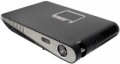 |
|---|---|---|
| Optoma ML1050ST | Optoma ML1500e | |
from £288.21 | Outdated Product | |
| TOP sellers | ||
Built-in touch screen | ||
| Main function | portable | universal |
Lamp and image | ||
| Lamp type | LED | LED |
| Service life | 20000 h | 20000 h |
| Brightness | 1000 lm | 1500 lm |
| Dynamic contrast | 20 000:1 | 20 000:1 |
| Colour rendering | 1.07 billion colours | |
| Horizontal frequency | 15 – 91 kHz | 49.64 kHz |
| Frame rate | 24 – 85 Hz | 50 – 120 Hz |
Projection system | ||
| Technology | DLP | DLP |
| Real resolution | 1280x800 px | 1280x800 px |
| Image format support | 4:3, 16:9, 16:10 | 4:3, 16:9, 16:10 |
Projecting | ||
| Rear projection |  | |
| Throw distance, min | 0.43 m | 0.52 m |
| Throw distance, max | 3.44 m | 3 m |
| Image size | 25 – 100 " | 17 – 100 " |
| Throw ratio | 0.8:1 | |
| Zoom and focus | manual | manual |
| Keystone correction (vert), ± | 40 ° | |
Features | ||
| Features | MHL support 3D support | 3D support |
Hardware | ||
| Card reader | | |
| USB-A 2.0 | 1 pcs | |
| Number of speakers | 1 | |
| Sound power | 1 W | |
| Video connectors | VGA composite AV-input | |
| HDMI inputs | 1 | |
| HDMI version | v 1.4 | |
| Audio connectors | 3.5 mm output (mini-Jack) | 3.5 mm input (mini-Jack) 3.5 mm output (mini-Jack) |
| Service connectors | USB (slave) | |
General | ||
| Noise level (nominal) | 24 dB | 30 dB |
| Noise level (energy-saving / quiet) | 22 dB | |
| Power source | mains | mains |
| Power consumption | 77 W | 145 W |
| Size (HxWxD) | 57x112x123 mm | 48x270x170 mm |
| Weight | 0.42 kg | 1.4 kg |
| Color | ||
| Added to E-Catalog | june 2018 | may 2017 |


Compare Optoma ML1050ST and ML1500e
Optoma projectors ML1050ST and ML1500e have similar characteristics but differ in purpose and performance. The ML1050ST is a portable projector with a brightness of 1000 lumens and a weight of only 0.42 kg, making it convenient for carrying. It supports 3D and has a lamp life of 20,000 hours. Meanwhile, the ML1500e is a versatile projector with a brightness of 1500 lumens and a weight of 1.4 kg, which provides a brighter image but makes it less portable. It also supports 3D and has a built-in touch screen, adding convenience to its use. Users note that the ML1500e is better suited for more stationary use, whereas the ML1050ST is ideal for travel and on-the-go presentations.
You may be interested in
My comparisons
Optoma ML1500e often compared

Glossary
Main function
Main purpose of the projector.
This parameter is somewhat subjective and largely depends on how the device is positioned by the manufacturer; nevertheless, for the most comfortable use, it is best to follow the stated purpose. The options may include: universal, for presentations, for home theater, professional, portable, gaming. Here is a more detailed description of each option:
— Universal. The simplest type of projector, roughly speaking—any model that does not belong to one of the specializations described below. Most have fixed optics, a projection distance of 1 – 12 m, an image diagonal of approximately 1 – 7 m (see below), and a relatively low price.
— For presentations. Projectors primarily intended for business use, particularly for giving presentations. They generally have a short projection distance with a fairly large image diagonal, allowing them to be used in small rooms; they can work with both widescreen and standard image formats (see below), and support resolutions typical of computer graphics cards—for example, 1280х800. At the same time, the native resolution itself (see below) may be quite low. In addition, an almost mandatory feature of this type of projector—with rare exceptions—is a 15-pin D-Sub...input (see “Connectors”).
— For home theater. Projectors intended primarily for watching films. The main criterion for assigning a particular model to this category is how the projector is positioned by the manufacturer itself (in other words, whether this purpose is specified in the official documentation). However, there are also some common features: cinema-oriented models generally support widescreen image formats, have a high native resolution (see below), allowing them to work with HD video, and are equipped with the appropriate interfaces (see “Connectors”).
— Professional. High-end projectors with advanced specifications, numerous features and, accordingly, a considerable price. They are characterized by high image contrast ratios, support high-resolution video (including cinematic image formats), feature optical zoom for scaling the image without loss of quality, allow the connection of multichannel audio systems, and much more. The specific set of options in professional projectors may vary depending on the model, but in any case, these are fully loaded devices with top-tier specifications.
— Portable projector. An ultra-compact type of projector: most models are small enough to be carried in a pocket. These devices are primarily intended for giving impromptu presentations. Their form factor and power supply can vary. Some models are standalone devices with their own built-in storage and batteries (and sometimes even a full-fledged mobile OS such as Android on board). Others are designed like external cases or add-ons and, when in use, are attached directly to a mobile phone, using it as the signal and power source. However, in all cases, portable projectors have rather modest specifications due to their small size—for example, they have neither high brightness nor high image contrast. Battery life (in models with their own batteries) generally ranges from 40 minutes to an hour and a half. Energy-efficient LED lamps are also characteristic of this type (see below).
— Gaming. Specialized projectors intended for use with video games. Externally, they often feature a distinctive “aggressive” design, which may follow the style of a particular line of gaming PCs or laptops. As the name suggests, their practical specifications are primarily geared toward delivering a high-quality gaming image. To this end, projectors for this purpose typically offer, among other things, high native resolution (at least 1920х720, and more often 1920х1080 or higher), color reproduction of 1 billion colors, support for refresh rates (see below) of up to 120 Hz inclusive, and at least one HDMI input for receiving a digital signal from a computer graphics card. In addition, such models often support 3D. The maximum image diagonal may reach 7.5 m or more; this category also includes ultra-wide-angle devices capable of providing an image diagonal of about 3 m from a distance of about half a meter.
This parameter is somewhat subjective and largely depends on how the device is positioned by the manufacturer; nevertheless, for the most comfortable use, it is best to follow the stated purpose. The options may include: universal, for presentations, for home theater, professional, portable, gaming. Here is a more detailed description of each option:
— Universal. The simplest type of projector, roughly speaking—any model that does not belong to one of the specializations described below. Most have fixed optics, a projection distance of 1 – 12 m, an image diagonal of approximately 1 – 7 m (see below), and a relatively low price.
— For presentations. Projectors primarily intended for business use, particularly for giving presentations. They generally have a short projection distance with a fairly large image diagonal, allowing them to be used in small rooms; they can work with both widescreen and standard image formats (see below), and support resolutions typical of computer graphics cards—for example, 1280х800. At the same time, the native resolution itself (see below) may be quite low. In addition, an almost mandatory feature of this type of projector—with rare exceptions—is a 15-pin D-Sub...input (see “Connectors”).
— For home theater. Projectors intended primarily for watching films. The main criterion for assigning a particular model to this category is how the projector is positioned by the manufacturer itself (in other words, whether this purpose is specified in the official documentation). However, there are also some common features: cinema-oriented models generally support widescreen image formats, have a high native resolution (see below), allowing them to work with HD video, and are equipped with the appropriate interfaces (see “Connectors”).
— Professional. High-end projectors with advanced specifications, numerous features and, accordingly, a considerable price. They are characterized by high image contrast ratios, support high-resolution video (including cinematic image formats), feature optical zoom for scaling the image without loss of quality, allow the connection of multichannel audio systems, and much more. The specific set of options in professional projectors may vary depending on the model, but in any case, these are fully loaded devices with top-tier specifications.
— Portable projector. An ultra-compact type of projector: most models are small enough to be carried in a pocket. These devices are primarily intended for giving impromptu presentations. Their form factor and power supply can vary. Some models are standalone devices with their own built-in storage and batteries (and sometimes even a full-fledged mobile OS such as Android on board). Others are designed like external cases or add-ons and, when in use, are attached directly to a mobile phone, using it as the signal and power source. However, in all cases, portable projectors have rather modest specifications due to their small size—for example, they have neither high brightness nor high image contrast. Battery life (in models with their own batteries) generally ranges from 40 minutes to an hour and a half. Energy-efficient LED lamps are also characteristic of this type (see below).
— Gaming. Specialized projectors intended for use with video games. Externally, they often feature a distinctive “aggressive” design, which may follow the style of a particular line of gaming PCs or laptops. As the name suggests, their practical specifications are primarily geared toward delivering a high-quality gaming image. To this end, projectors for this purpose typically offer, among other things, high native resolution (at least 1920х720, and more often 1920х1080 or higher), color reproduction of 1 billion colors, support for refresh rates (see below) of up to 120 Hz inclusive, and at least one HDMI input for receiving a digital signal from a computer graphics card. In addition, such models often support 3D. The maximum image diagonal may reach 7.5 m or more; this category also includes ultra-wide-angle devices capable of providing an image diagonal of about 3 m from a distance of about half a meter.
Brightness
The brightness of the image produced by the projector at maximum backlight brightness. Usually, the average brightness of the screen, derived from a special formula, is indicated. The higher it is, the less the image depends on ambient light: a bright projector can provide a clearly visible image even in daylight, but a dim one will require dimming. On the other hand, increasing brightness reduces contrast and accuracy of colour reproduction.
Accordingly, when choosing this parameter, you need to consider the conditions in which you plan to use the projector. So, for office or school/university use, a brightness of at least 3000 lm is desirable — this allows you to get normal visibility without obscuring the room. In turn, among the top models a very low brightness can be found, because. such projectors are usually installed in rooms specially designed for them with good darkness level. And in ultra-compact devices it is impossible to achieve high brightness for technical reasons.
Detailed recommendations on the optimal brightness for certain conditions can be found in special sources. Here we note that anyway, it is worth choosing according to this indicator with some margin. As mentioned above, as brightness increases, contrast and colour quality decrease, and you may need to use the projector at a reduced brightness to achieve the desired picture quality.
Accordingly, when choosing this parameter, you need to consider the conditions in which you plan to use the projector. So, for office or school/university use, a brightness of at least 3000 lm is desirable — this allows you to get normal visibility without obscuring the room. In turn, among the top models a very low brightness can be found, because. such projectors are usually installed in rooms specially designed for them with good darkness level. And in ultra-compact devices it is impossible to achieve high brightness for technical reasons.
Detailed recommendations on the optimal brightness for certain conditions can be found in special sources. Here we note that anyway, it is worth choosing according to this indicator with some margin. As mentioned above, as brightness increases, contrast and colour quality decrease, and you may need to use the projector at a reduced brightness to achieve the desired picture quality.
Colour rendering
The number of individual colour shades that the projector is capable of displaying.
The minimum indicator for modern projection technology is actually 16 million colours (more precisely, 16.7 million is a standard number associated with the features of digital image processing). In the most advanced models, this value can exceed 1 billion. However, two nuances should be taken into account here: firstly, the human eye is able to recognize only about 10 million colour shades, and secondly, not a single modern image output device (projectors, monitors, etc.) cannot cover the entire spectrum of colours visible to the human eye. Therefore, impressive colour performance is more of a marketing ploy than a real indicator of image quality, and in fact it makes sense to pay attention to other characteristics — primarily brightness and contrast (see above), as well as specific data like a colour gamut chart.
The minimum indicator for modern projection technology is actually 16 million colours (more precisely, 16.7 million is a standard number associated with the features of digital image processing). In the most advanced models, this value can exceed 1 billion. However, two nuances should be taken into account here: firstly, the human eye is able to recognize only about 10 million colour shades, and secondly, not a single modern image output device (projectors, monitors, etc.) cannot cover the entire spectrum of colours visible to the human eye. Therefore, impressive colour performance is more of a marketing ploy than a real indicator of image quality, and in fact it makes sense to pay attention to other characteristics — primarily brightness and contrast (see above), as well as specific data like a colour gamut chart.
Horizontal frequency
Horizontal frequency supported by the projector.
This parameter is relevant when working with analogue video signal. In such a video, the image is formed line by line: each pixel in the line is highlighted in turn, then the next line is highlighted, and so on. The horizontal frequency describes how many times per second the backlight beam runs from edge to edge of the screen. For normal playback, the projector must support the same refresh rate as the input signal was recorded. However, most models support a fairly wide range of frequencies, and there are no problems with support. Also note that if you are not a professional, then when choosing a projector, it is quite possible to focus on the frame rate (see below) — this parameter is simpler and more intuitive, and support for a certain frame rate automatically means support for the corresponding line rate.
This parameter is relevant when working with analogue video signal. In such a video, the image is formed line by line: each pixel in the line is highlighted in turn, then the next line is highlighted, and so on. The horizontal frequency describes how many times per second the backlight beam runs from edge to edge of the screen. For normal playback, the projector must support the same refresh rate as the input signal was recorded. However, most models support a fairly wide range of frequencies, and there are no problems with support. Also note that if you are not a professional, then when choosing a projector, it is quite possible to focus on the frame rate (see below) — this parameter is simpler and more intuitive, and support for a certain frame rate automatically means support for the corresponding line rate.
Frame rate
Frame rate, simply put, is the frame rate supported by the projector.
For normal playback, it is highly desirable that the frame rate of the projector match the original frame rate of the video signal. However, most modern models do not support a specific frame rate, but a whole range of frequencies, and quite an extensive one at that.
Note that for viewing most video materials, the range from 24 to 60 fps is quite enough. The exception is 3D content, which may require double the frame rate, up to 120Hz (see " 3D Support " for details).
For normal playback, it is highly desirable that the frame rate of the projector match the original frame rate of the video signal. However, most modern models do not support a specific frame rate, but a whole range of frequencies, and quite an extensive one at that.
Note that for viewing most video materials, the range from 24 to 60 fps is quite enough. The exception is 3D content, which may require double the frame rate, up to 120Hz (see " 3D Support " for details).
Throw distance, min
The closest distance to the screen that the projector can be used on. Typically, this is the minimum distance at which the image from the projector remains in focus.
This parameter is especially important if the device is to be placed at a small distance from the screen (for example, in a cramped room). Some modern projectors are able to work normally at a distance of 10 – 20 cm. Also note that the throw distances are determined primarily by the lens, and if the initial range of these distances does not suit you, perhaps the situation can be solved by replacing the optics.
This parameter is especially important if the device is to be placed at a small distance from the screen (for example, in a cramped room). Some modern projectors are able to work normally at a distance of 10 – 20 cm. Also note that the throw distances are determined primarily by the lens, and if the initial range of these distances does not suit you, perhaps the situation can be solved by replacing the optics.
Throw distance, max
The farthest distance from the screen that the projector can be used on. This is the maximum distance at which the image remains in focus and maintains acceptable brightness — at least enough for viewing in a darkened room on a high-quality screen.
It is necessary to choose according to this parameter taking into account the expected operating conditions and the distances to be dealt with. At the same time, it's ok to have a certain margin for the maximum distance — since, as already mentioned, it is usually indicated for an perfect screen and a darkened room, and such conditions are not always available. Also note that although the throw distances depend on the lens, not every projector with an interchangeable lens allows the installation of more "long-range" optics than the standard one — the device may simply not have enough brightness for an increased distance.
It is necessary to choose according to this parameter taking into account the expected operating conditions and the distances to be dealt with. At the same time, it's ok to have a certain margin for the maximum distance — since, as already mentioned, it is usually indicated for an perfect screen and a darkened room, and such conditions are not always available. Also note that although the throw distances depend on the lens, not every projector with an interchangeable lens allows the installation of more "long-range" optics than the standard one — the device may simply not have enough brightness for an increased distance.
Image size
Size of the image projected by the projector. Usually, it is indicated as a range — from the smallest, at the minimum throw distance, to the largest, at the maximum. About throw distances, see above; here it is worth saying that the choice of diagonal size depends both on the distance between the screen and the audience, and on the format of the projector. For example, to watch a video, the best option is the situation when the distance from the viewer to the image corresponds to 3-4 diagonals, and a relatively large picture can be useful for working with presentations. More detailed recommendations for different situations can be found in special sources; here we only recall that the image must fit on the screen used with the projector.
Throw ratio
The projector's throw distance is vital in determining what size projection screen to use and how far away it should be from the projector. Most projectors have a variable throw ratio. In the extreme positions, these are wide-angle mode (smallest value) and telephoto lens mode (largest value). Knowing these values, you will be able to determine the range of throw distances within which the projector must be placed in order for the projected image to match the specified dimensions of the projection screen.
According to these values, you need to check or set the optical zoom. We divide the larger value by the smaller value, and we get a figure, for example 1.33-2.16: 1.
If we want to calculate whether this projector is suitable for a certain image size, we do this: 1.33*3 (image width)=the distance at which the projector should hang.
According to these values, you need to check or set the optical zoom. We divide the larger value by the smaller value, and we get a figure, for example 1.33-2.16: 1.
If we want to calculate whether this projector is suitable for a certain image size, we do this: 1.33*3 (image width)=the distance at which the projector should hang.