
Comparison BenQ TH535 vs BenQ TW535
Add to comparison | 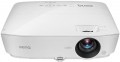 | 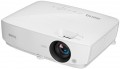 |
|---|---|---|
| BenQ TH535 | BenQ TW535 | |
from £870.00 | Outdated Product | |
| TOP sellers | ||
| Main function | home | home |
Lamp and image | ||
| Lamp type | UHP | |
| Lamp model | 5J.JFH05.001 | 5J.JG705.001 |
| Service life | 5000 h | 5000 h |
| Service life (energy-saving) | 10000 h | 10000 h |
| Lamp power | 203 W | 203 W |
| Brightness | 3500 lm | |
| Brightness ANSI Lumens | 3600 lm | |
| Dynamic contrast | 15 000:1 | 15 000:1 |
| Horizontal frequency | 15 – 102 kHz | 15 – 102 kHz |
| Frame rate | 23 – 120 Hz | 23 – 120 Hz |
Projection system | ||
| Technology | DLP | DLP |
| Real resolution | 1920x1080 px | 1280x800 px |
| Image format support | 4:3, 5:4, 16:9, 16:10 | 4:3, 5:4, 16:9, 16:10 |
Projecting | ||
| Rear projection |  | |
| Throw distance, min | 1.8 m | 1.18 m |
| Throw distance, max | 11.2 m | 12.98 m |
| Image size | 60 – 300 " | 30 – 300 " |
| Throw ratio | 1.37:1 – 1.64:1 | 1.55:1 – 1.86:1 |
| Optical zoom | 1.2 x | 1.2 x |
| Zoom and focus | manual | manual |
| Lens shift |  | |
| Keystone correction (vert), ± | 40 ° | |
Features | ||
| Features | 3D support | 3D support |
Hardware | ||
| Number of speakers | 1 | 1 |
| Sound power | 2 W | 2 W |
| Video connectors | VGA S-Video composite AV-input | VGA S-Video composite AV-input |
| HDMI inputs | 2 | 2 |
| Audio connectors | 3.5 mm input (mini-Jack) 3.5 mm output (mini-Jack) | 3.5 mm input (mini-Jack) 3.5 mm output (mini-Jack) |
| Service connectors | COM port (RS-232) USB (slave) | COM port (RS-232) USB (slave) |
General | ||
| Noise level (nominal) | 32 dB | 32 dB |
| Noise level (energy-saving / quiet) | 29 dB | 29 dB |
| Power source | mains | mains |
| Power consumption | 252 W | 260 W |
| Size (HxWxD) | 99x341x332 mm | 99x332x214 mm |
| Weight | 2.42 kg | 2.41 kg |
| Color | ||
| Added to E-Catalog | april 2019 | january 2019 |


Compare BenQ TH535 and TW535
BenQ TH535 and BenQ TW535 projectors are designed for home theater and have similar features, however, there are important differences. The TH535 offers a brightness of 3500 lm and a resolution of 1920x1080 pixels, providing a sharper image, while the TW535 has a brightness of 3600 lm, but a resolution of 1280x800 pixels, which may be less preferable for viewing high-quality content. Both projectors support 3D and have similar parameters in terms of lamp life (5000 h) and noise level (32 dB). The projection distance for the TH535 is 1.8 – 11.2 m, and for the TW535, it is 1.2 – 13.0 m, making the TW535 more versatile for different installation conditions. Overall, the choice between them depends on preferences in resolution and projection conditions.
You may be interested in
BenQ TH535 often compared


Glossary
Lamp type
— HD (High-intensity discharge). General name for gas discharge lamps, i.e. lamps in which the light flow is created by an electrical discharge between the electrodes inside the bulb. In the case of projectors, such lamps can be mercury, metal-halide, and xenon (see above for more details).
— LED. LEDs are used as a light source. They provide high brightness with low power consumption.
— Laser-LED. Light source based on laser LEDs. It has even greater brightness than classic LED, with relatively low power consumption.
— UHP (Ultra-high performance) — a high-pressure mercury lamp, developed by Philips. Compared to other lamps, it consumes less power, while not inferior in brightness. Projectors on such lamps are smaller and lighter than conventional ones due to a smaller power supply, the cooler operates with a lower noise level. The creators claimed a service life of up to 10,000 hours. One of the most popular types of lamps for projectors today
– UHE (Ultra-High Energy). Variety of UHP lamps (see above).
— UHB (Ultra-high brightness). Another kind of UHP lamps (see above).
— NSH (New Super High Pressure). Also applies to high pressure mercury lamps manufactured by Ushio. Somewhat less popular than UHP and its peers, but also widespread. Estimated operating time is about...2000 hours.
— SHP. High pressure mercury lamps manufactured by Phoenix.
— P-VIP (Video Projector) — a high-pressure mercury lamp from OSRAM. High brightness lamps, service life — 4000 — 6000 hours.
—UHM (Ultra High Performance Lamp of Matsushita) is a high pressure mercury lamp manufactured by Panasonic. Сan be easily changed, operating time, depending on type — 2000 — 5000 hours.
— Xenon. The design and principle of operation of such lamps are similar to high-pressure mercury lamps — light is created due to a discharge in a gaseous medium. However, instead of mercury vapor, in this case, an inert xenon gas under high pressure is used. This allows to create high power lamps (from 2 kW) with the appropriate light flow. Xenon lamps are used primarily in professional models.
— HPM. High-pressure mercury lamp technology developed by Sony and used primarily in its projectors (although other brands are also available). Combines compact size and relatively low cost with high brightness.
— DC. Abbreviation for "direct current". In the case of projector lamps, this designation usually refers to mercury lamps powered by direct current. The operating voltage of such lamps in different models of projectors may be different. Their design usually uses various tricks to improve performance compared to conventional lamps of this type — in particular, increase service life and reduce power consumption without sacrificing brightness.
— AC. This abbreviation stands for "alternating current". Such lamps are similar in almost everything to the DC ones described above, differing from them only in the type of power supply.
— LED. LEDs are used as a light source. They provide high brightness with low power consumption.
— Laser-LED. Light source based on laser LEDs. It has even greater brightness than classic LED, with relatively low power consumption.
— UHP (Ultra-high performance) — a high-pressure mercury lamp, developed by Philips. Compared to other lamps, it consumes less power, while not inferior in brightness. Projectors on such lamps are smaller and lighter than conventional ones due to a smaller power supply, the cooler operates with a lower noise level. The creators claimed a service life of up to 10,000 hours. One of the most popular types of lamps for projectors today
– UHE (Ultra-High Energy). Variety of UHP lamps (see above).
— UHB (Ultra-high brightness). Another kind of UHP lamps (see above).
— NSH (New Super High Pressure). Also applies to high pressure mercury lamps manufactured by Ushio. Somewhat less popular than UHP and its peers, but also widespread. Estimated operating time is about...2000 hours.
— SHP. High pressure mercury lamps manufactured by Phoenix.
— P-VIP (Video Projector) — a high-pressure mercury lamp from OSRAM. High brightness lamps, service life — 4000 — 6000 hours.
—UHM (Ultra High Performance Lamp of Matsushita) is a high pressure mercury lamp manufactured by Panasonic. Сan be easily changed, operating time, depending on type — 2000 — 5000 hours.
— Xenon. The design and principle of operation of such lamps are similar to high-pressure mercury lamps — light is created due to a discharge in a gaseous medium. However, instead of mercury vapor, in this case, an inert xenon gas under high pressure is used. This allows to create high power lamps (from 2 kW) with the appropriate light flow. Xenon lamps are used primarily in professional models.
— HPM. High-pressure mercury lamp technology developed by Sony and used primarily in its projectors (although other brands are also available). Combines compact size and relatively low cost with high brightness.
— DC. Abbreviation for "direct current". In the case of projector lamps, this designation usually refers to mercury lamps powered by direct current. The operating voltage of such lamps in different models of projectors may be different. Their design usually uses various tricks to improve performance compared to conventional lamps of this type — in particular, increase service life and reduce power consumption without sacrificing brightness.
— AC. This abbreviation stands for "alternating current". Such lamps are similar in almost everything to the DC ones described above, differing from them only in the type of power supply.
Lamp model
The lamp model that the projector is designed for. Most projectors come with lamps included, so this information is not needed for normal use. But when looking for a spare lamp or replacement, information about model can be very useful: finding a spare part by the exact name is much easier than by general data like the brand of the projector.
Brightness
The brightness of the image produced by the projector at maximum backlight brightness. Usually, the average brightness of the screen, derived from a special formula, is indicated. The higher it is, the less the image depends on ambient light: a bright projector can provide a clearly visible image even in daylight, but a dim one will require dimming. On the other hand, increasing brightness reduces contrast and accuracy of colour reproduction.
Accordingly, when choosing this parameter, you need to consider the conditions in which you plan to use the projector. So, for office or school/university use, a brightness of at least 3000 lm is desirable — this allows you to get normal visibility without obscuring the room. In turn, among the top models a very low brightness can be found, because. such projectors are usually installed in rooms specially designed for them with good darkness level. And in ultra-compact devices it is impossible to achieve high brightness for technical reasons.
Detailed recommendations on the optimal brightness for certain conditions can be found in special sources. Here we note that anyway, it is worth choosing according to this indicator with some margin. As mentioned above, as brightness increases, contrast and colour quality decrease, and you may need to use the projector at a reduced brightness to achieve the desired picture quality.
Accordingly, when choosing this parameter, you need to consider the conditions in which you plan to use the projector. So, for office or school/university use, a brightness of at least 3000 lm is desirable — this allows you to get normal visibility without obscuring the room. In turn, among the top models a very low brightness can be found, because. such projectors are usually installed in rooms specially designed for them with good darkness level. And in ultra-compact devices it is impossible to achieve high brightness for technical reasons.
Detailed recommendations on the optimal brightness for certain conditions can be found in special sources. Here we note that anyway, it is worth choosing according to this indicator with some margin. As mentioned above, as brightness increases, contrast and colour quality decrease, and you may need to use the projector at a reduced brightness to achieve the desired picture quality.
Brightness ANSI Lumens
This parameter largely determines the ability of the projector to work in a well-lit room. For a dark room, 1000 lumens is enough to make the projection picture bright, rich, clear and understandable. But when working in a lit room, the projector will need at least 3500-4000 lumens. Do not confuse ANSI lumens with Peak lumens. These are two different brightness standards. To convert one type of brightness to another, you need to multiply Peak lumens by 10-12. The result will be an approximate value of ANSI Lumens.
However, experts do not recommend chasing high ANSI lumen brightness values. There are many professional projectors with brightness up to 3500 lm. The lower the brightness, the lower the power consumption, and at the same time, the life of the illuminator increases. Of course, if the projector will be installed in a work office or classroom where good lighting is required, it is recommended to purchase a model with ANSI Lumens brightness of 4000 lumens and more.
Real resolution
The native resolution of the image produced by the projector matrix.
The minimum for modern projectors is actually the VGA standard, which assumes a resolution of 800x600 or close to it. The most limited of modern high-definition standards is HD (720); the classic size of such a frame is 1280x720, but projectors also have other options (up to 1920x720). A more advanced HD format is Full HD (1080), which also has several variations (the most popular is 1920x1080). And among high-end projectors there are models of Quad HD, Ultra HD (4K) and even Ultra HD (8K) standards.
In general, the higher the resolution, the clearer and more detailed image the projector can produce. On the other hand, this indicator directly affects the cost, and all the benefits of high resolution can only be appreciated if the reproduced content also corresponds to it. Note that modern projectors can work with higher resolutions than the “native” ones – for more details, see “Maximum video resolution”.
The minimum for modern projectors is actually the VGA standard, which assumes a resolution of 800x600 or close to it. The most limited of modern high-definition standards is HD (720); the classic size of such a frame is 1280x720, but projectors also have other options (up to 1920x720). A more advanced HD format is Full HD (1080), which also has several variations (the most popular is 1920x1080). And among high-end projectors there are models of Quad HD, Ultra HD (4K) and even Ultra HD (8K) standards.
In general, the higher the resolution, the clearer and more detailed image the projector can produce. On the other hand, this indicator directly affects the cost, and all the benefits of high resolution can only be appreciated if the reproduced content also corresponds to it. Note that modern projectors can work with higher resolutions than the “native” ones – for more details, see “Maximum video resolution”.
Throw distance, min
The closest distance to the screen that the projector can be used on. Typically, this is the minimum distance at which the image from the projector remains in focus.
This parameter is especially important if the device is to be placed at a small distance from the screen (for example, in a cramped room). Some modern projectors are able to work normally at a distance of 10 – 20 cm. Also note that the throw distances are determined primarily by the lens, and if the initial range of these distances does not suit you, perhaps the situation can be solved by replacing the optics.
This parameter is especially important if the device is to be placed at a small distance from the screen (for example, in a cramped room). Some modern projectors are able to work normally at a distance of 10 – 20 cm. Also note that the throw distances are determined primarily by the lens, and if the initial range of these distances does not suit you, perhaps the situation can be solved by replacing the optics.
Throw distance, max
The farthest distance from the screen that the projector can be used on. This is the maximum distance at which the image remains in focus and maintains acceptable brightness — at least enough for viewing in a darkened room on a high-quality screen.
It is necessary to choose according to this parameter taking into account the expected operating conditions and the distances to be dealt with. At the same time, it's ok to have a certain margin for the maximum distance — since, as already mentioned, it is usually indicated for an perfect screen and a darkened room, and such conditions are not always available. Also note that although the throw distances depend on the lens, not every projector with an interchangeable lens allows the installation of more "long-range" optics than the standard one — the device may simply not have enough brightness for an increased distance.
It is necessary to choose according to this parameter taking into account the expected operating conditions and the distances to be dealt with. At the same time, it's ok to have a certain margin for the maximum distance — since, as already mentioned, it is usually indicated for an perfect screen and a darkened room, and such conditions are not always available. Also note that although the throw distances depend on the lens, not every projector with an interchangeable lens allows the installation of more "long-range" optics than the standard one — the device may simply not have enough brightness for an increased distance.
Image size
Size of the image projected by the projector. Usually, it is indicated as a range — from the smallest, at the minimum throw distance, to the largest, at the maximum. About throw distances, see above; here it is worth saying that the choice of diagonal size depends both on the distance between the screen and the audience, and on the format of the projector. For example, to watch a video, the best option is the situation when the distance from the viewer to the image corresponds to 3-4 diagonals, and a relatively large picture can be useful for working with presentations. More detailed recommendations for different situations can be found in special sources; here we only recall that the image must fit on the screen used with the projector.
Throw ratio
The projector's throw distance is vital in determining what size projection screen to use and how far away it should be from the projector. Most projectors have a variable throw ratio. In the extreme positions, these are wide-angle mode (smallest value) and telephoto lens mode (largest value). Knowing these values, you will be able to determine the range of throw distances within which the projector must be placed in order for the projected image to match the specified dimensions of the projection screen.
According to these values, you need to check or set the optical zoom. We divide the larger value by the smaller value, and we get a figure, for example 1.33-2.16: 1.
If we want to calculate whether this projector is suitable for a certain image size, we do this: 1.33*3 (image width)=the distance at which the projector should hang.
According to these values, you need to check or set the optical zoom. We divide the larger value by the smaller value, and we get a figure, for example 1.33-2.16: 1.
If we want to calculate whether this projector is suitable for a certain image size, we do this: 1.33*3 (image width)=the distance at which the projector should hang.