
Comparison In-Sink-Erator Evolution 100 Supreme vs In-Sink-Erator Evolution 150
Add to comparison | 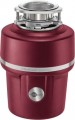 | 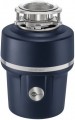 |
|---|---|---|
| In-Sink-Erator Evolution 100 Supreme | In-Sink-Erator Evolution 150 | |
| Outdated Product | Outdated Product | |
| TOP sellers | ||
Small length. Dura-Drive induction motor. Evolution silent 2-stage waste processing technology. QuickLock fast mounting systems. Auto-reverse. | ||
| Power | 0.75 hp | 0.75 hp |
| Number of revolutions | 1425 rpm | 1425 rpm |
| Chamber capacity | 1005 mL | 1005 mL |
| Grinding stages | 2 | 2 |
| Chamber material | metal | metal |
| Auto-reverse |  | |
| Overload protection | | |
| Noise level | 30 dB | |
| Dimensions (HxD) | 312x205 mm | 311x222 mm |
| Weight | 8.8 kg | 8.8 kg |
| Manufacturer's warranty | 5 years | 7 years |
| Added to E-Catalog | july 2019 | december 2017 |


Compare In-Sink-Erator Evolution 100 Supreme and Evolution 150
You may be interested in
In-Sink-Erator Evolution 100 Supreme often compared


In-Sink-Erator Evolution 150 often compared


Glossary
Noise level
The average noise level generated by the device during normal operation.
A waste disposal unit that produces less noise is more convenient to use, especially in situations where loud noises are unwanted, such as having a baby in the house or working in the kitchen late at night. However, it's important to consider that a powerful motor and a metal chamber may increase the noise level despite having advanced features.
Decibel values are used to indicate the noise level of waste disposal units, and it is a non-linear quantity. The easiest way to assess the noise is by comparing values in tables. Below is a simple table of noise values that are relevant for modern devices:
— 25 – 26 dB — the volume of a person's whisper at a distance of about 1 m, the noise level of the quietest models;
— 30 dB — the noise level that is acceptable for residential premises at night according to health regulations is equivalent to a soft whisper or a constant background noise at its maximum volume.;
— 35 dB — talking in an undertone;
— 40 dB — normal speech, the maximum volume of a constant background noise, permissible in living quarters during the day;
— 50 dB — conversation in slightly raised tones;
— 60 dB — loud conversation;
— 70 dB — The noise level of several loud conversations occurring within a range of approximately 1 m from each other;
— 73 – 75 dB — scream or loud laughter; the maximum noise level enco...untered in waste disposal units.
A waste disposal unit that produces less noise is more convenient to use, especially in situations where loud noises are unwanted, such as having a baby in the house or working in the kitchen late at night. However, it's important to consider that a powerful motor and a metal chamber may increase the noise level despite having advanced features.
Decibel values are used to indicate the noise level of waste disposal units, and it is a non-linear quantity. The easiest way to assess the noise is by comparing values in tables. Below is a simple table of noise values that are relevant for modern devices:
— 25 – 26 dB — the volume of a person's whisper at a distance of about 1 m, the noise level of the quietest models;
— 30 dB — the noise level that is acceptable for residential premises at night according to health regulations is equivalent to a soft whisper or a constant background noise at its maximum volume.;
— 35 dB — talking in an undertone;
— 40 dB — normal speech, the maximum volume of a constant background noise, permissible in living quarters during the day;
— 50 dB — conversation in slightly raised tones;
— 60 dB — loud conversation;
— 70 dB — The noise level of several loud conversations occurring within a range of approximately 1 m from each other;
— 73 – 75 dB — scream or loud laughter; the maximum noise level enco...untered in waste disposal units.