
Comparison Honor Sport vs JBL E25BT
Add to comparison | 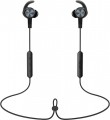 | 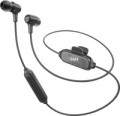 |
|---|---|---|
| Honor Sport | JBL E25BT | |
from £14.69 | from £59.95 | |
| User reviews | ||
| TOP sellers | ||
Increased battery life. Balanced remote control and magnetic mounts. | 4 colour solutions. Clip-holder. | |
Connection and design | ||
| Features | for active sports | |
| Design | in-ear | in-ear |
| Connection type | wireless | wireless |
| Connection | Bluetooth v4.1 | Bluetooth v4.1 |
| Range | 10 m | 10 m |
| Cable type | round | round |
Specs | ||
| Impedance | 32 Ohm | 16 Ohm |
| Frequency range | 20 – 20000 Hz | 20 – 20000 Hz |
| Sensitivity | 98 dB | |
| Speaker size | 11 mm | 8.6 mm |
| Emitter type | dynamic | dynamic |
Microphone specs | ||
| Microphone | on cable | on cable |
Features | ||
| Volume control |  | |
| Multipoint |  | |
Power supply | ||
| Power source | battery | battery |
| Headphone battery capacity | 135 mAh | |
| Charging time | 2 h | 2 h |
| Operating time (music) | 11 h | 8 h |
| Charging port | microUSB | |
General | ||
| Magnetic mount | | |
| Waterproof | IPX2 | |
| Weight | 10 g | 17 g |
| In box | silicone tips sheath | silicone tips |
| Color | ||
| Added to E-Catalog | september 2017 | december 2016 |


Compare Honor Sport and JBL E25BT
You may be interested in
Honor Sport often compared


JBL E25BT often compared


Glossary
Features
This parameter is specified only for specialized models, not related to general-purpose earphones. Nowadays, headphones can be found with such specializations as: gaming, for active sports, office, monitor (aka studio), for DJs, for children, for sleeping. Here is a more detailed description of these varieties:
— Gaming. Headphones mainly intended for use in games, primarily with PCs and laptops (a separate variety is produced for consoles, see more about it below). They stand out externally primarily by their design, which is usually quite bright and aggressive. Most of these models have an overhead design, most often the full-size “Over Ear” format (see “Design”), which provides the maximum immersive effect in the game. Other designs are also available, though much less frequently. A microphone is practically an obligatory feature for voice communication in online games. Additionally, most multi-channel models belong to this category (see “Sound”), as such sound is particularly important for games.
— For active sports. Headphones well-suited for sports activities. Firstly, such devices must have additional fixation in the ears or on the head to keep their position during intense moveme...nts; secondly, they should be resistant to sweat (ideally to rain, snow, and other atmospheric conditions). With rare exceptions, sports headphones are wireless to avoid inconvenience during movement. Sport models usually refer to in-ear, earbuds, and some on-ear headphones. Their key common traits are a secure fit and some level of IP water resistance (see “Protection level (IP)”).
— Office. Office headphones are intended for consultants, support operators, and other employees who frequently engage in voice communication via phone or Internet. Therefore, one of the main features of such models is the presence of a microphone. Among office headphones, models for one ear (see “Sound — mono”) are quite popular, allowing the user to hear both the conversation and the surrounding environment simultaneously. Many of these headphones connect via USB (see “Connection”), considering that inexpensive office computers may lack specialized audio outputs. A small control panel for IP telephony may be included on the USB plug, allowing functions such as accepting and rejecting calls. There are also wireless models (usually connecting via a radio channel, less often via Bluetooth) and specialized solutions for connecting to telephones with specific connectors.
— Monitor (studio). Headphones designed for professional sound recording and sound equipment tuning. They are wired only. However, the key feature of these models lies elsewhere: they have a flat frequency response, providing nearly equal loudness across all frequency bands, and a wide working range, often exceeding the limits of the human-audible frequency range. As a result, these headphones can clearly reveal any audio signal flaws, including details unnoticeable with traditional headphones; these capabilities are invaluable in professional sound work. On the other hand, for this reason, there's no point in using monitor models for everyday music listening: they not only reveal different recording flaws but also impart a sound coloration that is unusual and even unpleasant for the average user.
— For DJs. Headphones initially designed for professional DJs to use when mixing tracks. They are quite similar to the monitor models described above - particularly featuring a very flat frequency response for accurate sound reproduction and a wide frequency range. In addition, DJ headphones are usually closed-back and generally have high sound isolation quality, ensuring good audibility even in quite noisy environments.
— For kids. They differ from “adult” models mainly in appearance - both in smaller sizes and (in most models) in distinctive bright designs. Additionally, children's hearing is more sensitive to loud sounds, and excessively high volume is highly undesirable for a child (including psychological reasons). In this light, children's headphones may have specific features - for instance, slightly reduced sensitivity to prevent high sound levels or a volume limiter that only adults can control.
— For sleeping. Miniature headphones with a special anatomical design, allowing comfortable sleep while lying on your side without ear discomfort. To reduce surrounding noise, passive noise cancellation is typically included in their design. Such headphones can be used for listening to music, broadcasting white noise, nature sounds, or waves. Advanced models also monitor sleep quality, and the alarm clock function plays a melody for waking up at a set time. These headphones are frequently called electronic earplugs.
— Gaming. Headphones mainly intended for use in games, primarily with PCs and laptops (a separate variety is produced for consoles, see more about it below). They stand out externally primarily by their design, which is usually quite bright and aggressive. Most of these models have an overhead design, most often the full-size “Over Ear” format (see “Design”), which provides the maximum immersive effect in the game. Other designs are also available, though much less frequently. A microphone is practically an obligatory feature for voice communication in online games. Additionally, most multi-channel models belong to this category (see “Sound”), as such sound is particularly important for games.
— For active sports. Headphones well-suited for sports activities. Firstly, such devices must have additional fixation in the ears or on the head to keep their position during intense moveme...nts; secondly, they should be resistant to sweat (ideally to rain, snow, and other atmospheric conditions). With rare exceptions, sports headphones are wireless to avoid inconvenience during movement. Sport models usually refer to in-ear, earbuds, and some on-ear headphones. Their key common traits are a secure fit and some level of IP water resistance (see “Protection level (IP)”).
— Office. Office headphones are intended for consultants, support operators, and other employees who frequently engage in voice communication via phone or Internet. Therefore, one of the main features of such models is the presence of a microphone. Among office headphones, models for one ear (see “Sound — mono”) are quite popular, allowing the user to hear both the conversation and the surrounding environment simultaneously. Many of these headphones connect via USB (see “Connection”), considering that inexpensive office computers may lack specialized audio outputs. A small control panel for IP telephony may be included on the USB plug, allowing functions such as accepting and rejecting calls. There are also wireless models (usually connecting via a radio channel, less often via Bluetooth) and specialized solutions for connecting to telephones with specific connectors.
— Monitor (studio). Headphones designed for professional sound recording and sound equipment tuning. They are wired only. However, the key feature of these models lies elsewhere: they have a flat frequency response, providing nearly equal loudness across all frequency bands, and a wide working range, often exceeding the limits of the human-audible frequency range. As a result, these headphones can clearly reveal any audio signal flaws, including details unnoticeable with traditional headphones; these capabilities are invaluable in professional sound work. On the other hand, for this reason, there's no point in using monitor models for everyday music listening: they not only reveal different recording flaws but also impart a sound coloration that is unusual and even unpleasant for the average user.
— For DJs. Headphones initially designed for professional DJs to use when mixing tracks. They are quite similar to the monitor models described above - particularly featuring a very flat frequency response for accurate sound reproduction and a wide frequency range. In addition, DJ headphones are usually closed-back and generally have high sound isolation quality, ensuring good audibility even in quite noisy environments.
— For kids. They differ from “adult” models mainly in appearance - both in smaller sizes and (in most models) in distinctive bright designs. Additionally, children's hearing is more sensitive to loud sounds, and excessively high volume is highly undesirable for a child (including psychological reasons). In this light, children's headphones may have specific features - for instance, slightly reduced sensitivity to prevent high sound levels or a volume limiter that only adults can control.
— For sleeping. Miniature headphones with a special anatomical design, allowing comfortable sleep while lying on your side without ear discomfort. To reduce surrounding noise, passive noise cancellation is typically included in their design. Such headphones can be used for listening to music, broadcasting white noise, nature sounds, or waves. Advanced models also monitor sleep quality, and the alarm clock function plays a melody for waking up at a set time. These headphones are frequently called electronic earplugs.
Impedance
Impedance refers to the headphone's nominal resistance to AC current, such as an audio signal.
Other things being equal, a higher impedance reduces distortion, but requires a more powerful amplifier — otherwise the headphones simply will not be able to produce sufficient volume. Thus, the choice of resistance depends primarily on which signal source you plan to connect the "ears". So, for a portable gadget (smartphone, pocket player), an indicator of 16 ohms or less is considered optimal, 17 – 32 ohms is not bad. Higher values — 33 – 64 ohms and 65 – 96 ohms — will require quite powerful amplifiers, like those used in computers and televisions. And models with a resistance of 96 – 250 ohms and above are designed mainly for Hi-End audio equipment and professional use; for such cases, detailed recommendations for selection can be found in special sources.
Other things being equal, a higher impedance reduces distortion, but requires a more powerful amplifier — otherwise the headphones simply will not be able to produce sufficient volume. Thus, the choice of resistance depends primarily on which signal source you plan to connect the "ears". So, for a portable gadget (smartphone, pocket player), an indicator of 16 ohms or less is considered optimal, 17 – 32 ohms is not bad. Higher values — 33 – 64 ohms and 65 – 96 ohms — will require quite powerful amplifiers, like those used in computers and televisions. And models with a resistance of 96 – 250 ohms and above are designed mainly for Hi-End audio equipment and professional use; for such cases, detailed recommendations for selection can be found in special sources.
Sensitivity
Rated headphone sensitivity. Technically, this is the volume at which they sound when a certain standard signal from the amplifier is connected to them. Thus, sensitivity is one of the parameters that determine the overall volume of the headphones: the higher it is, the louder the sound will be with the same input signal level and other things being equal. However, we must not forget that the volume level also depends on the resistance (impedance, see above); moreover, it is worth choosing “ears” for a specific device first by impedance, and only then by sensitivity. In this case, one parameter can be compensated for by another: for example, a model with high resistance and high sensitivity can work even on a relatively weak amplifier.
As for specific figures, headphones with indicators of 100 dB or less are designed mainly for use in a quiet environment (in some similar models, the sensitivity does not exceed 90 dB). For use on the street, in transport and other similar conditions, it is desirable to have more sensitive headphones — about 101 – 105 dB, or even 110 dB. And in some models, this figure can reach 116 – 120 dB. and even more.
It is also worth noting that this parameter is relevant only for a wired connection according to the analogue standard — for example, via a 3.5 mm mini-...jack. When using digital interfaces like USB and wireless channels like Bluetooth, the sound is processed in the built-in headphone converter, and if you plan to mainly use this kind of application, you can not pay much attention to sensitivity.
As for specific figures, headphones with indicators of 100 dB or less are designed mainly for use in a quiet environment (in some similar models, the sensitivity does not exceed 90 dB). For use on the street, in transport and other similar conditions, it is desirable to have more sensitive headphones — about 101 – 105 dB, or even 110 dB. And in some models, this figure can reach 116 – 120 dB. and even more.
It is also worth noting that this parameter is relevant only for a wired connection according to the analogue standard — for example, via a 3.5 mm mini-...jack. When using digital interfaces like USB and wireless channels like Bluetooth, the sound is processed in the built-in headphone converter, and if you plan to mainly use this kind of application, you can not pay much attention to sensitivity.
Speaker size
The diameter of the speaker installed in the headphones; models with multiple drivers (see "Number of drivers"), usually, the size of the largest speaker is taken into account, other dimensions can be specified in the notes.
In general, this parameter is relevant primarily for over-ear headphones (see "Design"). In them, emitters can have different sizes; the larger it is, the more saturated the sound is and the better the speaker reproduces the bass, however, large emitters have a corresponding effect on the dimensions, weight and price of the headphones. But in-ear "ears" and earbuds, by definition, have very small speakers, and rich bass in them is achieved due to other design features.
In general, this parameter is relevant primarily for over-ear headphones (see "Design"). In them, emitters can have different sizes; the larger it is, the more saturated the sound is and the better the speaker reproduces the bass, however, large emitters have a corresponding effect on the dimensions, weight and price of the headphones. But in-ear "ears" and earbuds, by definition, have very small speakers, and rich bass in them is achieved due to other design features.
Multipoint
A technology used in Bluetooth models (see "Connection") that allows the headphones to connect to multiple devices at the same time. Thanks to this, you can, for example, listen to music from a laptop, and when a call comes in on a mobile phone, switch the headphones to a conversation. This technology has its own characteristics for different manufacturers, and therefore, if the multipoint function is critical for you, you should separately clarify the details of its operation in the selected model.
Headphone battery capacity
The capacity of the battery installed in the headphones of the corresponding design (see "Power").
Theoretically, a higher capacity allows to achieve greater battery life, but in fact, the operating time also depends on the power consumption of the headphones — and it can be very different, depending on the characteristics and design features. So this parameter is secondary, and when choosing it is worth paying attention not so much to the battery capacity, but to the directly claimed operating time (see below).
Theoretically, a higher capacity allows to achieve greater battery life, but in fact, the operating time also depends on the power consumption of the headphones — and it can be very different, depending on the characteristics and design features. So this parameter is secondary, and when choosing it is worth paying attention not so much to the battery capacity, but to the directly claimed operating time (see below).
Operating time (music)
The declared operating time of headphones with autonomous power supply (see above) when listening to music on a single battery charge or a set of batteries.
As a rule, the characteristics indicate a certain average operating time in music listening mode, for standard conditions; in practice, it will depend on the intensity of use, volume level and other operating parameters, and in models with replaceable batteries - also on the quality of specific batteries. However, based on the stated time, you can fairly reliably assess the autonomy of the selected headphones and compare them with other models. As for specific values, relatively “short-lived” devices have a battery life of up to 8 hours, a figure of 8 – 12 hours can be called quite good, 12 – 20 hours – very good, and in the most “long-lasting” headphones the operating time can exceed 20 hours.
As a rule, the characteristics indicate a certain average operating time in music listening mode, for standard conditions; in practice, it will depend on the intensity of use, volume level and other operating parameters, and in models with replaceable batteries - also on the quality of specific batteries. However, based on the stated time, you can fairly reliably assess the autonomy of the selected headphones and compare them with other models. As for specific values, relatively “short-lived” devices have a battery life of up to 8 hours, a figure of 8 – 12 hours can be called quite good, 12 – 20 hours – very good, and in the most “long-lasting” headphones the operating time can exceed 20 hours.
Charging port
The type of connector used for charging the built-in battery of headphones, more specifically, for connecting an external charger. Such a device can be a wall or car adapter, a power bank, or even a USB port of a PC or laptop (if you have the appropriate cable). In true wireless models (available with a stem, without a stem, with over-ear attachment, and clip-on), the “charger” cord connects to a special docking station where the “buds” are placed for charging (while the station itself usually has its own battery and can also function as an independent power bank). In wireless and combined solutions of a more traditional design, the charging input is often located on the headphones' body. Regarding connectors, the most common options are:
— microUSB. A smaller version of the USB connector, created for portable devices. It appeared quite some time ago but remains popular even nowadays and is used by the vast majority of manufacturers.
— USB-C. A miniature USB connector, positioned partially as a potential successor to microUSB. Unlike its predecessor, it features a reversible design that allows the plug to be inserted into the port any side up. It is still relatively rare, but it is highly likely that the situation will change in the coming years.
...— Lightning. A proprietary connector by the company Apple. Like USB-C, it has a reversible design, but is somewhat more convenient and reliable. However, the use of Lightning is limited to products from Apple itself and its owned brand Beats.
— microUSB. A smaller version of the USB connector, created for portable devices. It appeared quite some time ago but remains popular even nowadays and is used by the vast majority of manufacturers.
— USB-C. A miniature USB connector, positioned partially as a potential successor to microUSB. Unlike its predecessor, it features a reversible design that allows the plug to be inserted into the port any side up. It is still relatively rare, but it is highly likely that the situation will change in the coming years.
...— Lightning. A proprietary connector by the company Apple. Like USB-C, it has a reversible design, but is somewhat more convenient and reliable. However, the use of Lightning is limited to products from Apple itself and its owned brand Beats.
Magnetic mount
Magnets in the earbuds allow you to connect them together for easy storage and prevent tangling of wires. Another noteworthy implementation of the magnetic mount is pausing music playback when the headphones are pulled out of the ears and magnetized to each other. True, such an opportunity is found only in some copies of the headphones.