
Comparison Bang&Olufsen BeoPlay E8 2.0 vs Bang&Olufsen BeoPlay E8
Add to comparison | 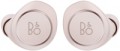 | 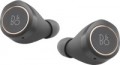 |
|---|---|---|
| Bang&Olufsen BeoPlay E8 2.0 | Bang&Olufsen BeoPlay E8 | |
from £278.00 | from £79.95 | |
| User reviews | ||
| TOP sellers | ||
Compared to the first generation of BeoPlay E8 headphones, the second model features wireless charging (Qi) support, as well as an increased case capacity, which allows you to use the headphones for more than 16 hours with the case. The battery capacity of the left earbud is 60 mAh, the right one is 85 mAh. | The battery capacity of the left earbud is 60 mAh, the right one is 85 mAh. | |
Connection and design | ||
| Design | in-ear | in-ear |
| Connection type | wireless | wireless |
| Connection | Bluetooth v4.2 | Bluetooth v4.2 |
| Range | 10 m | 10 m |
Specs | ||
| Impedance | 16 Ohm | |
| Frequency range | 20 – 20000 Hz | 20 – 20000 Hz |
| Sensitivity | 107 dB | |
| Speaker size | 5.7 mm | 5.7 mm |
| Emitter type | dynamic | dynamic |
Microphone specs | ||
| Microphone | built into the case | built into the case |
Features | ||
| Volume control |  | |
| Codec support | AAC | AAC |
Power supply | ||
| Power source | battery | battery |
| Headphone battery capacity | 60 mAh | 60 mAh |
| Case battery capacity | 365 mAh | |
| Charging time | 2 h | 2 h |
| Operating time (music) | 4 h | 4 h |
| Operating time (with case) | 35 h | |
| Wireless charger | | |
| Charging port | microUSB | microUSB |
General | ||
| Touch control | | |
| Weight | 7 g | 7 g |
| In box | silicone tips charging case | silicone tips charging case |
| Color | ||
| Added to E-Catalog | april 2019 | february 2018 |


Compare Bang&Olufsen BeoPlay E8 2.0 and BeoPlay E8
You may be interested in
Bang&Olufsen BeoPlay E8 often compared

Glossary
Impedance
Impedance refers to the headphone's nominal resistance to AC current, such as an audio signal.
Other things being equal, a higher impedance reduces distortion, but requires a more powerful amplifier — otherwise the headphones simply will not be able to produce sufficient volume. Thus, the choice of resistance depends primarily on which signal source you plan to connect the "ears". So, for a portable gadget (smartphone, pocket player), an indicator of 16 ohms or less is considered optimal, 17 – 32 ohms is not bad. Higher values — 33 – 64 ohms and 65 – 96 ohms — will require quite powerful amplifiers, like those used in computers and televisions. And models with a resistance of 96 – 250 ohms and above are designed mainly for Hi-End audio equipment and professional use; for such cases, detailed recommendations for selection can be found in special sources.
Other things being equal, a higher impedance reduces distortion, but requires a more powerful amplifier — otherwise the headphones simply will not be able to produce sufficient volume. Thus, the choice of resistance depends primarily on which signal source you plan to connect the "ears". So, for a portable gadget (smartphone, pocket player), an indicator of 16 ohms or less is considered optimal, 17 – 32 ohms is not bad. Higher values — 33 – 64 ohms and 65 – 96 ohms — will require quite powerful amplifiers, like those used in computers and televisions. And models with a resistance of 96 – 250 ohms and above are designed mainly for Hi-End audio equipment and professional use; for such cases, detailed recommendations for selection can be found in special sources.
Sensitivity
Rated headphone sensitivity. Technically, this is the volume at which they sound when a certain standard signal from the amplifier is connected to them. Thus, sensitivity is one of the parameters that determine the overall volume of the headphones: the higher it is, the louder the sound will be with the same input signal level and other things being equal. However, we must not forget that the volume level also depends on the resistance (impedance, see above); moreover, it is worth choosing “ears” for a specific device first by impedance, and only then by sensitivity. In this case, one parameter can be compensated for by another: for example, a model with high resistance and high sensitivity can work even on a relatively weak amplifier.
As for specific figures, headphones with indicators of 100 dB or less are designed mainly for use in a quiet environment (in some similar models, the sensitivity does not exceed 90 dB). For use on the street, in transport and other similar conditions, it is desirable to have more sensitive headphones — about 101 – 105 dB, or even 110 dB. And in some models, this figure can reach 116 – 120 dB. and even more.
It is also worth noting that this parameter is relevant only for a wired connection according to the analogue standard — for example, via a 3.5 mm mini-...jack. When using digital interfaces like USB and wireless channels like Bluetooth, the sound is processed in the built-in headphone converter, and if you plan to mainly use this kind of application, you can not pay much attention to sensitivity.
As for specific figures, headphones with indicators of 100 dB or less are designed mainly for use in a quiet environment (in some similar models, the sensitivity does not exceed 90 dB). For use on the street, in transport and other similar conditions, it is desirable to have more sensitive headphones — about 101 – 105 dB, or even 110 dB. And in some models, this figure can reach 116 – 120 dB. and even more.
It is also worth noting that this parameter is relevant only for a wired connection according to the analogue standard — for example, via a 3.5 mm mini-...jack. When using digital interfaces like USB and wireless channels like Bluetooth, the sound is processed in the built-in headphone converter, and if you plan to mainly use this kind of application, you can not pay much attention to sensitivity.
Case battery capacity
The capacity of the battery installed in the case (case) for headphones.
This parameter is relevant only for true wireless models (see "Cable type"). Recall that these headphones are charged from a case, which is usually equipped with its own battery and actually works in standalone power bank mode. Knowing the capacity of the battery in the case and in the headphones, you can estimate how many charges of the “ears” will last for one charge of the case. However, it should be taken into account that in the process of charging the headphones, part of the energy is inevitably spent on third-party losses, and the effective capacity of the case turns out to be somewhere 1.6 times less than the claimed one. This is the starting point for calculations: for example, a 300 mAh case will actually be able to transfer 300 / 1.6 = 187 mAh of energy to the headphones, and 30 mAh “ears” from such a battery can be fully charged about 6 times (187 / 30 ≈ 6).
This parameter is relevant only for true wireless models (see "Cable type"). Recall that these headphones are charged from a case, which is usually equipped with its own battery and actually works in standalone power bank mode. Knowing the capacity of the battery in the case and in the headphones, you can estimate how many charges of the “ears” will last for one charge of the case. However, it should be taken into account that in the process of charging the headphones, part of the energy is inevitably spent on third-party losses, and the effective capacity of the case turns out to be somewhere 1.6 times less than the claimed one. This is the starting point for calculations: for example, a 300 mAh case will actually be able to transfer 300 / 1.6 = 187 mAh of energy to the headphones, and 30 mAh “ears” from such a battery can be fully charged about 6 times (187 / 30 ≈ 6).
Operating time (with case)
The maximum operating time of TWS headphones, taking into account recharging with a native case. But this time is not continuous use, it takes into account breaks for "refueling". Anyway, this parameter allows you to understand for how long you can leave the network (for example, how many nights to spend in a tent to the accompaniment of your favorite artist).