
Comparison Hoco ES26 vs Hoco ES20 Plus
Add to comparison | 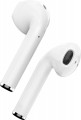 | 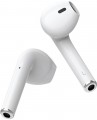 |
|---|---|---|
| Hoco ES26 | Hoco ES20 Plus | |
| Outdated Product | Outdated Product | |
| TOP sellers | ||
Connection and design | ||
| Design | inserts | inserts |
| Connection type | wireless | wireless |
| Connection | Bluetooth v5.0 | Bluetooth v5.0 |
| Range | 10 m | 10 m |
Specs | ||
| Frequency range | 20 – 20000 Hz | 20 – 20000 Hz |
| Emitter type | dynamic | dynamic |
Microphone specs | ||
| Microphone | built into the case | built into the case |
Power supply | ||
| Power source | battery | battery |
| Headphone battery capacity | 35 mAh | |
| Charging time | 1 h | |
| Operating time (music) | 2.5 h | 2 h |
| Charging port | microUSB | Lightning |
General | ||
| Touch control |  | |
| Weight | 4 g | 3 g |
| In box | charging case | charging case |
| Color | ||
| Added to E-Catalog | november 2019 | november 2019 |


Compare Hoco ES26 and ES20 Plus
Headphones Hoco ES26 and Hoco ES20 Plus have similar features, such as wireless connectivity and a frequency range from 20 to 20000 Hz. However, there are a few key differences. Hoco ES26 offers longer battery life on a single charge — 2.5 hours compared to 2 hours for the ES20 Plus. Meanwhile, the ES20 Plus uses a Lightning connector for charging, whereas the ES26 uses microUSB. Both devices have a built-in microphone and touch controls but do not support additional features. The choice between them may depend on preferences regarding battery life and the type of charging connector.
You may be interested in
Hoco ES26 often compared

Hoco ES20 Plus often compared
Glossary
Headphone battery capacity
The capacity of the battery installed in the headphones of the corresponding design (see "Power").
Theoretically, a higher capacity allows to achieve greater battery life, but in fact, the operating time also depends on the power consumption of the headphones — and it can be very different, depending on the characteristics and design features. So this parameter is secondary, and when choosing it is worth paying attention not so much to the battery capacity, but to the directly claimed operating time (see below).
Theoretically, a higher capacity allows to achieve greater battery life, but in fact, the operating time also depends on the power consumption of the headphones — and it can be very different, depending on the characteristics and design features. So this parameter is secondary, and when choosing it is worth paying attention not so much to the battery capacity, but to the directly claimed operating time (see below).
Charging time
The time required to fully charge the battery in properly powered headphones (see above).
In this case, we mean the battery charging time from 0 to 100% when using a standard charger (or a third-party charger with identical characteristics). Accordingly, in fact, this indicator may differ from the claimed one, depending on the specifics of the situation. However, in general, it is quite possible to evaluate different models and compare them with each other: headphones with a shorter claimed charging time will in fact charge faster (ceteris paribus).
Also note that an increase in battery capacity (and headphone battery life) inevitably implies an increase in charging time. To compensate for this moment, special fast charging technologies can be used — however, they affect the cost and require the use of specialized charger.
In this case, we mean the battery charging time from 0 to 100% when using a standard charger (or a third-party charger with identical characteristics). Accordingly, in fact, this indicator may differ from the claimed one, depending on the specifics of the situation. However, in general, it is quite possible to evaluate different models and compare them with each other: headphones with a shorter claimed charging time will in fact charge faster (ceteris paribus).
Also note that an increase in battery capacity (and headphone battery life) inevitably implies an increase in charging time. To compensate for this moment, special fast charging technologies can be used — however, they affect the cost and require the use of specialized charger.
Operating time (music)
The declared operating time of headphones with autonomous power supply (see above) when listening to music on a single battery charge or a set of batteries.
As a rule, the characteristics indicate a certain average operating time in music listening mode, for standard conditions; in practice, it will depend on the intensity of use, volume level and other operating parameters, and in models with replaceable batteries - also on the quality of specific batteries. However, based on the stated time, you can fairly reliably assess the autonomy of the selected headphones and compare them with other models. As for specific values, relatively “short-lived” devices have a battery life of up to 8 hours, a figure of 8 – 12 hours can be called quite good, 12 – 20 hours – very good, and in the most “long-lasting” headphones the operating time can exceed 20 hours.
As a rule, the characteristics indicate a certain average operating time in music listening mode, for standard conditions; in practice, it will depend on the intensity of use, volume level and other operating parameters, and in models with replaceable batteries - also on the quality of specific batteries. However, based on the stated time, you can fairly reliably assess the autonomy of the selected headphones and compare them with other models. As for specific values, relatively “short-lived” devices have a battery life of up to 8 hours, a figure of 8 – 12 hours can be called quite good, 12 – 20 hours – very good, and in the most “long-lasting” headphones the operating time can exceed 20 hours.
Charging port
The type of connector used for charging the built-in battery of headphones, more specifically, for connecting an external charger. Such a device can be a wall or car adapter, a power bank, or even a USB port of a PC or laptop (if you have the appropriate cable). In true wireless models (available with a stem, without a stem, with over-ear attachment, and clip-on), the “charger” cord connects to a special docking station where the “buds” are placed for charging (while the station itself usually has its own battery and can also function as an independent power bank). In wireless and combined solutions of a more traditional design, the charging input is often located on the headphones' body. Regarding connectors, the most common options are:
— microUSB. A smaller version of the USB connector, created for portable devices. It appeared quite some time ago but remains popular even nowadays and is used by the vast majority of manufacturers.
— USB-C. A miniature USB connector, positioned partially as a potential successor to microUSB. Unlike its predecessor, it features a reversible design that allows the plug to be inserted into the port any side up. It is still relatively rare, but it is highly likely that the situation will change in the coming years.
...— Lightning. A proprietary connector by the company Apple. Like USB-C, it has a reversible design, but is somewhat more convenient and reliable. However, the use of Lightning is limited to products from Apple itself and its owned brand Beats.
— microUSB. A smaller version of the USB connector, created for portable devices. It appeared quite some time ago but remains popular even nowadays and is used by the vast majority of manufacturers.
— USB-C. A miniature USB connector, positioned partially as a potential successor to microUSB. Unlike its predecessor, it features a reversible design that allows the plug to be inserted into the port any side up. It is still relatively rare, but it is highly likely that the situation will change in the coming years.
...— Lightning. A proprietary connector by the company Apple. Like USB-C, it has a reversible design, but is somewhat more convenient and reliable. However, the use of Lightning is limited to products from Apple itself and its owned brand Beats.
Weight
The total weight of the headphones; for true wireless models (see "Cable Type"), the weight of each individual earbud is listed.
This parameter is directly related to the design (see above) and some features of the functionality. Thus, the mentioned true wireless devices are very light, their weight does not exceed 25 g. More traditional in-ears and in-ears can be noticeably heavier, up to 50g for in-ears and up to 100g for most in-ears. Overhead models, for the most part, are quite massive: among them there are many models weighing 200 – 250 g, 250 – 300 g and even more than 300 g. It should be noted that a significant weight for false ears is often not a disadvantage, but an advantage: it allows them to stay on the head more securely, creates an impression of solidity and reliability, and most often does not create significant inconvenience.
This parameter is directly related to the design (see above) and some features of the functionality. Thus, the mentioned true wireless devices are very light, their weight does not exceed 25 g. More traditional in-ears and in-ears can be noticeably heavier, up to 50g for in-ears and up to 100g for most in-ears. Overhead models, for the most part, are quite massive: among them there are many models weighing 200 – 250 g, 250 – 300 g and even more than 300 g. It should be noted that a significant weight for false ears is often not a disadvantage, but an advantage: it allows them to stay on the head more securely, creates an impression of solidity and reliability, and most often does not create significant inconvenience.