
Comparison HotFrost V450ASM vs HotFrost 35AN
Add to comparison | 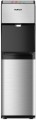 | 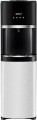 |
|---|---|---|
| HotFrost V450ASM | HotFrost 35AN | |
| Outdated Product | from $399.92 up to $440.00 | |
| TOP sellers | ||
Electronic control. Bottom loading butyl. | ||
| Installation | floor | floor |
| Water loading | bottom | bottom |
Features | ||
| Water temperature | hot cold ambient | hot cold ambient |
| Cooling type | compressor | compressor |
| Cold water tank volume | 3.6 L | 3.6 L |
| Hot water tank volume | 1 L | 1.16 L |
| Cooling performance | 2 L/h | 2 L/h |
| Heating performance | 5.5 L/h | |
| Heating power | 650 W | 650 W |
| Cooling power | 100 W | 100 W |
More specs | ||
| Water supply control | buttons | buttons |
| Water blocker |  | |
| Lighting | | |
| Dimensions (WxDxH) | 31x34x103 cm | 31x34x104 cm |
| Weight | 15.7 kg | 16.5 kg |
| Color | ||
| Added to E-Catalog | august 2019 | november 2016 |


Compare HotFrost V450ASM and 35AN
You may be interested in
My comparisons
HotFrost V450ASM often compared


HotFrost 35AN often compared


Glossary
Hot water tank volume
The volume of the hot water tank provided in the device.
This parameter describes the maximum amount of hot water that the cooler can produce in one run, without interruption or with minimal interruptions. When this amount is exhausted, you will have to wait until the water in the tank heats up again to a sufficient degree; the waiting time depends on the heating capacity (see below). At the same time, the volume of hot water tanks in modern devices is usually several litres, and it is extremely rare to drain this volume entirely — usually, small portions of 200-300 mL are required. Therefore, this tank plays the role of a buffer — when the user drains the next portion of water, water from a bottle or a water mains is added to the tank; such an admixture does not particularly affect the temperature in the tank, however, for an additional guarantee, the heating system immediately turns on. Thus, if the consumption does not exceed the heating capacity, the temperature of the contents remains practically unchanged.
This parameter describes the maximum amount of hot water that the cooler can produce in one run, without interruption or with minimal interruptions. When this amount is exhausted, you will have to wait until the water in the tank heats up again to a sufficient degree; the waiting time depends on the heating capacity (see below). At the same time, the volume of hot water tanks in modern devices is usually several litres, and it is extremely rare to drain this volume entirely — usually, small portions of 200-300 mL are required. Therefore, this tank plays the role of a buffer — when the user drains the next portion of water, water from a bottle or a water mains is added to the tank; such an admixture does not particularly affect the temperature in the tank, however, for an additional guarantee, the heating system immediately turns on. Thus, if the consumption does not exceed the heating capacity, the temperature of the contents remains practically unchanged.
Heating performance
The performance of the heating system installed in the device, in other words, is the amount of water that can be heated per hour. In coolers, it is usually indicated for water at room temperature — about 20 °C, in models with a connection to the water mains (see "Water loading") — for 15 °C (this is the average temperature of cold water). Accordingly, when deviating from these indicators, the actual performance may be slightly more or less (however, such deviations must be very significant for this to become noticeable).
This parameter determines two main points. First of all, it characterizes the maximum consumption of hot water that the device can handle and the recommended breaks between use. For example, if a user needs to fill 2 tea cups with a volume of 300 mL each, and the cooler specifications state a heating capacity of 3 L/h, this means that 600 g (0.6 L) of water that has entered the tank instead of poured out, the cooler will heat in 0.6/3 = 0.2 h, that is, about 12 minutes. However, the need for such calculations arises mainly with high water consumption, which is very close to the claimed performance.
Also, knowing the heating rate and the volume of the cold water tank (see above), you can determine how long it will take to heat the tank filled with water at room temperature (for example, if the cooler is started for the first time, or if the tank was completely drained before). So, if in the above example, the volume of the tank is 1 li...tre, then 1/3 hour will be spent on heating it, that is, about 20 minutes. However, you can use water earlier if maximum heating is not critical.
This parameter determines two main points. First of all, it characterizes the maximum consumption of hot water that the device can handle and the recommended breaks between use. For example, if a user needs to fill 2 tea cups with a volume of 300 mL each, and the cooler specifications state a heating capacity of 3 L/h, this means that 600 g (0.6 L) of water that has entered the tank instead of poured out, the cooler will heat in 0.6/3 = 0.2 h, that is, about 12 minutes. However, the need for such calculations arises mainly with high water consumption, which is very close to the claimed performance.
Also, knowing the heating rate and the volume of the cold water tank (see above), you can determine how long it will take to heat the tank filled with water at room temperature (for example, if the cooler is started for the first time, or if the tank was completely drained before). So, if in the above example, the volume of the tank is 1 li...tre, then 1/3 hour will be spent on heating it, that is, about 20 minutes. However, you can use water earlier if maximum heating is not critical.