
Comparison Britax Romer KidFix2 R vs Cybex Solution Q3-Fix
Add to comparison | 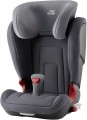 |  |
|---|---|---|
| Britax Romer KidFix2 R | Cybex Solution Q3-Fix | |
| Outdated Product | from $232.00 up to $252.20 | |
| TOP sellers | ||
The Secure Guard technology, due to the additional attachment point of the regular seat belt, reduces the impact force to the pelvis and abdomen by up to 35%. | ||
| Weight group | 2 (15 – 25 kg) 3 (22 – 36 kg) | 2 (15 – 25 kg) 3 (22 – 36 kg) |
| Age range | 3 – 7 years old 6 – 12 years old | 3 – 7 years old 6 – 12 years old |
| Recommended height | 100 – 150 cm | |
| Installation | seat belt ISOFIX | seat belt ISOFIX |
| Installation | forward facing | forward facing |
| Adjustments | headrest height removable backrest | headrest height backrest width |
| Equipment | removable cover anatomical cushion armrests | removable cover anatomical cushion |
| Additional side protection |  |  |
| Harness type | none | none |
| Weight | 7 kg | 7.6 kg |
| Country of origin | Germany | Germany |
| Color | ||
| Added to E-Catalog | december 2018 | february 2017 |


Compare Britax Romer KidFix2 R and Cybex Solution Q3-Fix
You may be interested in
My comparisons
Britax Romer KidFix2 R often compared


Cybex Solution Q3-Fix often compared


Glossary
Recommended height
Recommended values of the minimum and maximum height of the child (in centimeters), at which the car seat provides optimal safety and comfort. The parameter must be taken into account when choosing a child car seat along with the age and weight groups, because children of the same age can have different heights and weights.
Adjustments
— Backrest tilt adjustment. The backrest tilt can be adjusted. This point is different for various weight groups. In groups 0+ and 1 not the backrest, but the whole seat tilts against the fixed base, and in groups 2 and 2/3 only the backrest tilts. The possibility of adjusting the backrest tilt is important if the child is in the car for a long time – by tilting the backrest you can let the child sleep or rest.
— Headrest height adjustment. According to safety requirements, the child's head should not be more than one third above the headrest, so it is necessary to adjust the headrest as the child grows.
— Harness height adjustment. The ability to adjust the height of car seat harnesses — such a need arises as the child grows.
— Backrest width adjustment. The ability to adjust the width of the backrest allows you to optimally adjust the car seat not only for constantly changing height, but also for the child's complexion.
— Horizontal position of a backrest. The backrest of the car seat is horizontal. The horizontal position is optimal for babies under the age of six months, since it avoids unnecessary stress on the spine, therefore group 0 car seats usually have this function.
— Removable backrest. It is possible to completely remove the backrest of the car seat. This function expands the possibilities of the seat: it can be used both for its intended purpose, with a backrest, and as a booster (for more information on boosters, refer to "Weight group 3").
— Swivel system.... The seat swivels relative to a fixed base. This makes it easier to drop off and pick up the child: during these operations, the seat can be turned to face the car door, and when driving, it can be positioned in or against the direction of travel.
— Headrest height adjustment. According to safety requirements, the child's head should not be more than one third above the headrest, so it is necessary to adjust the headrest as the child grows.
— Harness height adjustment. The ability to adjust the height of car seat harnesses — such a need arises as the child grows.
— Backrest width adjustment. The ability to adjust the width of the backrest allows you to optimally adjust the car seat not only for constantly changing height, but also for the child's complexion.
— Horizontal position of a backrest. The backrest of the car seat is horizontal. The horizontal position is optimal for babies under the age of six months, since it avoids unnecessary stress on the spine, therefore group 0 car seats usually have this function.
— Removable backrest. It is possible to completely remove the backrest of the car seat. This function expands the possibilities of the seat: it can be used both for its intended purpose, with a backrest, and as a booster (for more information on boosters, refer to "Weight group 3").
— Swivel system.... The seat swivels relative to a fixed base. This makes it easier to drop off and pick up the child: during these operations, the seat can be turned to face the car door, and when driving, it can be positioned in or against the direction of travel.
Equipment
— Isofix base. The product is equipped with a separate Isofix base, which is fixed in the interior of the car on the appropriate fixing clips, and the car seat is installed directly on it. The use of the base provides reliable fixation of the car seat and reduces the risk of its incorrect installation. On the Isofix base are installed mainly car seats of age groups 0+ and 1, some models assume the possibility of placing seats for older kids. It should be noted that car seat models without an Isofix base are also widely available on the market.
— Removable cover. Removable car seat cover for cleaning and/or washing. This function is especially useful if the seat is used when feeding a kid.
— Anatomical cushion. Depending on the age group, it can either be a special horseshoe-shaped cushion to support the kid's head (for the youngest ones who are still unable to hold their head on their own), or a special soft headrest that fixes the head from behind and to the sides (for older kids).
— Armrests. Armrests refer to the handles placed on the sides of a seat where one can rest their elbows and forearms. They reduce fatigue in the neck and shoulders of a child during prolonged sitting.
— Sun canopy. Plastic (most often) canopy to protect the kid fro...m the sun or bright light.
— Foot cover. A cover that covers the kid's legs and lower body. It is used in seats of age group 0.
— Cup holder. A device used in car seats to hold a bottle of drink or formula for feeding. Most often done removable.
— Anatomical cushion. Depending on the age group, it can either be a special horseshoe-shaped cushion to support the kid's head (for the youngest ones who are still unable to hold their head on their own), or a special soft headrest that fixes the head from behind and to the sides (for older kids).
— Armrests. Armrests refer to the handles placed on the sides of a seat where one can rest their elbows and forearms. They reduce fatigue in the neck and shoulders of a child during prolonged sitting.
— Sun canopy. Plastic (most often) canopy to protect the kid fro...m the sun or bright light.
— Foot cover. A cover that covers the kid's legs and lower body. It is used in seats of age group 0.
— Cup holder. A device used in car seats to hold a bottle of drink or formula for feeding. Most often done removable.
Additional side protection
The car seat has structural elements that further protect the child from side impacts. At least such elements include sidewalls for head protection made of impact-absorbing material such as polyurethane foam; torso protection may also be provided. If you are looking for a car seat with the maximum level of protection, you should choose from models with additional side protection.