
Comparison Black&Decker BEBLV300 vs Black&Decker BEBLV260
Add to comparison | 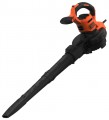 | 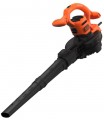 |
|---|---|---|
| Black&Decker BEBLV300 | Black&Decker BEBLV260 | |
| Compare prices 2 | Compare prices 17 | |
| TOP sellers | ||
| Type | manual | manual |
| Operating mode | blowing suction | blowing suction |
Specs | ||
| Air flow control |  |  |
| Garbage container volume | 72 L | 40 L |
Motor | ||
| Motor type | electric (mains) | electric (mains) |
| Motor power | 3000 W | 2600 W |
General | ||
| Shoulder strap | | |
| Noise level | 90 dB | 90 dB |
| Weight | 4.4 kg | 4.4 kg |
| Added to E-Catalog | july 2019 | july 2019 |





Compare Black&Decker BEBLV300 and BEBLV260
Price comparison
You may be interested in
Black&Decker BEBLV300 often compared


Black&Decker BEBLV260 often compared

Glossary
Air flow control
The ability to change the speed (and, accordingly, the intensity) of the air flowissued by the vacuum cleaner. This function allows you to optimally adjust the operating parameters to the specifics of certain conditions — in order, on the one hand, not to waste energy / fuel and not wear out the unit, and on the other, to ensure proper work efficiency. For example, for collecting leaves from an asphalt path, high power is not needed, but for cleaning in thick grass, it can be very useful.
The ability to adjust is especially important for high-performance garden vacuums — these are the models that are most likely to find themselves in a situation where high power is unnecessary. And in models with a petrol engine (see below), this function is provided by default.
The ability to adjust is especially important for high-performance garden vacuums — these are the models that are most likely to find themselves in a situation where high power is unnecessary. And in models with a petrol engine (see below), this function is provided by default.
Garbage container volume
The volume of the garbage collector — a container for garbage — regularly supplied with a garden vacuum cleaner. The larger the bin, the more debris can fit inside and the less often you have to empty it during work. On the other hand, a capacious container has the appropriate dimensions, and when filled, it also weighs a lot, which can affect the ease of use of the vacuum cleaner (this is especially true for manual and backpack models, see "Type"). Therefore, manufacturers tend to choose bins for their products based on the overall level of the vacuum cleaner and the scale of work for which it is designed. And some units may not be equipped with complete containers at all — in the expectation that the user picks up such a container separately.
The volume of the garbage can can be approximately estimated, knowing that an ordinary household bucket holds about 10 – 12 liters. Thus, for example, a 35 liter container corresponds approximately to three standard buckets.
The volume of the garbage can can be approximately estimated, knowing that an ordinary household bucket holds about 10 – 12 liters. Thus, for example, a 35 liter container corresponds approximately to three standard buckets.
Motor power
The power of a garden vacuum motor, expressed in watts. This unit is currently the primary one; it is used for both electric and gasoline engines (see “Motor Type”).
The more powerful the motor, the more air the vacuum can move, the greater the speed it can impart to the airflow, and the more effectively the shredder operates (if one is present at all — see “Operating Mode”). At the same time, all these factors depend not only on power but also on many other design features; manufacturers select each motor to provide the vacuum with specific operating characteristics. Therefore, when choosing, it is worth looking primarily at the practical specifications (airflow speed, blowing and suction performance), while motor power is of secondary importance.
The more powerful the motor, the more air the vacuum can move, the greater the speed it can impart to the airflow, and the more effectively the shredder operates (if one is present at all — see “Operating Mode”). At the same time, all these factors depend not only on power but also on many other design features; manufacturers select each motor to provide the vacuum with specific operating characteristics. Therefore, when choosing, it is worth looking primarily at the practical specifications (airflow speed, blowing and suction performance), while motor power is of secondary importance.