
Comparison Sturm P1090 vs Sturm P1011
Add to comparison | 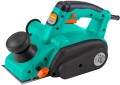 | 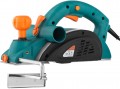 |
|---|---|---|
| Sturm P1090 | Sturm P1011 | |
from $37.44 up to $41.24 | from $44.68 up to $50.40 | |
| TOP sellers | ||
Specs | ||
| Power consumption | 900 W | 1100 W |
| Rotation speed | 16000 rpm | 14000 rpm |
| Planing width | 82 mm | 82 mm |
| Planing depth | 3 mm | 3 mm |
| Grooving depth | 14 mm | 18 mm |
| V-grooves | 1 | 1 |
| Knives | double sided | double sided |
| Dust removal | unidirectional | bidirectional |
| Features | edge guide | edge guide |
General | ||
| Power source | mains (230 V) | mains (230 V) |
| In box | dust collector | |
| Power cord length | 2 m | |
| Weight | 3.3 kg | 3.2 kg |
| Added to E-Catalog | february 2015 | november 2013 |


Compare Sturm P1090 and P1011
You may be interested in
Glossary
Power consumption
The total power consumed by the electric planer during operation. The more powerful the tool, the generally higher its productivity and the better it is suitable for large volumes of work and/or hardwoods. Here, however, it must be taken into account that the effective power (the power supplied by the unit directly to the working tool) is anyway lower than the consumed one, but it is far from always indicated. Therefore, it is quite possible to compare different models with each other precisely in terms of power consumption.
Note that more power means higher electricity consumption, and also, most often, more weight and cost of the tool. Therefore, it does not always make sense to chase the most powerful units. So, for occasional use and small volumes of work, a power of 500-600 W is considered quite sufficient; for regular work on relatively soft wood, 700-800 W is enough, and professional models have a power of more than 1000 W.
Note that more power means higher electricity consumption, and also, most often, more weight and cost of the tool. Therefore, it does not always make sense to chase the most powerful units. So, for occasional use and small volumes of work, a power of 500-600 W is considered quite sufficient; for regular work on relatively soft wood, 700-800 W is enough, and professional models have a power of more than 1000 W.
Rotation speed
The maximum speed of rotation of the working tool of the electric planer — a drum with knives attached to it. In modern models, this figure is practically never lower than 10,000 rpm (otherwise it is impossible to ensure normal quality of work), and in most cases it is in the range of 11,000 – 17,000 rpm. It is believed that the higher the number of revolutions, the more evenly the workpiece is processed and the smoother the surface is obtained; and the overall speed of work will be higher. On the other hand, a high speed also requires high engine power, especially when working with hardwoods; for such materials, it makes sense to use a low-speed tool — it will provide more efficient power distribution.
Grooving depth
The greatest depth of the groove that can be cut into the workpiece with a planer.
Grooves are narrow and long slots used, in particular, for tenoning wooden parts. Some models of electric planers are equipped with special tools that make it easier to cut grooves.
Grooves are narrow and long slots used, in particular, for tenoning wooden parts. Some models of electric planers are equipped with special tools that make it easier to cut grooves.
Dust removal
Direction of ejection of waste (dust, shavings, etc.) generated during operation of an electric planer.
— One-sided. This category includes models capable of ejecting waste in only one direction, with no option to change it. Most often, the ejection is to the right — thus, with a classic right-handed grip, the shavings will not fly into the user's face. However, left-handed users may encounter problems — there are very few models designed specifically for them. In addition, when performing complex tasks that may require an unusual grip, the inability to change the ejection direction can create serious problems. On the other hand, a «one-sided» tool is simpler and cheaper than a «two-sided» one, all other things being equal.
— Two-sided. Tools in this category have a switch that allows you to choose which direction the shavings will be ejected — right or left. This makes it possible to optimally set the direction depending on how the planer is held (with the right or left hand) and other circumstances.
— One-sided. This category includes models capable of ejecting waste in only one direction, with no option to change it. Most often, the ejection is to the right — thus, with a classic right-handed grip, the shavings will not fly into the user's face. However, left-handed users may encounter problems — there are very few models designed specifically for them. In addition, when performing complex tasks that may require an unusual grip, the inability to change the ejection direction can create serious problems. On the other hand, a «one-sided» tool is simpler and cheaper than a «two-sided» one, all other things being equal.
— Two-sided. Tools in this category have a switch that allows you to choose which direction the shavings will be ejected — right or left. This makes it possible to optimally set the direction depending on how the planer is held (with the right or left hand) and other circumstances.
In box
— Dust collector. The presence of a dust collector in the delivery set — a special bag for collecting dust, chips and other waste that occurs during operation. This bag connects directly to the waste chute, so that the waste stays in the dust bin and cleaning up after work becomes much easier. However the dimensions of the tool with the bag attached increase somewhat, and during work it is necessary to monitor its filling and release it in time — otherwise the accumulated chips can jam or even break the planer.
— Case (bag). The presence in the delivery set of a special case — a suitcase for storing and carrying a tool, which also provides some degree of protection. Using a case for such purposes is much more convenient than various "non-native" packages: it is optimally adapted to a specific planer model, in addition, it often has specialized compartments for additional accessories. There are also rag bags, lighter, but at the same time less protective.
— Case (bag). The presence in the delivery set of a special case — a suitcase for storing and carrying a tool, which also provides some degree of protection. Using a case for such purposes is much more convenient than various "non-native" packages: it is optimally adapted to a specific planer model, in addition, it often has specialized compartments for additional accessories. There are also rag bags, lighter, but at the same time less protective.
Power cord length
The length of the network cable can tell you how far from the outlet you can operate the device. Therefore, for domestic use, it is more relevant to choose models with a short cord, for construction work or use in production, in the garage a longer cable is better.