
Comparison Tempish Tiger vs Roller Derby RDB20
Add to comparison |  | 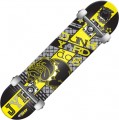 |
|---|---|---|
| Tempish Tiger | Roller Derby RDB20 | |
| Outdated Product | from $45.56 | |
| TOP sellers | ||
| Product type | skateboard | skateboard |
| Deck size | 787x203 mm | 787x203 mm |
| Deck material | chinese maple | chinese maple |
| Number of deck layers | 9 | 9 |
| Suspension material | aluminium | aluminium |
| Wheel material | polyurethane | polyurethane |
| Wheel stiffness | 99A | |
| Wheel diameter | 50 mm | 50 mm |
| Wheel width | 36 mm | 30 mm |
| Bearing | ABEC 5 | ABEC 5 |
| Max. rider weight | 100 kg | 100 kg |
| Added to E-Catalog | september 2018 | march 2016 |


Compare Tempish Tiger and Roller Derby RDB20
You may be interested in
Tempish Tiger often compared

Roller Derby RDB20 often compared

Glossary
Wheel stiffness
Stiffness of skateboard wheels.
This parameter is denoted by a number and the letter A; the higher the number, the stiffer the material. Higher stiffness allows the wheel to maintain speed better, increase wheel life, make it easier to slide (drifting, for example) and perform jump tricks more efficiently. On the other hand, soft wheels cope with small bumps in the road better, they have better grip and manoeuvrability, and they are also less noisy. Accordingly, the choice of wheel stiffness depends primarily on what surfaces it is planned to ride.
In general, wheels up to 80A can be classified as very soft, and up to 87A — are soft; such wheels are best suited for driving on not-very smooth, worn asphalt, paving slabs with an abundance of joints, etc. Indicators 88A — 95A correspond to medium hardness, such wheels are designed mainly for high-quality "urban" surfaces like a new sidewalk. Stiff wheels are marked from 96A to 99A, they are designed primarily for skate parks and other specialized surfaces, and indicators of 100A and more correspond to professional-level options.
It is worth noting that the wheels are usually made removable, and if necessary, they can be replaced with others, harder or softer. However, one must also take into account the fact that the entire design of the skateboard is usually designed for a certain stiffness of the wheels, and significant deviations from this parameter are unde...sirable. And you should not forget about the type (see above): for example, it is hardly worth looking for especially soft wheels for a traditional stunt skateboard.
This parameter is denoted by a number and the letter A; the higher the number, the stiffer the material. Higher stiffness allows the wheel to maintain speed better, increase wheel life, make it easier to slide (drifting, for example) and perform jump tricks more efficiently. On the other hand, soft wheels cope with small bumps in the road better, they have better grip and manoeuvrability, and they are also less noisy. Accordingly, the choice of wheel stiffness depends primarily on what surfaces it is planned to ride.
In general, wheels up to 80A can be classified as very soft, and up to 87A — are soft; such wheels are best suited for driving on not-very smooth, worn asphalt, paving slabs with an abundance of joints, etc. Indicators 88A — 95A correspond to medium hardness, such wheels are designed mainly for high-quality "urban" surfaces like a new sidewalk. Stiff wheels are marked from 96A to 99A, they are designed primarily for skate parks and other specialized surfaces, and indicators of 100A and more correspond to professional-level options.
It is worth noting that the wheels are usually made removable, and if necessary, they can be replaced with others, harder or softer. However, one must also take into account the fact that the entire design of the skateboard is usually designed for a certain stiffness of the wheels, and significant deviations from this parameter are unde...sirable. And you should not forget about the type (see above): for example, it is hardly worth looking for especially soft wheels for a traditional stunt skateboard.
Wheel width
The thickness of the wheels installed on the skateboard.
The width of the wheel is, roughly speaking, the width of the track left during movement. Narrow wheels are convenient for stunts, in particular in grinds (sliding along pipes, railings, etc. directly on the suspension), but they require flat surfaces; wide, in turn, behave better on rough roads, they are more stable and cope with small bumps more efficiently. Accordingly, narrow wheels are typical mainly for stunt models designed for skate parks and other specialized locations with high-quality surfaces; wide, in turn, are better suited for longboards and "city" cruisers who often have to ride on less than perfect roads.
The wheels in modern skateboards are made removable if desired, they can be replaced with wider or narrower ones. However, it is still not recommended to deviate from the “native” width value — riding can become uncomfortable, if not dangerous.
The width of the wheel is, roughly speaking, the width of the track left during movement. Narrow wheels are convenient for stunts, in particular in grinds (sliding along pipes, railings, etc. directly on the suspension), but they require flat surfaces; wide, in turn, behave better on rough roads, they are more stable and cope with small bumps more efficiently. Accordingly, narrow wheels are typical mainly for stunt models designed for skate parks and other specialized locations with high-quality surfaces; wide, in turn, are better suited for longboards and "city" cruisers who often have to ride on less than perfect roads.
The wheels in modern skateboards are made removable if desired, they can be replaced with wider or narrower ones. However, it is still not recommended to deviate from the “native” width value — riding can become uncomfortable, if not dangerous.