
Comparison KITFORT KT-514 vs Karcher WV 2 Plus
Add to comparison | 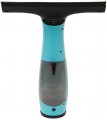 | 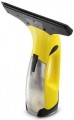 |
|---|---|---|
| KITFORT KT-514 | Karcher WV 2 Plus | |
| Outdated Product | Compare prices 12 | |
| User reviews | ||
| TOP sellers | ||
Microfibre sprayer included. Unlike the model WV 2 Premium, there is no narrow nozzle vacuum nozzle. | ||
| Type | window vacuum cleaner | window vacuum cleaner |
| Width | 28 cm | 28 cm |
Specs | ||
| Power | 12 W | 10 W |
| Water collection tank | 150 L | 100 L |
| Power source | battery | battery |
| Battery capacity | 1.7 Ah | |
| Operating time | 30 min | 35 min |
| Charging time | 3 h | 4 h |
General | ||
| Noise level | 60 dB | 50 dB |
| In box | spray bottle | |
| Dimensions (H×W×D) | 31x28x11 cm | 32x28x12 cm |
| Weight | 0.7 kg | 0.6 kg |
| Added to E-Catalog | june 2016 | september 2015 |




Compare KITFORT KT-514 and Karcher WV 2 Plus
Price comparison
You may be interested in
My comparisons
Karcher WV 2 Plus often compared


Glossary
Power
Power consumption characterizes the load on the motor, suction fan, drives, and electronics, but it does not directly measure cleaning quality. It is more appropriate to compare this value within the same type of equipment: a more powerful device may provide greater operating headroom, but streaks and residual water are influenced more by the nozzle design, the condition of the cloths, and the movement algorithm. For corded models, this value also helps assess the requirements for the adapter or external power source.
Water collection tank
Capacity of the tank in which a handheld window vacuum collects dirty water removed from the glass. A larger tank needs to be emptied less often, but foam or a steep tilt may reduce the available working capacity. A full tank makes the appliance heavier, but its size does not affect suction power or the performance of the rubber squeegee.
Battery capacity
Battery capacity characterizes the battery’s stored electrical charge. However, the stated operating time provides a more accurate indication of the actual cleaning duration, as consumption depends on the motor and electronics power. Comparing capacity is relevant only for models with the same battery voltage.
Operating time
Runtime indicates how long a window vacuum can operate without recharging. The more windows or other glass surfaces you plan to clean in one session, the more runtime you will need; some charge should be reserved for re-cleaning dirty areas. As the battery wears and different modes are selected, actual runtime may decrease.
Charging time
The time required to fully recharge the battery-powered window vacuum. The shorter it is compared with the runtime, the easier it is to complete several cleaning cycles with a short break.
Noise level
The noise level indicates how loud the window cleaner operates: the lower the value, the more comfortable the device is to use indoors. Models quieter than 60 dB are comparable in volume to a calm conversation, the 60 – 65 dB range is already clearly audible, while devices above 65 dB may interfere with work or relaxation nearby. A robot produces sound throughout the entire cycle, whereas a handheld vacuum makes noise only while directly collecting water.
In box
— Additional nozzle. The second, narrower suction nozzle is designed for tight areas where using the main working edge is inconvenient. It makes it easier to clean small window sashes, sectional frames, and narrow mirrors.
— Sprayer. A hand sprayer with a reservoir for water or cleaning solution that evenly wets the glass with fine droplets. It helps soften dried-on dirt and prepare the surface for wiping and subsequent collection of the liquid by the window vacuum.
— Extension pole. A telescopic or sectional handle that increases the operating range of the window vacuum or the device used to apply cleaning solution. It allows you to clean the upper areas of tall windows, glass partitions, and other hard-to-reach surfaces from the floor, without a stepladder.
— Remote control. Allows you to start, stop, and direct the window-cleaning robot without a smartphone. The set of commands varies by model, but a separate remote is convenient for quick local control and does not depend on mobile app compatibility.
— Sprayer. A hand sprayer with a reservoir for water or cleaning solution that evenly wets the glass with fine droplets. It helps soften dried-on dirt and prepare the surface for wiping and subsequent collection of the liquid by the window vacuum.
— Extension pole. A telescopic or sectional handle that increases the operating range of the window vacuum or the device used to apply cleaning solution. It allows you to clean the upper areas of tall windows, glass partitions, and other hard-to-reach surfaces from the floor, without a stepladder.
— Remote control. Allows you to start, stop, and direct the window-cleaning robot without a smartphone. The set of commands varies by model, but a separate remote is convenient for quick local control and does not depend on mobile app compatibility.