
Comparison Hoco E19 Smart vs Roidmi 3S
Add to comparison | 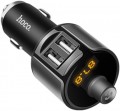 |  |
|---|---|---|
| Hoco E19 Smart | Roidmi 3S | |
from £22.50 | Compare prices 1 | |
| User reviews | ||
| TOP sellers | ||
2 USB ports for simultaneous charging of gadgets. Fast charging. Backlight. No microphone. | ||
| Type | FM transmitter | FM transmitter |
| Frequency range | 87.5 – 108 MHz | 88.1 – 107.9 MHz |
Features | ||
| Screen |  |  |
| Bluetooth | | |
| Hands free | | |
Interfaces | ||
| USB input | | |
| Max. memory card / flash drive capacity | 32 GB | |
| Media support | WMA, MP3 | |
General | ||
| Charging port | USB-A | USB-A |
| 24V support | | |
| Added to E-Catalog | may 2019 | november 2017 |



Compare Hoco E19 Smart and Roidmi 3S
Price comparison
You may be interested in
Hoco E19 Smart often compared


Roidmi 3S often compared


Glossary
Frequency range
The FM frequency range supported by the FM transmitter.
For normal use of the device, it is necessary that at least part of this range coincides with the tuner range in the car radio, and that there is no full-fledged FM station broadcasting at the selected frequency. However, most modern FM transmitters cover frequencies of the order of 88 – 108 MHz, this is quite enough to find a suitable frequency.
For normal use of the device, it is necessary that at least part of this range coincides with the tuner range in the car radio, and that there is no full-fledged FM station broadcasting at the selected frequency. However, most modern FM transmitters cover frequencies of the order of 88 – 108 MHz, this is quite enough to find a suitable frequency.
Screen
The presence of a display in the design of the FM transmitter.
Various additional information can be displayed on the display : the set frequency, the signal source used, the name of the song being played, etc. This greatly simplifies device management.
Various additional information can be displayed on the display : the set frequency, the signal source used, the name of the song being played, etc. This greatly simplifies device management.
Hands free
The presence of a hands-free function in the FM transmitter.
The speakerphone implies the presence of Bluetooth (see the relevant paragraph) and allows you to conduct conversations by broadcasting the voice of the interlocutor through the car's speaker system. This is the best option for talking on the phone while driving — the phone does not need to be held in your hand, and the audibility is better than from the device's own speaker.
At the same time, it is worth noting that the presence of Bluetooth in the FM transmitter does not mean the presence of this function, it requires the presence of a microphone. However, there are also transmitters without a microphone. In one case, in order not to make the conversation public when there are other people in the salon; in the second case, for models without Bluetooth at all.
The speakerphone implies the presence of Bluetooth (see the relevant paragraph) and allows you to conduct conversations by broadcasting the voice of the interlocutor through the car's speaker system. This is the best option for talking on the phone while driving — the phone does not need to be held in your hand, and the audibility is better than from the device's own speaker.
At the same time, it is worth noting that the presence of Bluetooth in the FM transmitter does not mean the presence of this function, it requires the presence of a microphone. However, there are also transmitters without a microphone. In one case, in order not to make the conversation public when there are other people in the salon; in the second case, for models without Bluetooth at all.
Max. memory card / flash drive capacity
The maximum size of a memory card or USB-drive (flash drive) supported by the transmitter.
For more information about memory cards and flash drives, see "Cart Reader" and "USB Input", respectively. Here we note that a modern FM transmitter can support two types of media at once; in such cases, the volume limit is often relevant for both flash drives and memory cards, but this nuance does not hurt to further clarify the documentation. Anyway, this limitation is primarily due to the fact that a higher storage capacity requires a more powerful hardware; in addition, there are nuances associated with individual subspecies of memory cards. Anyway, it is impossible to exceed the maximum allowable volume — this can lead to malfunctions and even to hardware breakdowns.
For more information about memory cards and flash drives, see "Cart Reader" and "USB Input", respectively. Here we note that a modern FM transmitter can support two types of media at once; in such cases, the volume limit is often relevant for both flash drives and memory cards, but this nuance does not hurt to further clarify the documentation. Anyway, this limitation is primarily due to the fact that a higher storage capacity requires a more powerful hardware; in addition, there are nuances associated with individual subspecies of memory cards. Anyway, it is impossible to exceed the maximum allowable volume — this can lead to malfunctions and even to hardware breakdowns.
Media support
File formats supported by the FM transmitter.
Almost all models support the MP3 format, which is the most common modern digital audio format. Some devices are also capable of working with WMA — this is also one of the main formats, but for a number of reasons it is used much less often. And even less common is compatibility with WAV — this format provides higher sound quality, but with FM broadcasting this advantage is lost, and the files themselves take up noticeably more space than MP3 and WMA.
Almost all models support the MP3 format, which is the most common modern digital audio format. Some devices are also capable of working with WMA — this is also one of the main formats, but for a number of reasons it is used much less often. And even less common is compatibility with WAV — this format provides higher sound quality, but with FM broadcasting this advantage is lost, and the files themselves take up noticeably more space than MP3 and WMA.