
Comparison Smart Watch Z60 vs Smart Watch W8
Add to comparison | 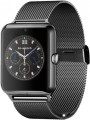 | 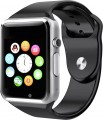 |
|---|---|---|
| Smart Watch Z60 | Smart Watch W8 | |
| Outdated Product | from £90.30 | |
| TOP sellers | ||
| Type | watch phone | watch phone |
| Interface | Bluetooth v4.0 | Bluetooth v3.0 |
Telephony | ||
| SIM card support | micro-SIM | nano-SIM |
| Calls and alerts | notifications sound signal vibration built-in microphone built-in speaker | notifications sound signal vibration built-in microphone built-in speaker |
Sports and tourism | ||
| Possible measurements | number of steps distance traveled calories burned activity time | number of steps distance traveled calories burned activity time |
Display | ||
| Touch screen |  | |
| Type | monochrome | colour |
| Display type | OLED | TFT |
| Size | 1.54 " | |
| Screen resolution | 240x240 px | 240x240 px |
| PPI | 220 ppi | |
| Bezel-less |  | |
Hardware | ||
| CPU frequency | 533 MHz | |
| Memory storage | 128 MB | |
| Memory card slot | | |
| Extra features | Wi-Fi accelerometer camera | accelerometer camera |
Power source | ||
| Device charging | microUSB | |
| Source of power | Li-Ion | Li-Ion |
| Battery capacity | 420 mAh | 350 mAh |
Case and strap | ||
| Material | metal | metal |
| Strap | non-removable | non-removable |
| Strap Options | milanese bracelet | rubber/silicone |
| Clasp options | folding lock | snap fastener |
General | ||
| Protection rating | IP67 | |
| Dimensions (without strap) | 46x42x11.5 mm | 46x38x12 mm |
| Weight | 54 g | |
| Color | ||
| Added to E-Catalog | february 2018 | september 2019 |


Compare Smart Watch Z60 and W8
You may be interested in
My comparisons
Smart Watch Z60 often compared


Smart Watch W8 often compared
Glossary
Interface
The primary way to connect a wrist gadget with external devices. For smartwatches and fitness bands (see "Type"), it is assumed to be connected to a smartphone or tablet, while in the case of watch-phones, it's usually about headsets.
— Bluetooth. A wireless technology for direct communication between various devices. There are different versions that indicate the device's capabilities.
— Bluetooth. A wireless technology for direct communication between various devices. There are different versions that indicate the device's capabilities.
- — 5.0. The fifth generation of Bluetooth was released in 2016. The key innovation in version 5.0 was expanding the capabilities related to the "Internet of Things." For example, the Bluetooth Low Energy protocol introduced the ability to double data transfer speed (up to 2 Mbps) at the cost of reducing range, as well as quadruple the range at the cost of reducing speed; additionally, several improvements were introduced concerning simultaneous operation with a large number of connected devices.
- — v 5.1. An update of the version v 5.0 described above. In addition to general improvements in connection quality and reliability, this update implemented an interesting feature such as determining the direction from which the Bluetooth signal comes. This makes it possible to determine the location of connected devices with centimeter accuracy.
- — v 5.2. The update following 5.1 of the fifth-generation Bluetooth. The main innovations in this version included several security improvements, additional optimization of power consumption in LE mode, and a new audio signal format for synchronizing parallel playback on multiple devices.
- — v 5.3.... The Bluetooth v 5.3 wireless communication protocol was introduced in early 2022. Innovations included speeding up the process of coordinating the communication channel between the controller and the device, implementing a feature for rapid switching between low-duty cycle and high-speed modes, improved bandwidth and connection stability by reducing susceptibility to interference. In the event of unexpected interference in Low Energy mode, the procedure for selecting a communication channel for switching is sped up. There were no fundamental innovations in protocol 5.3; however, it is evident that there are several qualitative improvements.
- — v 5.4. The standard generation approved in 2023, which became an intermediate step before Bluetooth 6. The main innovation was the introduction of the PAwR (Periodic Advertising with Responses) mode, allowing watches and other devices to exchange data in large sensor networks with minimal power consumption. Also added was the Encrypted Advertising Data mechanism, enhancing protection against eavesdropping and packet forgery, which is important when using watches for contactless keys or payments. Compared to earlier versions 5.2 and 5.3, Bluetooth 5.4 focuses on security, energy efficiency, and operation in a "noisy" radio environment. In real-world use, this is manifested in more stable data transmission from sensors (heart rate, steps, sleep), battery savings with constant phone connection, and the reliability of functions like notifications or fitness tracking even with many connected devices around.
- — v 6.0. Bluetooth 6 has been officially approved by Bluetooth SIG and offers a number of significant benefits in smartwatches compared to version 5.4. Thanks to the improved Channel Sounding system and LE Audio optimization, such devices maintain connections faster and more stably, determine the distance to the smartphone more accurately (to centimeters), lose frames less frequently during calls or Auracast broadcasts, and provide longer battery life. In practice, this manifests in functions like unlocking a laptop upon approach, precise indoor watch search, reliable operation of heart rate sensors and sports sensors, as well as stable calls even in crowded gyms.
Naturally, to utilize all the capabilities of a particular Bluetooth version, it must be supported not only by the gadget itself but also by the smartphone/tablet to which it is connected.
SIM card support
Type of SIM card for which the gadget is designed. SIM cards are required for mobile communication modules, which are mainly found in watch phones and children's beacons (see "Type"). And their types can be:
— Micro-SIM. Reduced in size and improved, in comparison with the obsolete mini-SIM, a variety of SIM-cards: the dimensions were reduced to 15x12 mm, while the amount of built-in memory and the overall functionality of the chip were slightly expanded.
— Nano-SIM. The newest and smallest variety of replaceable SIM-cards: it has dimensions of only 12x9 mm.
It is worth noting that nowadays, most mobile operators sell SIM cards that are compatible with all three types of slots at once: the chip itself has a nano-SIM format, and such a card can be installed in a micro-SIM or mini-SIM slot using an adapter frame. So paying attention to the type of SIM card makes sense, first of all, if you already have a "sim card" of a strictly defined format and you do not want to change it.
A separate variety is represented by e-SIM(Embedded SIM) — non-removable modules that need to be programmed for a particular mobile operator. On the one hand, this creates some inconvenience: to change the number, changing the SIM card can be easier than reconfiguring the e-SIM. On the other hand, e-SIMs are more compact and...better suited for wearable gadgets, and when you change your number, you do not need to spend money on buying a new card. The compatibility of such a module with the network of a particular operator should be specified separately.
— Micro-SIM. Reduced in size and improved, in comparison with the obsolete mini-SIM, a variety of SIM-cards: the dimensions were reduced to 15x12 mm, while the amount of built-in memory and the overall functionality of the chip were slightly expanded.
— Nano-SIM. The newest and smallest variety of replaceable SIM-cards: it has dimensions of only 12x9 mm.
It is worth noting that nowadays, most mobile operators sell SIM cards that are compatible with all three types of slots at once: the chip itself has a nano-SIM format, and such a card can be installed in a micro-SIM or mini-SIM slot using an adapter frame. So paying attention to the type of SIM card makes sense, first of all, if you already have a "sim card" of a strictly defined format and you do not want to change it.
A separate variety is represented by e-SIM(Embedded SIM) — non-removable modules that need to be programmed for a particular mobile operator. On the one hand, this creates some inconvenience: to change the number, changing the SIM card can be easier than reconfiguring the e-SIM. On the other hand, e-SIMs are more compact and...better suited for wearable gadgets, and when you change your number, you do not need to spend money on buying a new card. The compatibility of such a module with the network of a particular operator should be specified separately.
Type
The type of display installed in the watch/bracelet.
— Colour. Such displays are often found in classic smartwatches and are almost mandatory for watch phones (see "Type"). They allow you to display a wide variety of types of information — not only numbers or indicators, but also pictures, videos, web pages, etc. Among the shortcomings of colour displays in this case are high power consumption (which negatively affects the battery life of the device), as well as a rather high cost.
— Monochrome. There are two types of screens in this category. The first is single-colour displays, like those sometimes found on miniature MP3 players. They are significantly inferior in versatility to full-colour versions and can display only text and simple graphics, but they are cheaper and consume less power. This option is found among fitness trackers (see "Type"). Another variety of "monochrome" is e-ink, "electronic paper", known primarily from electronic books. Such displays can even be used in smartwatches — in addition to the actual colour, they are inferior to the colour versions only in the refresh rate, while consuming much less energy. The main disadvantage of e-ink is the rather high cost.
— Is absent. The complete absence of a display is typical primarily for fitness trackers (see "Type"): the main purpose of such accessories is to collect inform...ation, and other methods are often enough for notifications — the simplest light indicators, sound signals, vibration, etc. Another specific type of non-display device is the smartwatch in the form of a conventional "hand watch" supplemented with indicators on the dial and/or other means of notification.
— Colour. Such displays are often found in classic smartwatches and are almost mandatory for watch phones (see "Type"). They allow you to display a wide variety of types of information — not only numbers or indicators, but also pictures, videos, web pages, etc. Among the shortcomings of colour displays in this case are high power consumption (which negatively affects the battery life of the device), as well as a rather high cost.
— Monochrome. There are two types of screens in this category. The first is single-colour displays, like those sometimes found on miniature MP3 players. They are significantly inferior in versatility to full-colour versions and can display only text and simple graphics, but they are cheaper and consume less power. This option is found among fitness trackers (see "Type"). Another variety of "monochrome" is e-ink, "electronic paper", known primarily from electronic books. Such displays can even be used in smartwatches — in addition to the actual colour, they are inferior to the colour versions only in the refresh rate, while consuming much less energy. The main disadvantage of e-ink is the rather high cost.
— Is absent. The complete absence of a display is typical primarily for fitness trackers (see "Type"): the main purpose of such accessories is to collect inform...ation, and other methods are often enough for notifications — the simplest light indicators, sound signals, vibration, etc. Another specific type of non-display device is the smartwatch in the form of a conventional "hand watch" supplemented with indicators on the dial and/or other means of notification.
Display type
— TFT. The simplest type of liquid crystal panel used in colour displays. They provide a relatively low, but generally sufficient image quality, while they are much cheaper than more advanced options. This type does not require backlight — more precisely, the backlight is part of the screen itself and turns on with it. Of the unequivocal disadvantages, it is worth noting that many TFT panels have rather limited viewing angles; however, as technology improves, this drawback is gradually eliminated.
— IPS. A variety of LCD panels created in an attempt to eliminate the shortcomings of TFT. There are many subspecies of IPS panels, but they all feature high colour reproduction quality, excellent brightness and wide viewing angles. The disadvantage of this option is the relatively high cost.
— OLED. In this case, we mean the technology used to create the simplest monochrome displays. In such screens, each segment that makes up the image is a separate LED, which eliminates the need for external illumination (and even the display itself can be used as a flashlight).
— AMOLED. Screens based on a panel of active organic light emitting diodes. Similar to various types of TFT, this technology allows the creation of high-resolution colour displays. Its key feature is that the screen doe...s not require a separate backlight system — in AMOLED panels, each pixel glows independently, resulting in somewhat lower power consumption. At the same time, such screens are distinguished by good colour reproduction quality, excellent brightness and wide viewing angles, however, they are much more expensive than TFT.
— Super AMOLED. An enhanced version of the AMOLED technology described above, delivering more expansive colour reproduction and brightness, as well as improved touch accuracy and speed, all at a thinner display and lower power consumption. In addition, the degree of reflection of external light is reduced, such a panel gives less glare and is better visible in sunlight.
— E-Ink (E-Paper). Displays made using "electronic paper" technology; in addition, this category also includes screens such as Memory LCD. The classic E-Ink screen is black and white, does not have a backlight (however, it can be built into particular gadgets), has a very low refresh rate and is poorly suited even for stopwatches, not to mention videos or animated pictures. On the other hand, "electronic paper" is perfectly visible in bright light and has a very low power consumption: it requires electricity only when the image is changed, while a still image remains visible even when the power is completely turned off. Memory LCD screens, in turn, with the same advantages, are almost as good as classic LCD panels in terms of refresh rate, but for a number of reasons they are not widely used.
— Transflective. A specific type of LCD panels that can work both due to its own backlight and due to reflected light. In bright external light (for example, in the sun), such a screen effectively reflects it and does not require a separate backlight — however, it is still included in the design and turns on in low light. This type of operation can significantly reduce power consumption compared to traditional LCD screens, where the image is not visible without backlight; in addition, good visibility in bright light is also an important advantage. The main disadvantage of panels of this type is their high cost; in addition, they are made mostly monochrome.
- LTPO. OLED and AMOLED matrices with an adaptive refresh rate that varies over a wide range based on the tasks performed. When rendering dynamic frames, screens with LTPO technology automatically raise the refresh rate to the maximum values, while viewing static images, they automatically reduce it to the minimum. At the heart of the technology is a traditional LTPS substrate with a thin TFT oxide film on top of the TFT base. Dynamic control of the refresh rate is provided by controlling the electron flow. The key benefit of LTPO screens is their reduced power consumption.
— IPS. A variety of LCD panels created in an attempt to eliminate the shortcomings of TFT. There are many subspecies of IPS panels, but they all feature high colour reproduction quality, excellent brightness and wide viewing angles. The disadvantage of this option is the relatively high cost.
— OLED. In this case, we mean the technology used to create the simplest monochrome displays. In such screens, each segment that makes up the image is a separate LED, which eliminates the need for external illumination (and even the display itself can be used as a flashlight).
— AMOLED. Screens based on a panel of active organic light emitting diodes. Similar to various types of TFT, this technology allows the creation of high-resolution colour displays. Its key feature is that the screen doe...s not require a separate backlight system — in AMOLED panels, each pixel glows independently, resulting in somewhat lower power consumption. At the same time, such screens are distinguished by good colour reproduction quality, excellent brightness and wide viewing angles, however, they are much more expensive than TFT.
— Super AMOLED. An enhanced version of the AMOLED technology described above, delivering more expansive colour reproduction and brightness, as well as improved touch accuracy and speed, all at a thinner display and lower power consumption. In addition, the degree of reflection of external light is reduced, such a panel gives less glare and is better visible in sunlight.
— E-Ink (E-Paper). Displays made using "electronic paper" technology; in addition, this category also includes screens such as Memory LCD. The classic E-Ink screen is black and white, does not have a backlight (however, it can be built into particular gadgets), has a very low refresh rate and is poorly suited even for stopwatches, not to mention videos or animated pictures. On the other hand, "electronic paper" is perfectly visible in bright light and has a very low power consumption: it requires electricity only when the image is changed, while a still image remains visible even when the power is completely turned off. Memory LCD screens, in turn, with the same advantages, are almost as good as classic LCD panels in terms of refresh rate, but for a number of reasons they are not widely used.
— Transflective. A specific type of LCD panels that can work both due to its own backlight and due to reflected light. In bright external light (for example, in the sun), such a screen effectively reflects it and does not require a separate backlight — however, it is still included in the design and turns on in low light. This type of operation can significantly reduce power consumption compared to traditional LCD screens, where the image is not visible without backlight; in addition, good visibility in bright light is also an important advantage. The main disadvantage of panels of this type is their high cost; in addition, they are made mostly monochrome.
- LTPO. OLED and AMOLED matrices with an adaptive refresh rate that varies over a wide range based on the tasks performed. When rendering dynamic frames, screens with LTPO technology automatically raise the refresh rate to the maximum values, while viewing static images, they automatically reduce it to the minimum. At the heart of the technology is a traditional LTPS substrate with a thin TFT oxide film on top of the TFT base. Dynamic control of the refresh rate is provided by controlling the electron flow. The key benefit of LTPO screens is their reduced power consumption.
Size
The size of the display installed in the gadget; for round screens, respectively, the diameter is indicated.
A larger screen, on the one hand, is more convenient to use, on the other hand, it significantly affects the dimensions of the entire device, which is especially critical for wearable gadgets. Therefore, manufacturers choose the display size in accordance with the purpose and functionality of each specific model — so that there is enough space on the screen and the device itself is not too bulky.
It is also worth mentioning that screens with a similar size may have different aspect ratios. For example, traditional smartwatches are usually equipped with square or round panels, while in fitness trackers, screens are often made elongated in height.
A larger screen, on the one hand, is more convenient to use, on the other hand, it significantly affects the dimensions of the entire device, which is especially critical for wearable gadgets. Therefore, manufacturers choose the display size in accordance with the purpose and functionality of each specific model — so that there is enough space on the screen and the device itself is not too bulky.
It is also worth mentioning that screens with a similar size may have different aspect ratios. For example, traditional smartwatches are usually equipped with square or round panels, while in fitness trackers, screens are often made elongated in height.
PPI
The density of dots on the screen of the gadget, namely, the number of pixels that are on each inch of the panel vertically or horizontally.
The higher the PPI, the higher the detail of the screen, the clearer and smoother the image is. On the other hand, this indicator affects the price accordingly. Therefore, the higher the density of points, the more advanced, usually, this gadget is in terms of general capabilities. However, when choosing a screen, manufacturers take into account the general purpose and functionality of the device; so that even a small number of PPIs usually does not interfere with comfortable use.
The higher the PPI, the higher the detail of the screen, the clearer and smoother the image is. On the other hand, this indicator affects the price accordingly. Therefore, the higher the density of points, the more advanced, usually, this gadget is in terms of general capabilities. However, when choosing a screen, manufacturers take into account the general purpose and functionality of the device; so that even a small number of PPIs usually does not interfere with comfortable use.
Bezel-less
Bezel-less are displays in which the case or bezel does not occupy the usable area of the front panel, or it is minimized. In terms of design, bezels have both pros and cons. One of the most important reasons for adding substantial bezels to your screen is physical protection. The bezel-less display is very easy to scratch or damage when dropped. On the other hand, the frame takes up space on the screen, and this is one of the reasons why the frames in modern smartwatches are minimized, making the gadget more compact and stylish.
CPU frequency
The clock speed of the processor (CPU) installed in the gadget.
Theoretically, a high clock speed has a positive effect on speed and performance; however, in fact, this parameter has a purely reference and promotional value. This is due to the fact that the real capabilities of the CPU depend on a number of other factors, and the overall performance of the system also depends on the properties of the rest of the hardware. In addition, manufacturers select processors in such a way that their performance is guaranteed to be sufficient, taking into account the planned specialization and functionality of the gadget. Therefore, when choosing this parameter, you can not pay much attention.
Theoretically, a high clock speed has a positive effect on speed and performance; however, in fact, this parameter has a purely reference and promotional value. This is due to the fact that the real capabilities of the CPU depend on a number of other factors, and the overall performance of the system also depends on the properties of the rest of the hardware. In addition, manufacturers select processors in such a way that their performance is guaranteed to be sufficient, taking into account the planned specialization and functionality of the gadget. Therefore, when choosing this parameter, you can not pay much attention.
Memory storage
The amount of own storage provided in the design of the watch/bracelet. This memory is used for permanent storage of various information: call log, received SMS and other messages, additional applications, data on physical activity for a certain time, etc. The larger its volume, the more data can be stored in the device without the need to clean it to free up space. On the other hand, in the operation of smartwatches, large volumes ( 64 GB, 32 GB, 16 GB, even 8 GB and 4 GB) are not always required, capacious drives are quite expensive, and replaceable cards installed in corresponding slot (see below).