
Comparison Cort AD890CF vs Cort AD810E
Add to comparison | 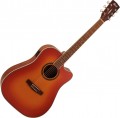 | 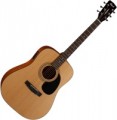 |
|---|---|---|
| Cort AD890CF | Cort AD810E | |
| Outdated Product | Compare prices 1 | |
| TOP sellers | ||
| Type | electroacoustic | electroacoustic |
| Number of strings | 6 | 6 |
| Pickup |  | |
Tone block | ||
| Type | active | active |
| Equalizer | | |
| Tuner | | |
Body | ||
| Size | 4/4 | 4/4 |
| Shape | dreadnought (western) | dreadnought (western) |
| Cutaway | |  |
| Pickguard | | |
| Top deck | spruce | spruce |
| Bottom deck | mahogany | mahogany |
| Shell | mahogany | mahogany |
| Bridge | merbau | rosewood |
Neck | ||
| Number of frets | 20 | 20 |
| Anchor | single | single |
| Scale | 25.5 " | 25.6 " |
| Neck material | mahogany | mahogany |
| Fretboard | merbau | rosewood |
| Color | ||
| Added to E-Catalog | november 2018 | july 2016 |



Compare Cort AD890CF and AD810E
Price comparison
You may be interested in
My comparisons
Cort AD810E often compared


Glossary
Cutaway
Special cutout on the body of the guitar. It is located at the base of the neck, to the right of it, if you look at the upright guitar from the front (in left-handed models — on the left). This feature makes it much easier to play on the upper frets (located near the rosette): without a cutout, the body would prevent reaching them. Therefore, this feature is highly desirable for guitarists who play notes at high frets (from the 12th and above).
There is an opinion that the cutout negatively affects the acoustics of the guitar (reduces the useful volume of the body, reduces the volume and saturation). However, in most cases, this effect is almost imperceptible, especially since manufacturers often use various tricks to compensate for this effect.
There is an opinion that the cutout negatively affects the acoustics of the guitar (reduces the useful volume of the body, reduces the volume and saturation). However, in most cases, this effect is almost imperceptible, especially since manufacturers often use various tricks to compensate for this effect.
Bridge
The material from which the bridge (string holder) of the guitar is made is a device with which the strings are attached to the top deck.
Theoretically, the colour of the sound of an instrument depends on the characteristics of all its details. However, in the case of the bridge, this influence is so insignificant that the data on the material in this case are more of general reference and advertising than of real practical value. The variety of such materials is quite large; among the most common are rosewood, mongoy and ebony.
Theoretically, the colour of the sound of an instrument depends on the characteristics of all its details. However, in the case of the bridge, this influence is so insignificant that the data on the material in this case are more of general reference and advertising than of real practical value. The variety of such materials is quite large; among the most common are rosewood, mongoy and ebony.
Scale
Scale length of the guitar. The scale in this case is the working part of the string, in other words, the distance from the saddle (on the headstock) to the saddle (on the bridge). In most acoustic and similar guitars, the scale is set during production and is unchanged. Without going into technical details, we can say that the value of this parameter is generally a reference: it allows you to some extent estimate the overall dimensions of the instrument, as well as the size of the frets (the longer the scale, the larger the size of the frets, regardless of their number). However, there is also a practical application: with an adjustable anchor (see above), the scale length data can be useful in the tuning process.