
Comparison Panda X600 vs Panda X500
Add to comparison | 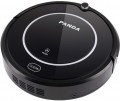 | 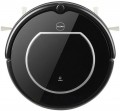 |
|---|---|---|
| Panda X600 | Panda X500 | |
| Outdated Product | from $266.00 | |
| User reviews | ||
| TOP sellers | ||
| Type | robot vacuum cleaner | robot vacuum cleaner |
| Cleaning | dry 2 side brushes | dry 2 side brushes |
Robot vacuum cleaner | ||
| Dust container capacity | 500 ml | 450 ml |
| Fine filter | HEPA | HEPA |
| Cleaning area limitation | laser sensor | laser sensor |
Features | ||
| Scheduled cleaning |  | |
| Remote control | | |
Battery | ||
| Battery capacity | 2 Ah | 2.2 Ah |
| Operating time | 90 min | 110 min |
| Charging time | 5 h | 5 h |
General | ||
| Noise level | 50 dB | 50 dB |
| Dimensions (HxWxD) | 9x34x34 cm | 10x45x45 cm |
| Weight | 3.5 kg | 3.5 kg |
| Color | ||
| Added to E-Catalog | december 2014 | october 2014 |


Compare Panda X600 and X500
The Panda X600 and Panda X500 robot vacuums have similar features but differ in some key aspects. The Panda X600 offers greater suction power (50 W) and a larger dustbin capacity (0.5 L), which allows it to handle cleaning more effectively, especially in homes with pets. Users note that the X600 excels at collecting dust and hair and also features improved cleaning algorithms and additional functions, such as a UV lamp and the ability for wet cleaning. Meanwhile, the Panda X500, with a smaller dustbin capacity (0.45 L) and less power, also receives positive feedback for its quiet operation and ability to handle pet hair, though it sometimes gets tangled in cords and requires pre-cleaning space preparation. Both devices have similar features, such as scheduled cleaning and fall protection, but the X600 offers more capabilities and improved performance, making it the more preferred choice for users seeking a more powerful and functional vacuum.
You may be interested in
My comparisons
Panda X500 often compared

Glossary
Dust container capacity
The dustbin capacity indicates how much dry debris fits in the robot vacuum’s built-in container before it needs to be emptied. Models with a 200–300 ml capacity are suitable for a small apartment and frequent cleaning cycles, while a 400–600 ml capacity is more convenient for larger areas, pets, or lots of hair. For robots with a self-emptying station, the size of the internal container is less important, as debris is automatically transferred to the docking station’s collection bin.
Battery capacity
Battery capacity indicates the amount of charge available to the robot vacuum for navigation, motor operation, brushes, and the mopping system. A higher-capacity battery can potentially provide longer runtime, but it does not allow the exact cleaning time to be determined without considering the device's power consumption. Operating time is more strongly affected by the selected mode, suction power, floor type, use of mopping pads, and frequency of returns to the docking station.
Operating time
Battery life determines how much area the robot vacuum can clean before returning to the docking station. Actual performance depends on the selected mode, suction power, floor type, operation of the mops or roller, and layout complexity. Therefore, the stated maximum time is usually achieved in a gentle mode and will be noticeably shorter during intensive cleaning.