
Comparison DJI Tello Boost Combo vs RYZE Tello
Add to comparison | 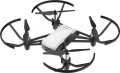 | 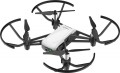 |
|---|---|---|
| DJI Tello Boost Combo | RYZE Tello | |
from £139.00 | from £112.97 | |
| User reviews | ||
| TOP sellers | ||
It has five flight modes. Can be used with 3D glasses. Electronic image stabilization. It has a 14-core Intel processor. Takeoff and landing by hand. The ability to programme the drone in Scratch (a programming language for teaching students). The DJI Tello Boost Combo model differs from the Tello model in the presence of additional batteries, a hub and a microUSB cable. Developed by Ryze Tech, DJI and Intel jointly and can be sold under different brands (does not differ in characteristics). | It has five flight modes. Can be used with 3D glasses. Electronic image stabilization. 14-core Intel processor. Flight control system from DJI. Takeoff and landing by hand. The ability to programme the drone on Scratch. Can be equipped with additional batteries. Developed by Ryze Tech, DJI and Intel jointly and can be sold under different brands (does not differ in characteristics). collector motors. There is no USB charging cable included. | |
| Features | mini drone | mini drone |
Flight specs | ||
| Maximum flight time | 13 min | 13 min |
| Horizontal speed | 30 km/h | 30 km/h |
Camera | ||
| Camera type | built-in | built-in |
| Number of megapixels | 5 MP | 5 MP |
| HD filming (720p) | 1280x720 px 30 fps | 1280x720 px 30 fps |
| Viewing angles | 82.6° | 82.6° |
| Camera stabilization |  | |
| Live video streaming | | |
Flight modes and sensors | ||
| Flight modes | return "home" acrobatic mode | return "home" acrobatic mode |
| Sensors | heights gyroscope | heights gyroscope |
Control and transmitter | ||
| Control | smartphone only | smartphone only |
| Range | 100 m | 100 m |
| Video transmission frequency | 2.4 GHz (Wi-Fi) | |
Motor and chassis | ||
| Motor type | collector | collector |
| Number of screws | 4 pcs | 4 pcs |
Battery | ||
| Battery capacity | 1.1 Ah | 1.1 Ah |
| Voltage | 3.8 В | 3.8 В |
| Batteries in the set | 3 pcs | 1 pcs |
| USB charging | | |
General | ||
| Protected case | | |
| Body backlight | | |
| Material | plastic | plastic |
| Dimensions | 98x93x41 mm | 98x93x41 mm |
| Weight | 80 g | 80 g |
| Color | ||
| Added to E-Catalog | february 2019 | february 2019 |


Compare DJI Tello Boost Combo and RYZE Tello
You may be interested in
My comparisons
DJI Tello Boost Combo often compared

RYZE Tello often compared


Glossary
Video transmission frequency
The frequency of the radio channel used to transmit the video stream from the camera on board the drone to the receiving device: smartphone or tablet, control panel or pilot’s video glasses. The most common frequencies are 2.4 GHz and 5.8 GHz; video data transmission at a frequency of 1.2 GHz is less common. This parameter directly affects the quality and stability of the video signal, depending on environmental conditions, as well as accompanying interference from other devices. Thus, for receiving video from FPV drones, the most preferable frequency is 5.8 GHz, which is due to a wide selection of channels and high data transfer rates.
Batteries in the set
The number of batteries for the drone itself, supplied in the kit.
Most modern drones use a single battery; accordingly, the presence of several batteries in the kit usually means the ability to quickly change them. This allows you to extend the operating time without recharging the batteries: when the energy reserve is exhausted, it is enough to replace the dead battery with a fresh one. At the same time, there are quadcopters that require several batteries at once; this feature is directly indicated in the specifications (see below), and such models are usually equipped with the minimum set of batteries necessary for operation. However, there are exceptions — for example, a model for two batteries can be supplied immediately with 8 or even 10 power supplies. These nuances should be clarified separately.
Most modern drones use a single battery; accordingly, the presence of several batteries in the kit usually means the ability to quickly change them. This allows you to extend the operating time without recharging the batteries: when the energy reserve is exhausted, it is enough to replace the dead battery with a fresh one. At the same time, there are quadcopters that require several batteries at once; this feature is directly indicated in the specifications (see below), and such models are usually equipped with the minimum set of batteries necessary for operation. However, there are exceptions — for example, a model for two batteries can be supplied immediately with 8 or even 10 power supplies. These nuances should be clarified separately.