
Comparison Ecooter E2L vs Ecooter E1R
Add to comparison | 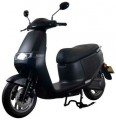 | 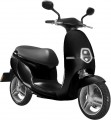 |
|---|---|---|
| Ecooter E2L | Ecooter E1R | |
| Outdated Product | Outdated Product | |
| TOP sellers | ||
Two modifications are available with engine power of 3 kW and 4.2 kW. | ||
| Product type | electric scooterbike | electric scooterbike |
| Max. load | 150 kg | 150 kg |
Driving performance | ||
| Range | 80 km | 100 km |
| Power | 3.3 hp | |
| Power | 2.5 kW | 3 kW |
| Max speed | 60 km/h | 50 km/h |
| Max. climb angle | 18 ° | 18 ° |
| Wheels | 12 " | 12 " |
Battery | ||
| Battery type | Li-Ion | Li-Ion |
| Battery capacity | 30 Ah | 30 Ah |
| Energy capacity | 1920 Wh | 1920 Wh |
| Full charge time | 4.5 h | 6 h |
| Removable battery |  | |
Functions and features | ||
| Headlight and position lamps | | |
| Turn signals | | |
| Horn | | |
| Passenger seat | | |
| Kickstand | | |
General | ||
| Wheelbase | 1300 mm | 1260 mm |
| Dimensions | 184x70x111 cm | 175x65x108 cm |
| Weight | 93 kg | 95 kg |
| Color | ||
| Added to E-Catalog | may 2019 | may 2019 |


Compare Ecooter E2L and E1R
You may be interested in
Ecooter E1R often compared

Glossary
Range
The range of a vehicle is the distance it can travel on a single battery charge.
Note that the range usually indicates the value for perfect operating conditions: driving at optimal speed with a small load, flat road, no ups and downs, etc. The actual range may differ from the claimed one, sometimes quite noticeably. In addition, to improve range, manufacturers can deliberately use low-power motors that consume little energy.
Note that the range usually indicates the value for perfect operating conditions: driving at optimal speed with a small load, flat road, no ups and downs, etc. The actual range may differ from the claimed one, sometimes quite noticeably. In addition, to improve range, manufacturers can deliberately use low-power motors that consume little energy.
Power
The motor power of a vehicle, in horsepower.
In general, the power of electric motors is indicated in watts. However, in electric transport, this designation is also often indicated. This is done for the convenience of comparison with internal combustion engines: for internal combustion engines, especially in vehicles, horsepower is traditionally used, and it is more convenient for some users to evaluate the power of motors by this designation. At the same time, if the need arises, some units are easily converted to others: 1 hp. ≈ 735 W.
For the power value in general, see the relevant paragraph below.
In general, the power of electric motors is indicated in watts. However, in electric transport, this designation is also often indicated. This is done for the convenience of comparison with internal combustion engines: for internal combustion engines, especially in vehicles, horsepower is traditionally used, and it is more convenient for some users to evaluate the power of motors by this designation. At the same time, if the need arises, some units are easily converted to others: 1 hp. ≈ 735 W.
For the power value in general, see the relevant paragraph below.
Power
The motor power of a vehicle, in kilowatts. In addition to them, horsepower is also used (for more details, see above).
Let us clarify that in this case, we are talking about maximum power; the actual power can be adjusted while driving with the help of the accelerator. And in some models, it may even be possible to set a limit on the maximum power.
A more powerful motor allows you to carry more weight, reach higher speeds and/or have more torque. However, the energy consumption from the battery will also be high, and the battery life, with the same battery capacity, will be correspondingly less than when using a less powerful motor. Also note that in many countries, motor power is a criterion for classifying an electric vehicle as one or another variety. For example, according to this criterion, motorcycles and scooters can be formally separated, requiring different driving licences.
Let us clarify that in this case, we are talking about maximum power; the actual power can be adjusted while driving with the help of the accelerator. And in some models, it may even be possible to set a limit on the maximum power.
A more powerful motor allows you to carry more weight, reach higher speeds and/or have more torque. However, the energy consumption from the battery will also be high, and the battery life, with the same battery capacity, will be correspondingly less than when using a less powerful motor. Also note that in many countries, motor power is a criterion for classifying an electric vehicle as one or another variety. For example, according to this criterion, motorcycles and scooters can be formally separated, requiring different driving licences.
Max speed
The highest speed that a vehicle can reach.
When choosing according to this parameter, it is worth considering that in dense city traffic, it is rarely possible to accelerate faster than 40 km/h; so if the vehicle is bought mainly for a comfortable ride through traffic jams, then there is no need to look for a high-speed model. In addition, for the same motor power, low speed means more torque, which makes it easier to climb hills.
When choosing according to this parameter, it is worth considering that in dense city traffic, it is rarely possible to accelerate faster than 40 km/h; so if the vehicle is bought mainly for a comfortable ride through traffic jams, then there is no need to look for a high-speed model. In addition, for the same motor power, low speed means more torque, which makes it easier to climb hills.
Full charge time
The time needed to charge the vehicle battery from 0 to 100%.
This parameter allows you to estimate what breaks you will have to take between trips to charge the vehicle. But keep in mind that a short charging time may mean a low battery capacity.
Separately, we note that in modern battery technology, “emergency” charging technologies can be used, which make it possible to partially replenish the energy supply in a very short time — for example, to charge a battery by 40% in an hour, which in normal mode would be fully charged in 8 hours.
This parameter allows you to estimate what breaks you will have to take between trips to charge the vehicle. But keep in mind that a short charging time may mean a low battery capacity.
Separately, we note that in modern battery technology, “emergency” charging technologies can be used, which make it possible to partially replenish the energy supply in a very short time — for example, to charge a battery by 40% in an hour, which in normal mode would be fully charged in 8 hours.
Wheelbase
Wheelbase of the vehicle.
This term shows the distance between the wheels, more precisely, between the axles of the wheels. This size is one of the key parameters for any motorcycle, it determines not only the overall dimensions of the vehicle but also some of the features of the movement. So, a small wheelbase reduces the turning radius and makes the vehicle more manoeuvrable; at the same time, a longer vehicle will be more stable and predictable in corners.
This term shows the distance between the wheels, more precisely, between the axles of the wheels. This size is one of the key parameters for any motorcycle, it determines not only the overall dimensions of the vehicle but also some of the features of the movement. So, a small wheelbase reduces the turning radius and makes the vehicle more manoeuvrable; at the same time, a longer vehicle will be more stable and predictable in corners.
Weight
The total weight of the vehicle without cargo and rider.
The lighter the unit, the greater the range and, accordingly, the weight of the payload that can be carried on it. On the other hand, too little weight adversely affects the stability, and sometimes the overall strength of the structure.
The lighter the unit, the greater the range and, accordingly, the weight of the payload that can be carried on it. On the other hand, too little weight adversely affects the stability, and sometimes the overall strength of the structure.