
Comparison Viper 6.5 vs Smart Balance Wheel U3
Add to comparison | 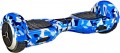 | 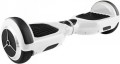 |
|---|---|---|
| Viper 6.5 | Smart Balance Wheel U3 | |
| Outdated Product | from $401.00 | |
| TOP sellers | ||
Power reserve up to 20 km. Bluetooth speakers. Remote control. An abundance of colours and bright prints. Low clearance. | ||
| Product type | hoverboard | hoverboard |
| Max. load | 100 kg | 120 kg |
Driving performance | ||
| Range | 20 km | 20 km |
| Max. speed | 15 km/h | 20 km/h |
| Wheel size | 6.5 " | 6.5 " |
| Max. climb angle | 15 ° | 15 ° |
| Wheel material | rubber | rubber |
| More features | position lamps remote control | position lamps Bluetooth speakers remote control |
Battery and motor | ||
| Battery capacity | 4400 mAh | 4400 mAh |
| Battery capacity | 158 W*h | 158 W*h |
| Voltage | 36 В | 36 В |
| Power | 500 W | 700 W |
| Number of motors | 2 | 2 |
| Full charge time | 120 min | 120 min |
General | ||
| Dustproof, waterproof | IP54 | IP54 |
| Dimensions | 584x186x178 mm | 584x186x178 mm |
| Weight | 10 kg | 11 kg |
| Color | ||
| Added to E-Catalog | august 2017 | september 2016 |


Compare Viper 6.5 and Smart Balance Wheel U3
You may be interested in
My comparisons
Smart Balance Wheel U3 often compared


Glossary
Max. load
The maximum rider weight that the device can support (including the weight of a backpack, bag and other things carried on oneself; this is especially important to remember if the weight of the person himself is close to the maximum allowable). If the permissible load is exceeded, the transport not only loses efficiency but can also break down at any time. Therefore, it is impossible to ignore the prescriptions for weight anyway.
Max. speed
The maximum speed that the hoverboard is capable of reaching: on a flat surface, with a full battery charge and an average rider weight. The same parameter is also the maximum safe speed allowed when using this model; in theory, it is possible to accelerate even faster (for example, from a mountain), but this is fraught with breakdown, accident and injury, and therefore is not recommended at all.
Most modern models have a maximum speed of up to 20 km/h, and in “high-speed” vehicles this figure can exceed 30 km/h. Note that a fall from a hoverboard, even at a speed of 10 – 15 km/h, is fraught with serious injuries. Therefore, protective gear is highly recommended.
Most modern models have a maximum speed of up to 20 km/h, and in “high-speed” vehicles this figure can exceed 30 km/h. Note that a fall from a hoverboard, even at a speed of 10 – 15 km/h, is fraught with serious injuries. Therefore, protective gear is highly recommended.
More features
— Position lights. The dimensions of the self-stabilizing transport are small, so such lights not only highlight the dimensions of the vehicle, but increase its visibility. This function is especially important at night — for safety, both for the rider and those around him. And in some countries, operation without position lights is prohibited by law.
In models that do not have front and rear sides as such and can drive equally efficiently in either direction, position lights are often made in the form of switchable two-colour lights: for example, the device turns on white light from the side it is currently traveling to, and red on the opposite side of the case.
— Bluetooth. This feature turns the vehicle into a mobile speaker system: you can connect an external Bluetooth device (for example, a smartphone) to it and listen to music through the built-in speakers during the ride.
— USB port. Usually, this port is intended for charging smartphones or other gadgets from the built-in battery — thus, the vehicle turns into an external battery (power bank). At the same time, given the impressive battery capacity in a self-stabilizing vehicle, charging an external gadget has practically no effect on the power reserve — especially since we are most often talking about a minimum charge replenishment, and not about charging up to 100%.
...— Remote control. Such control can be carried out both from a separate remote control supplied in the kit, and via a smartphone (usually via Bluetooth) using a proprietary application. Specific control options can be different — up to the tracking mode, when the device itself follows the owner at a certain distance. However, anyway, this function significantly expands the possibilities of transport.
In models that do not have front and rear sides as such and can drive equally efficiently in either direction, position lights are often made in the form of switchable two-colour lights: for example, the device turns on white light from the side it is currently traveling to, and red on the opposite side of the case.
— Bluetooth. This feature turns the vehicle into a mobile speaker system: you can connect an external Bluetooth device (for example, a smartphone) to it and listen to music through the built-in speakers during the ride.
— USB port. Usually, this port is intended for charging smartphones or other gadgets from the built-in battery — thus, the vehicle turns into an external battery (power bank). At the same time, given the impressive battery capacity in a self-stabilizing vehicle, charging an external gadget has practically no effect on the power reserve — especially since we are most often talking about a minimum charge replenishment, and not about charging up to 100%.
...— Remote control. Such control can be carried out both from a separate remote control supplied in the kit, and via a smartphone (usually via Bluetooth) using a proprietary application. Specific control options can be different — up to the tracking mode, when the device itself follows the owner at a certain distance. However, anyway, this function significantly expands the possibilities of transport.
Power
The power of the motor installed in the device. For models with two electric motors, this paragraph usually indicates their total power.
This parameter is one of the most critical for self-balancing transport. On the one hand, powerful motors improve the efficiency of balancing (especially with the large weight of the rider), allow you to reach high speed, effectively overcome bumps in the road and climb hills. On the other hand, they weigh a lot, are expensive and require capacious batteries to ensure a decent range (which further affects the weight and price of the entire unit). Therefore, motor power, usually, directly depends on the price category of a particular model.
In fact, the more powerful the motors, the better, and the question of choice for this parameter depends primarily on the price.
This parameter is one of the most critical for self-balancing transport. On the one hand, powerful motors improve the efficiency of balancing (especially with the large weight of the rider), allow you to reach high speed, effectively overcome bumps in the road and climb hills. On the other hand, they weigh a lot, are expensive and require capacious batteries to ensure a decent range (which further affects the weight and price of the entire unit). Therefore, motor power, usually, directly depends on the price category of a particular model.
In fact, the more powerful the motors, the better, and the question of choice for this parameter depends primarily on the price.