
Comparison HTC Vive Cosmos vs Lenovo Explorer
Add to comparison | 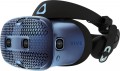 | 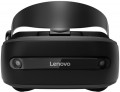 |
|---|---|---|
| HTC Vive Cosmos | Lenovo Explorer | |
from £394.99 | from £491.07 | |
| User reviews | ||
| TOP sellers | ||
To work, you need to connect to a computer or smartphone. The design of the device has 4 cameras (2 front, 2 side). Thanks to the presence of cameras and controllers, there is no need for external motion tracking devices. Requires the use of two controllers to track the movements of the user. | 2 Inside-out motion detection cameras. Voice control system Cortana. Cortana is available in select markets, experience may vary by region. | |
| Device type | VR glasses | VR glasses |
| Purpose (compatibility) | Windows | Windows |
Specs | ||
| Screen resolution | 2880x1700 px | 2880x1440 px |
| Field of view | 110 ° | 110 ° |
| Refresh rate | 90 fps | 90 fps |
| 6DoF motion tracking |  | |
| Accelerometer | | |
| Gyroscope | | |
| Proximity sensor | | |
| Lens distance adjusting | | |
| Pupillary distance adjustment | | |
Multimedia | ||
| USB-A | |  |
| DisplayPort | v1.2 | |
| Headphones | | |
General | ||
| Controller | | |
| Track camera | | |
| Material | plastic | plastic |
| Dimensions (HxWxD) | 185x102x95 mm | |
| Weight | 380 g | |
| Added to E-Catalog | january 2019 | september 2018 |


Compare HTC Vive Cosmos and Lenovo Explorer
You may be interested in
My comparisons
HTC Vive Cosmos often compared


Lenovo Explorer often compared


Glossary
Screen resolution
Resolution of built-in displays in glasses equipped with such equipment — that is, models for PC / consoles, as well as standalone devices (see "Intended use").
The higher the resolution, the more smooth and detailed the “picture” is given out by glasses, all other things being equal. Thanks to the development of technology nowadays, models with Full HD (1920x1080) screens and even higher resolutions are not uncommon. On the other hand, this parameter significantly affects the cost of points. In addition, it is worth remembering that in order to fully work with high-resolution displays, you need powerful graphics capable of playing relevant content. In the case of glasses for PCs and set-top boxes, this puts forward corresponding requirements for external devices, and in standalone models you have to use advanced integrated video adapters (which affects the cost even more).
The higher the resolution, the more smooth and detailed the “picture” is given out by glasses, all other things being equal. Thanks to the development of technology nowadays, models with Full HD (1920x1080) screens and even higher resolutions are not uncommon. On the other hand, this parameter significantly affects the cost of points. In addition, it is worth remembering that in order to fully work with high-resolution displays, you need powerful graphics capable of playing relevant content. In the case of glasses for PCs and set-top boxes, this puts forward corresponding requirements for external devices, and in standalone models you have to use advanced integrated video adapters (which affects the cost even more).
USB-A
The presence of at least one USB-A port in the glasses. This is a full-sized USB port, the same type as standard USB ports on computers and laptops. However, its functions may vary depending on the functionality of the glasses (see "Purpose"). For models for PCs and consoles, USB-A is one of the connection ports used in conjunction with a video interface like HDMI or DisplayPort: the video interface transmits the image, while the USB connection transmits data from sensors on the glasses necessary for changing the picture and creating an "immersion effect". In standalone devices, USB-A is used for connecting various additional accessories — for example, flash drives with applications or other content. This port may also be used for charging the battery, although such use is generally not typical for it.
DisplayPort
Availability of DisplayPort input in glasses; the version of this interface can also be specified here.
DisplayPort is one of the most popular high-resolution digital video interfaces these days (however, audio transmission is also possible). It is especially common in computer technology, and is actually a standard in Apple PCs and laptops. Only glasses for computers and set-top boxes are equipped with this type of input (see “Purpose”) - it is used to receive a video signal (and audio signal, if necessary) from an external device. As for DisplayPort versions, the options here could be:
- v.1.2. The earliest (2010) version that is relevant today, but at the same time a more than functional version. Fully supports video quality up to 5K (30 fps), and with certain restrictions - up to 8K.
- v.1.3. Update released in 2014. It provided the opportunity to fully work with 8K resolutions at 30 fps, and with 4K and 5K at 120 and 60 fps, respectively.
- v.1.4. Updated in 2016, in which the bandwidth was further increased - up to support for 5K video at 240 fps and 8K at 120 fps. In addition, there is compatibility with HDR 10 technology, which improves color reproduction and overall picture quality.
DisplayPort is one of the most popular high-resolution digital video interfaces these days (however, audio transmission is also possible). It is especially common in computer technology, and is actually a standard in Apple PCs and laptops. Only glasses for computers and set-top boxes are equipped with this type of input (see “Purpose”) - it is used to receive a video signal (and audio signal, if necessary) from an external device. As for DisplayPort versions, the options here could be:
- v.1.2. The earliest (2010) version that is relevant today, but at the same time a more than functional version. Fully supports video quality up to 5K (30 fps), and with certain restrictions - up to 8K.
- v.1.3. Update released in 2014. It provided the opportunity to fully work with 8K resolutions at 30 fps, and with 4K and 5K at 120 and 60 fps, respectively.
- v.1.4. Updated in 2016, in which the bandwidth was further increased - up to support for 5K video at 240 fps and 8K at 120 fps. In addition, there is compatibility with HDR 10 technology, which improves color reproduction and overall picture quality.
Headphones
The presence of your own headphones in the design or delivery of virtual reality glasses.
A full-fledged "immersion" in the virtual world requires not only a picture on the screen, but also an appropriate sound accompaniment, for which headphones are the best option. However, glasses take up quite a lot of space on the head, and not all “ears” can be comfortably combined with them (this is especially noticeable on large over-ear headphones). In addition, when connecting headphones with a wire, there may be problems related to the length and/or location of the audio cable. Thus, some models provide this function. These models can have any purpose (see above); most of these are for PC/console glasses, but headphones are also popular in standalone devices. Also note that some glasses use speakers located in the ear area; such speakers are also considered headphones in this case.
An alternative to the bundled "ears" is a headphone output; however, there are models with both functions at once — either folding / removable cups or the simplest speakers mentioned above play the role of headphones in them.
A full-fledged "immersion" in the virtual world requires not only a picture on the screen, but also an appropriate sound accompaniment, for which headphones are the best option. However, glasses take up quite a lot of space on the head, and not all “ears” can be comfortably combined with them (this is especially noticeable on large over-ear headphones). In addition, when connecting headphones with a wire, there may be problems related to the length and/or location of the audio cable. Thus, some models provide this function. These models can have any purpose (see above); most of these are for PC/console glasses, but headphones are also popular in standalone devices. Also note that some glasses use speakers located in the ear area; such speakers are also considered headphones in this case.
An alternative to the bundled "ears" is a headphone output; however, there are models with both functions at once — either folding / removable cups or the simplest speakers mentioned above play the role of headphones in them.
Track camera
The presence of a special external camera in the glasses; often several such cameras are installed at once, for a more complete coverage of the surrounding space.
The main function of the track camera is to track the movement of game controllers held by the user. This makes it possible to perform various game actions with the help of appropriate hand movements — for example, to strike or shoot from a bow. In addition, the track camera can be used to "perceive" the environment — for example, building a "safe zone" in virtual space based on data on the size of the room, so that the user can see right in the game how far he can move without collisions.
The main function of the track camera is to track the movement of game controllers held by the user. This makes it possible to perform various game actions with the help of appropriate hand movements — for example, to strike or shoot from a bow. In addition, the track camera can be used to "perceive" the environment — for example, building a "safe zone" in virtual space based on data on the size of the room, so that the user can see right in the game how far he can move without collisions.