
Comparison HTC Vive Pro Eye vs HTC Vive Pro KIT
Add to comparison | 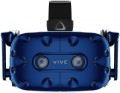 | 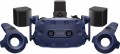 |
|---|---|---|
| HTC Vive Pro Eye | HTC Vive Pro KIT | |
from £699.00 | from £1,371.00 | |
| User reviews | ||
| TOP sellers | ||
User gaze tracking function. Headphones have a built-in amplifier. Dual front camera. Increased resolution of AMOLED matrices. Comfortable fit. Huge library of PC games. Requires a relatively powerful PC and a lot of free space in the room. | Headphones have a built-in amplifier. Dual front camera. Increased resolution of AMOLED matrices. Comfortable fit. Huge library of PC games. Includes 2 controllers and 2 base stations Requires a relatively powerful PC and a lot of free space in the room. | |
| Device type | VR glasses | VR glasses |
| Purpose (compatibility) | Windows | Windows |
Specs | ||
| Screen resolution | 2880x1600 px | 2880x1600 px |
| Field of view | 110 ° | 110 ° |
| Refresh rate | 90 fps | 90 fps |
| 6DoF motion tracking |  | |
| Accelerometer | | |
| Gyroscope | | |
| Lens distance adjusting | | |
| Pupillary distance adjustment | | |
Multimedia | ||
| USB-C | 5Gbps | + |
| DisplayPort | v1.2 | v1.2 |
| Bluetooth | + | + |
| Microphone | | |
| Headphones | | |
General | ||
| Controller |  | |
| External sensors | | |
| Track camera | | |
| Material | plastic | plastic |
| Added to E-Catalog | january 2019 | november 2018 |


Compare HTC Vive Pro Eye and Vive Pro KIT
You may be interested in
HTC Vive Pro Eye often compared


HTC Vive Pro KIT often compared


Glossary
USB-C
Presence of a USB-C port in glasses. This is a relatively new type of USB port, with miniature size (slightly larger than microUSB) and a convenient reversible design, allowing the plug to be connected either way. It can be found in glasses of different purposes and, accordingly, designed for various applications. For example, in models for PCs/consoles, this port is used similarly to traditional USB-A — for main connection, alongside HDMI or DisplayPort interfaces. In standalone devices, in turn, USB-C is mainly intended for battery charging and connection to a computer for direct file exchange, settings management, firmware updates, etc.
It should also be noted that this section might specify the USB version that the USB-C port corresponds to. Currently, two versions are relevant — 5Gbps and 10Gbps; for VR glasses, the difference between them is generally not significant.
It should also be noted that this section might specify the USB version that the USB-C port corresponds to. Currently, two versions are relevant — 5Gbps and 10Gbps; for VR glasses, the difference between them is generally not significant.
Controller
The presence of a controller — an additional control device — is included in the delivery of glasses.
The design and functionality of such an accessory may be different. So, the most popular option is specialized game controllers with a characteristic look — a handle with an analogue lever and buttons. There can be two such handles at once, under both hands; and in some models they are also used to control gestures. The movement of the hands can be tracked both by sensors in the controllers themselves and by cameras on the glasses. There are also simpler solutions — for example, portable gamepads or remote controls for controlling video playback.
The design and functionality of such an accessory may be different. So, the most popular option is specialized game controllers with a characteristic look — a handle with an analogue lever and buttons. There can be two such handles at once, under both hands; and in some models they are also used to control gestures. The movement of the hands can be tracked both by sensors in the controllers themselves and by cameras on the glasses. There are also simpler solutions — for example, portable gamepads or remote controls for controlling video playback.
External sensors
The presence of external sensors in the delivery set of glasses.
Such sensors are placed in a special way (usually in the corners) in the room where glasses are supposed to be used. They allow you to turn this room (all or part of it) into a playing zone — a space in which the player can physically move during the game. This provides additional features and at the same time ensures safety: the device warns the player when approaching the boundaries of a safe play area (in the real world), preventing collisions and other similar troubles.
Such sensors are placed in a special way (usually in the corners) in the room where glasses are supposed to be used. They allow you to turn this room (all or part of it) into a playing zone — a space in which the player can physically move during the game. This provides additional features and at the same time ensures safety: the device warns the player when approaching the boundaries of a safe play area (in the real world), preventing collisions and other similar troubles.