
Comparison Fenix E12 V2.0 vs Fenix E12
Add to comparison | 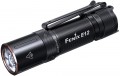 | 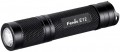 |
|---|---|---|
| Fenix E12 V2.0 | Fenix E12 | |
from £30.14 | from £29.99 | |
| User reviews | ||
| TOP sellers | ||
| Type | trinket | trinket |
Specs | ||
| Lamp type | lED with reflector | lED with reflector |
| Diode model | Cree XP-E2 | |
| Peak luminous flux | 160 lm | 130 lm |
| Lighting range | 68 m | 88 m |
| Brightness levels | 3 | 3 |
Power supply | ||
| Power source | 1xAA | 1xAA |
| Operating time (Low mode) | 70 h | 40 h |
In box | ||
| In box | battery(s) carrying clip strap | strap |
General | ||
| Shockproof |  | |
| Water protection | IP68 | IP68 |
| Material | metal | metal |
| Length | 7.6 cm | 9 cm |
| Weight | 27 g | 29 g |
| Color | ||
| Added to E-Catalog | august 2022 | may 2014 |


Compare Fenix E12 V2.0 and E12
You may be interested in
My comparisons
Fenix E12 V2.0 often compared


Fenix E12 often compared


Glossary
Diode model
Model of the LED(s) used in the flashlight. Knowing the exact name of the LED, you can find its detailed characteristics and evaluate the capabilities of the flashlight. In addition, this information may be useful when replacing a failed diode.
Note that the LED model is indicated mainly if it is a high-quality LED with advanced characteristics. Such light sources are produced by different manufacturers, but the most popular in modern flashlights are products from Cree with its series Cree XM, Cree XP, Cree XHP. Here are some of the most common LEDs from this brand: Cree XP-L, Cree XM-L2, Cree XP-E, Cree XP-G, Cree XM-L T6, Cree XM-L2 T6, Cree XM-L U2, Cree XM- L2 U2, Cree XP-G R5, Cree XP-G2 R5, Cree XP-E Q5.
Cree XM-L and XM-L2 series diodes are used in high-power flashlights. XP-G and XP-G2 are used in relatively small models. They produce a beam of light in the shape of a circle with a darkening inside when using a reflector to focus. XP-E and XP-E2 are a godsend for small items with an evenly f...ocused beam and even illumination on the sides. The number “2” in the designation of the diode model indicates increased brightness (compared to the basic modification). The XHP series is also gaining popularity - the LEDs in this line more than double the light flow. At the same time, they are compatible with standard printed circuit boards and optics. The numerical prefix 35/50/70 in the name of XHP diodes indicates the dimensions of the housing.
Along with solutions from Cree, high-quality LEDs from the American manufacturer Luminus are often found in flashlights. Its range includes both inexpensive diode options for budget flashlights and advanced LED light sources with high luminous brightness and luminous flux intensity for the most powerful flashlights.
A separate case is represented by diode plates made using COB technology (chip-on-board, that is, “chip on a board”). Such plates are arrays of a large number of miniature light sources, soldered directly into a printed circuit board at a short distance from each other and filled with a special composition; This composition performs two functions at once. First of all, it protects the LEDs from contact with air, which increases their service life; In addition, the coating effectively diffuses light, creating a uniform luminous flux.
Note that previously, to create LED arrays, SMD technology was mainly used, with individual LEDs soldered onto the surface of a printed circuit board. However, COB is a more modern and advanced option: this technology allows small but bright light sources to be placed at very high densities, achieving powerful lumen output even with small array sizes. In addition, SMD boards did not provide a protective coating.
In general, it makes sense to pay attention to flashlights with COB plates if you need a high-quality source of diffused light. As a result, such diode arrays are especially popular in travel lanterns and auxiliary lighting (see "Type"), but can also be used in other varieties - from ultra-compact key fobs to high-power hand-held lamps.
Note that the LED model is indicated mainly if it is a high-quality LED with advanced characteristics. Such light sources are produced by different manufacturers, but the most popular in modern flashlights are products from Cree with its series Cree XM, Cree XP, Cree XHP. Here are some of the most common LEDs from this brand: Cree XP-L, Cree XM-L2, Cree XP-E, Cree XP-G, Cree XM-L T6, Cree XM-L2 T6, Cree XM-L U2, Cree XM- L2 U2, Cree XP-G R5, Cree XP-G2 R5, Cree XP-E Q5.
Cree XM-L and XM-L2 series diodes are used in high-power flashlights. XP-G and XP-G2 are used in relatively small models. They produce a beam of light in the shape of a circle with a darkening inside when using a reflector to focus. XP-E and XP-E2 are a godsend for small items with an evenly f...ocused beam and even illumination on the sides. The number “2” in the designation of the diode model indicates increased brightness (compared to the basic modification). The XHP series is also gaining popularity - the LEDs in this line more than double the light flow. At the same time, they are compatible with standard printed circuit boards and optics. The numerical prefix 35/50/70 in the name of XHP diodes indicates the dimensions of the housing.
Along with solutions from Cree, high-quality LEDs from the American manufacturer Luminus are often found in flashlights. Its range includes both inexpensive diode options for budget flashlights and advanced LED light sources with high luminous brightness and luminous flux intensity for the most powerful flashlights.
A separate case is represented by diode plates made using COB technology (chip-on-board, that is, “chip on a board”). Such plates are arrays of a large number of miniature light sources, soldered directly into a printed circuit board at a short distance from each other and filled with a special composition; This composition performs two functions at once. First of all, it protects the LEDs from contact with air, which increases their service life; In addition, the coating effectively diffuses light, creating a uniform luminous flux.
Note that previously, to create LED arrays, SMD technology was mainly used, with individual LEDs soldered onto the surface of a printed circuit board. However, COB is a more modern and advanced option: this technology allows small but bright light sources to be placed at very high densities, achieving powerful lumen output even with small array sizes. In addition, SMD boards did not provide a protective coating.
In general, it makes sense to pay attention to flashlights with COB plates if you need a high-quality source of diffused light. As a result, such diode arrays are especially popular in travel lanterns and auxiliary lighting (see "Type"), but can also be used in other varieties - from ultra-compact key fobs to high-power hand-held lamps.
Peak luminous flux
Luminous flux (measured in lumens) can be described as the total amount of light produced by an LED or other light source and emitted in all directions the source shines by itself. In practice, this means a flashlight’s capability depends not only on luminous flux but also on beam angle. For example, a relatively weak flux can be concentrated into a narrow beam to achieve good throw; while effectively covering a wide area will inevitably require a large number of lumens.
Peak luminous flux is the short-term maximum brightness a light source can deliver with a fresh battery and low temperature, usually in Turbo mode. It’s used to gauge instantaneous burst output. Unlike sustained (long-term) luminous flux, the peak lasts seconds or minutes and then drops due to heating down to High mode, so for real-world use it’s more important to understand how many lumens a flashlight can maintain steadily. You can see this with EDC models: a stated 2000 lm is impressive for a quick outdoor search, but for a long walk the device will switch, say, to 1000 lm, keeping a comfortable body temperature and solid runtime.
It’s also worth keeping in mind that high flashlight brightness is far from always justified, and you should choose this parameter based on real conditions of use. At short distances, very bright light can be a hindrance: it tires the eyes and can dazzle people nearby. In addition, increasing brightness usually requires more powerful sources of both light an...d power, so the flashlight’s weight and overall dimensions go up.
Peak luminous flux is the short-term maximum brightness a light source can deliver with a fresh battery and low temperature, usually in Turbo mode. It’s used to gauge instantaneous burst output. Unlike sustained (long-term) luminous flux, the peak lasts seconds or minutes and then drops due to heating down to High mode, so for real-world use it’s more important to understand how many lumens a flashlight can maintain steadily. You can see this with EDC models: a stated 2000 lm is impressive for a quick outdoor search, but for a long walk the device will switch, say, to 1000 lm, keeping a comfortable body temperature and solid runtime.
It’s also worth keeping in mind that high flashlight brightness is far from always justified, and you should choose this parameter based on real conditions of use. At short distances, very bright light can be a hindrance: it tires the eyes and can dazzle people nearby. In addition, increasing brightness usually requires more powerful sources of both light an...d power, so the flashlight’s weight and overall dimensions go up.
Lighting range
The maximum range at which the flashlight provides any effective illumination of objects. Different manufacturers have different criteria for this efficiency when measuring ranges, and therefore it is only possible to unequivocally compare among themselves in range only models of one manufacturer. At the same time, this parameter allows us to compare models from different manufacturers with some certainty: for example, flashlights with a lighting range of 15 m and 100 m will clearly belong to different range classes, regardless of manufacturers.
Note that the range of illumination depends not only on the maximum luminous flux provided by the lantern (see above), but also on the features of its design: the narrower the beam is provided by the reflector of the lantern, the greater the range will be, and vice versa — scattered light does not spread far. Some models allow you to adjust the beam width depending on the requirements of the situation (for more details, see "Adjusting the focus").
It is also worth bearing in mind that models with the same claimed lighting range can cover different spaces. For example, a hand lamp (see Type) with a reflector diameter of 20 cm will be able to provide a wider beam than a conventional hand lamp with a 5 cm reflector. And although in both cases the objects that fall into the light spot will be illuminated in the same way, however, in the first case, the size of the spot itself will be larger, and the actual efficien...cy of the flashlight will be correspondingly higher (in light of the fact that it is easier to "feel" individual objects with a wide beam, especially at a considerable distance).
Note that the range of illumination depends not only on the maximum luminous flux provided by the lantern (see above), but also on the features of its design: the narrower the beam is provided by the reflector of the lantern, the greater the range will be, and vice versa — scattered light does not spread far. Some models allow you to adjust the beam width depending on the requirements of the situation (for more details, see "Adjusting the focus").
It is also worth bearing in mind that models with the same claimed lighting range can cover different spaces. For example, a hand lamp (see Type) with a reflector diameter of 20 cm will be able to provide a wider beam than a conventional hand lamp with a 5 cm reflector. And although in both cases the objects that fall into the light spot will be illuminated in the same way, however, in the first case, the size of the spot itself will be larger, and the actual efficien...cy of the flashlight will be correspondingly higher (in light of the fact that it is easier to "feel" individual objects with a wide beam, especially at a considerable distance).
Operating time (Low mode)
The operating time in Low mode indicates how long the flashlight shines at low brightness before there’s a noticeable decrease in light level according to factory tests, usually at room temperature and with the battery provided. Low is chosen for long-duration tasks: set it as a tent light, attach it with a magnetic tail under the hood, or leave it as a nightlight or marker—situations where autonomy and moderate brightness are important. In this mode, the electronics heat up less and consume power more efficiently than in Medium/High, so the stated hours often reach the tens, especially in models with 18650/21700 batteries. It's important to consider that the actual "Low mode runtime" varies depending on the quality and capacity of the battery, outdoor temperature, and driver settings (such as whether there are steps and constant brightness maintenance). Compared to "Eco/Ultralow," Low provides a more practical level of light for household and service tasks, preserving the main advantage—long autonomy without overheating and unnecessary battery resource loss.
In box
- Flashlight charger. A device for charging batteries directly in the flashlight. Note that models with both non-removable and removable batteries can be equipped with such a “charger”. In any case, such devices are extremely easy to use: you do not need to remove the batteries and put them in a separate device, just connect the flashlight to an outlet, auto outlet or USB port (memory devices can use different power sources, this should be specified separately). In addition, some flashlights with this function are able to work even while the battery is charging (in fact, from the mains). At the same time, chargers of this type are not as universal as "chargers" for individual batteries (see the corresponding paragraph).
- Car memory. The presence in the kit of a device for charging a flashlight from a car cigarette lighter (or a standard auto socket of the same size). Typically, such a device has the form of a simple plug with a cable; the cable can be made detachable. And in some models, a separate car charger is completely absent: to charge the battery, the flashlight itself is inserted into the cigarette lighter socket, and the body of the device plays the role of a plug. See "Power - Cigarette Lighter" for details.
- USB cable for charging. The presence in the kit is separately only a cable for charging, but without a...complete plug into an outlet. At the same time, you have the possibility to charge, for example, from Power-bank.
- Battery charger. A device for charging the batteries supplied with the flashlight. Only models with removable batteries are equipped with such a device - in fact, the battery must be removed to charge. This may create some inconvenience. On the other hand, batteries are usually made in a standard size, which gives many additional options. For example, you can buy a spare set of batteries and use it while the main one is charging, or even put disposable batteries instead of "native" batteries; The charger can be used not only for flashlight batteries, but also for other compatible batteries.
— Power element(s). A battery is included with the flashlight. This feature allows you to use the flashlight immediately after purchase, without buying additional batteries separately. Note that the presence or absence of a battery in the kit does not depend on the type of battery itself (see "Power"): for example, models for the original battery are not always equipped with such a battery. Therefore, if readiness for work “out of the box” is critical, you should choose a flashlight for which the battery is directly declared in the kit. At the same time, it does not hurt to clarify which element the product is equipped with - a disposable battery or a rechargeable battery.
- Light filters. Removable filters, commonly used to color the beam of a flashlight in one color or another - red, blue and / or green. See "Additional Modes" for more information on such colored lighting; Here we note two points. Firstly, the set of light filters can be different: for example, red light is common, but green and blue are much less common. At the same time, for some lamps, additional light filters are produced separately, they can be purchased in addition if necessary. Secondly, if a flashlight with colored light does not have filters in the kit, it means that this model uses separate colored diodes or, much less often, built-in filters. Both the one and the other option turns out to be more convenient from the point of view that to switch colors you do not need to mess around with interchangeable accessories (which you can forget somewhere or lose). On the other hand, additional equipment somewhat complicates and increases the cost of the design of the entire device.
— Clip for carrying. The presence in the design of the flashlight of a special clip (clips) - similar to that used in portable players, ballpoint pens, etc. This clip allows you to fix the flashlight on clothing, for example, on the edge of a pocket. This function is intended primarily for ease of wearing: a flashlight fixed with a clip will always be in one place, without getting lost or confused in your pocket.
- Bicycle mount. Fastening for installation of a lantern on a handlebar of a bicycle. Allows you to use the lighting device as a source of head light and indicates the presence of a cyclist on the road at night. As a rule, the holder is fixed on the steering wheel by means of a screw clamp, and the flashlight is held in it due to the elasticity of the mount.
- Strap. The presence in the design of the lantern strap for mount on the hand. It protects the device from falling: even if you accidentally open your fingers, the strap will hold the flashlight on your hand (or at least delay the fall so that you have time to react). And in diving models (see "Type"), such a device can, on the contrary, keep the flashlight from floating up. In large-sized hand-held lamps, the strap may be designed for ease of carrying on the shoulder, but such options are quite rare.
— Case. Existence in a set of delivery of a special cover for storage and transportation of a lamp. Such a case protects the device from excessive contamination and provides some degree of protection against damage. In addition, it can come in handy for protecting surrounding fragile items - for example, if you have to transport them along with a flashlight in a tightly packed bag or backpack.
- Underbarrel mount. Attachment for mounting an underbarrel flashlight (see "Type") on a weapon. Most often, such a mount is designed for a standard Picatinny / Weaver rail, but other options are possible; This point does not hurt to clarify before buying. In any case, this equipment is convenient because the mount does not need to be looked for separately; on the other hand, it may not be suitable for non-standard "seats".
- Without mount. The absence of a mount on a weapon in the delivery set of an underbarrel flashlight (see "Type"). Such models were originally intended for use for a different purpose - usually as hand-held compact ones (see ibid.), and the possibility of installation under the barrel is provided as an option. Also, you should pay attention to this option if the weapon has a non-standard way of installing flashlights - the mount for such an installation is easiest to buy separately from the flashlight.
- Car memory. The presence in the kit of a device for charging a flashlight from a car cigarette lighter (or a standard auto socket of the same size). Typically, such a device has the form of a simple plug with a cable; the cable can be made detachable. And in some models, a separate car charger is completely absent: to charge the battery, the flashlight itself is inserted into the cigarette lighter socket, and the body of the device plays the role of a plug. See "Power - Cigarette Lighter" for details.
- USB cable for charging. The presence in the kit is separately only a cable for charging, but without a...complete plug into an outlet. At the same time, you have the possibility to charge, for example, from Power-bank.
- Battery charger. A device for charging the batteries supplied with the flashlight. Only models with removable batteries are equipped with such a device - in fact, the battery must be removed to charge. This may create some inconvenience. On the other hand, batteries are usually made in a standard size, which gives many additional options. For example, you can buy a spare set of batteries and use it while the main one is charging, or even put disposable batteries instead of "native" batteries; The charger can be used not only for flashlight batteries, but also for other compatible batteries.
— Power element(s). A battery is included with the flashlight. This feature allows you to use the flashlight immediately after purchase, without buying additional batteries separately. Note that the presence or absence of a battery in the kit does not depend on the type of battery itself (see "Power"): for example, models for the original battery are not always equipped with such a battery. Therefore, if readiness for work “out of the box” is critical, you should choose a flashlight for which the battery is directly declared in the kit. At the same time, it does not hurt to clarify which element the product is equipped with - a disposable battery or a rechargeable battery.
- Light filters. Removable filters, commonly used to color the beam of a flashlight in one color or another - red, blue and / or green. See "Additional Modes" for more information on such colored lighting; Here we note two points. Firstly, the set of light filters can be different: for example, red light is common, but green and blue are much less common. At the same time, for some lamps, additional light filters are produced separately, they can be purchased in addition if necessary. Secondly, if a flashlight with colored light does not have filters in the kit, it means that this model uses separate colored diodes or, much less often, built-in filters. Both the one and the other option turns out to be more convenient from the point of view that to switch colors you do not need to mess around with interchangeable accessories (which you can forget somewhere or lose). On the other hand, additional equipment somewhat complicates and increases the cost of the design of the entire device.
— Clip for carrying. The presence in the design of the flashlight of a special clip (clips) - similar to that used in portable players, ballpoint pens, etc. This clip allows you to fix the flashlight on clothing, for example, on the edge of a pocket. This function is intended primarily for ease of wearing: a flashlight fixed with a clip will always be in one place, without getting lost or confused in your pocket.
- Bicycle mount. Fastening for installation of a lantern on a handlebar of a bicycle. Allows you to use the lighting device as a source of head light and indicates the presence of a cyclist on the road at night. As a rule, the holder is fixed on the steering wheel by means of a screw clamp, and the flashlight is held in it due to the elasticity of the mount.
- Strap. The presence in the design of the lantern strap for mount on the hand. It protects the device from falling: even if you accidentally open your fingers, the strap will hold the flashlight on your hand (or at least delay the fall so that you have time to react). And in diving models (see "Type"), such a device can, on the contrary, keep the flashlight from floating up. In large-sized hand-held lamps, the strap may be designed for ease of carrying on the shoulder, but such options are quite rare.
— Case. Existence in a set of delivery of a special cover for storage and transportation of a lamp. Such a case protects the device from excessive contamination and provides some degree of protection against damage. In addition, it can come in handy for protecting surrounding fragile items - for example, if you have to transport them along with a flashlight in a tightly packed bag or backpack.
- Underbarrel mount. Attachment for mounting an underbarrel flashlight (see "Type") on a weapon. Most often, such a mount is designed for a standard Picatinny / Weaver rail, but other options are possible; This point does not hurt to clarify before buying. In any case, this equipment is convenient because the mount does not need to be looked for separately; on the other hand, it may not be suitable for non-standard "seats".
- Without mount. The absence of a mount on a weapon in the delivery set of an underbarrel flashlight (see "Type"). Such models were originally intended for use for a different purpose - usually as hand-held compact ones (see ibid.), and the possibility of installation under the barrel is provided as an option. Also, you should pay attention to this option if the weapon has a non-standard way of installing flashlights - the mount for such an installation is easiest to buy separately from the flashlight.