
Comparison Midea S8+ vs Midea M7 Pro
Add to comparison | 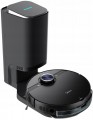 | 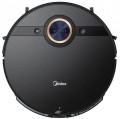 |
|---|---|---|
| Midea S8+ | Midea M7 Pro | |
from £204.49 | from £135.99 | |
| User reviews | ||
| TOP sellers | ||
| Type | robot vacuum cleaner | robot vacuum cleaner |
| Cleaning | dry and wet 2 side brushes turbo brush wet wiping (vibration) | dry and wet 2 side brushes turbo brush wet wiping (vibration) |
| Water supply adjustment |  | |
Robot vacuum cleaner | ||
| Suction power | 4000 Pa | 4000 Pa |
| Dust container capacity | 450 ml | 450 ml |
| Water tank capacity | 220 ml | 220 ml |
| Power auto-adjustment |  | |
| Fine filter | HEPA | HEPA |
| Building a room map | rangefinder (laser) | rangefinder (laser) |
| Cleaning area limitation | via the app | via the app |
Features | ||
| Control via smartphone | | |
| Scheduled cleaning | | |
| Memory of several maps (floors) | | |
Self-cleaning station | ||
| Dust collector station | disposable bag | |
Battery | ||
| Battery capacity | 5.2 Ah | 5.2 Ah |
| Operating time | 180 min | 180 min |
| Charging time | 4 h | 2.5 h |
General | ||
| Cleaning area | 250 m² | 250 m² |
| Threshold clearance | 20 mm | 20 mm |
| Noise level | 67 dB | 65 dB |
| Dimensions (HxWxD) | 9.7x35x35 cm | 9.6x35x35 cm |
| Weight | 3.8 kg | |
| Color | ||
| Added to E-Catalog | july 2022 | august 2021 |


Compare Midea S8+ and M7 Pro
Both robotic vacuum cleaners, Midea S8+ and Midea M7 Pro, offer similar features such as dry and wet cleaning, a cyclonic dust collection system, and suction power of 4000 Pa. However, the M7 Pro stands out with its power auto-adjustment feature and multi-map memory, which can be useful for multi-level homes. Both models have a runtime of 180 minutes, but the M7 Pro charges faster — 2.5 hours compared to 4 hours for the S8+. The noise level for the M7 Pro is also slightly lower — 65 dB compared to 67 dB for the S8+. Both devices have similar dimensions and weight, but the M7 Pro is slightly lighter. The decision between them may depend on the need for the additional features of the M7 Pro.
You may be interested in
My comparisons
Midea M7 Pro often compared


Glossary
Power auto-adjustment
A function that automatically adjusts suction power based on the type of surface or the amount of detected debris. On carpets or heavily soiled areas, the robot increases power, while on smooth floors it reduces it to save battery life and reduce noise. Automatic power adjustment helps maintain cleaning quality without constantly selecting the mode manually.
Memory of several maps (floors)
Multiple map memory allows the robot vacuum to save separate layouts for different floors or rooms. When the device is moved, it recognizes the required map and uses the already defined rooms, no-go zones, and cleaning settings. This feature is especially useful for multi-story homes, as it eliminates the need to rescan the space every time the robot is moved.
Dust collector station
The dust collector of the self-cleaning station is used to collect debris that is automatically emptied from the robot vacuum cleaner’s internal container. Its design affects maintenance frequency, user contact with dust, and the need to purchase consumables.
— Disposable bag. Debris is stored in a sealed dust collector, which is usually designed for several weeks of regular cleaning. It is easy to replace without spilling dust, but further use involves the cost of compatible bags.
— Cyclone container. Dust and debris accumulate in a rigid removable container that can be emptied repeatedly and reinstalled. This solution is more economical and allows you to see the fill level, but is less hygienic than a bag and requires more thorough maintenance.
— Disposable bag. Debris is stored in a sealed dust collector, which is usually designed for several weeks of regular cleaning. It is easy to replace without spilling dust, but further use involves the cost of compatible bags.
— Cyclone container. Dust and debris accumulate in a rigid removable container that can be emptied repeatedly and reinstalled. This solution is more economical and allows you to see the fill level, but is less hygienic than a bag and requires more thorough maintenance.
Charging time
Full charging cycle of the robot vacuum to restore the battery from the minimum level to 100%. The process usually takes several hours and depends on the battery capacity and charging system power. However, with regular returns to the base, this parameter rarely affects cleaning convenience.
Noise level
The dB rating helps assess how noticeable the robot vacuum will be during cleaning. A level of 55–60 dB is typical of quiet robots, 60–70 dB is considered standard, and values above 70 dB are typical of the most powerful modes. The lower the rating, the less the device interferes with conversations, rest, or work.