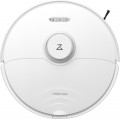
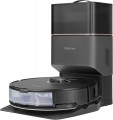
Comparison Roborock S8+ vs Roborock S8
Add to comparison | ![]() | ![]() |
|---|---|---|
| Roborock S8+ | Roborock S8 | |
| Compare prices 3 | Compare prices 1 | |
| User reviews | ||
| TOP sellers | ||
Laser cartography. Vibrating floor cleaning system. Automatic rise of microfiber upon arrival on the carpet. Docking station with dust collector. | Laser cartography. Vibrating floor cleaning system. Automatic rise of microfiber upon arrival on the carpet. | |
| Type | robot vacuum cleaner | robot vacuum cleaner |
| Cleaning type | dry and wet | dry and wet |
| Water supply control | ||
| Dust collector | container | container |
Specs | ||
| Motor power | 69 W | |
| Suction force | 6000 Pa | 6000 Pa |
| Dust collector capacity | 0.4 L | 0.4 L |
| Water tank capacity | 0.3 L | 0.3 L |
| Smartphone connection | ||
| Automatic power control | ||
| Fine filter | EPA 11 | EPA 11 |
Robot vacuum cleaner | ||
| Robot features | scheduled cleaning anti-fall function obstacle sensor object recognition | scheduled cleaning anti-fall function obstacle sensor object recognition |
| Mapping system | rangefinder + camera | rangefinder + camera |
| Cleaning area limit | app | app |
Nozzles included | ||
| Nozzle functions | side brush turbobrush wet wipe (vibro) | side brush turbobrush wet wipe (vibro) |
Docking station | ||
| Charging station | + | + |
| Docking station with dust collector | ||
| Station dust collector | disposable bag | |
Power source | ||
| Source of power | battery | battery |
| Battery type | Li-Ion | Li-Ion |
| Battery capacity | 5.2 Ah | 5.2 Ah |
| Battery run time | 180 min | 180 min |
| Charging time | 2 h | 2 h |
More specs | ||
| Cleaning area | 300 m² | 300 m² |
| Noise level | 67 dB | 67 dB |
| Dimensions (HxWxD) | 9.6x35.3x35.3 cm | 9.6x35.3x35.3 cm |
| Color | ||
| Added to E-Catalog | may 2023 | may 2023 |
Compare Roborock S8+ and S8
Both robot vacuums, Roborock S8+ and Roborock S8, offer similar features such as dry and wet cleaning, a suction power of 6000 Pa, and the ability to connect to a smartphone. However, the S8+ stands out with its docking station with a dustbin, which simplifies maintenance, while the S8 does not have this feature. Both devices have the same cleaning area of up to 300 m² and a runtime of up to 180 minutes. Users note the high cleaning efficiency and convenient app control for both models. Overall, the Roborock S8+ may be the preferred choice for those looking for a more convenient solution with automatic dustbin cleaning.
Price comparison
You may be interested in
Roborock S8+ often compared
Roborock S8 often compared
Glossary
Motor power
Rated power consumed by the vacuum cleaner. In models with power adjustment (see below), the maximum value is taken into account in this case. We are talking about the characteristics of the installed motor, which is the main, and in most vacuum cleaners, the only consumer of energy.
Higher power increases suction force and improves overall cleaning efficiency. In addition, a more powerful unit is easier to equip with a capacious dust collector. On the other hand, only vacuum cleaners of the same type with the same types of dust collectors can be directly compared by this parameter (see above for both). And even in such cases, the actual suction force (see below) may be different — and it is it that determines the real efficiency. However, the total power also allows you to generally evaluate the capabilities of the vacuum cleaner, including in comparison: a 1500 W model will significantly outperform its 800 W counterpart in efficiency (although it is impossible to say exactly by how much). But what definitely depends on this indicator is energy consumption.
As for specific power values, they are largely related to the type of device. For example, handheld models, robots and uproght units have low power — less than 1500 W(and often noticeably less). Such values are quite popular among other types of vacuum cleaners (conventional, industrial, workshop, etc.), but among them there are already more solid indicators — 1500 – 1750 W..., 1750 – 2000 W and even more than 2000 W.
Higher power increases suction force and improves overall cleaning efficiency. In addition, a more powerful unit is easier to equip with a capacious dust collector. On the other hand, only vacuum cleaners of the same type with the same types of dust collectors can be directly compared by this parameter (see above for both). And even in such cases, the actual suction force (see below) may be different — and it is it that determines the real efficiency. However, the total power also allows you to generally evaluate the capabilities of the vacuum cleaner, including in comparison: a 1500 W model will significantly outperform its 800 W counterpart in efficiency (although it is impossible to say exactly by how much). But what definitely depends on this indicator is energy consumption.
As for specific power values, they are largely related to the type of device. For example, handheld models, robots and uproght units have low power — less than 1500 W(and often noticeably less). Such values are quite popular among other types of vacuum cleaners (conventional, industrial, workshop, etc.), but among them there are already more solid indicators — 1500 – 1750 W..., 1750 – 2000 W and even more than 2000 W.
Docking station with dust collector
Docking station with dust container. Upon getting to such a stand, the robot can recharge the battery and carry out self-cleaning — unloading the collected garbage into an external container. The capacity of the station is enough for several unloadings. The convenience of this function is obvious: it allows the device to work longer without user intervention and eliminates the need to manually clean the vacuum cleaner when the dust container is full (besides, unloading garbage from the dock is usually easier than such cleaning). Unfortunately, such a feature is quite expensive. There are also upright vacuum cleaners with a similar station. In such models, the cleaning is carried out with minimal human intervention - you only need to install the vacuum cleaner in the docking station. The self-cleaning mode independently moves the debris from the dust collector of the device to the dust container of the station.
Station dust collector
The type of dust collector in the docking station indicates where exactly the base stores the dust and how "clean" the maintenance of the self-cleaning system will be.
— Bag. A disposable dust collector where the base "packs" everything the robot unloads during self-cleaning. The strong point of the bag is hygiene and clean maintenance: dust, pet hair, and small debris remain inside, the bag is removed and discarded without emptying, which means less contact with allergens and a lower risk of a "dust cloud" in the room. Compared to the cyclone, the downside is obvious — consumables are needed, and it's important for the bags to be affordable and available; however, maintaining the system is usually simpler and less frequent.
— Cyclone. A reusable container where the base collects waste after the robot's auto-cleaning without bags: the airflow swirls, and dust and crumbs settle in the vessel. The main feature is the absence of consumables, making this option more advantageous for frequent cleaning and a large amount of waste (sand in the hallway, crumbs in the kitchen, small construction debris after renovations). Compared to the bag, the cyclone usually requires a bit more maintenance: the container needs to be emptied and filters/channels cleaned from time to time, and emptying may release fine dust, which is not always comfortable for allergy sufferers.
— Bag. A disposable dust collector where the base "packs" everything the robot unloads during self-cleaning. The strong point of the bag is hygiene and clean maintenance: dust, pet hair, and small debris remain inside, the bag is removed and discarded without emptying, which means less contact with allergens and a lower risk of a "dust cloud" in the room. Compared to the cyclone, the downside is obvious — consumables are needed, and it's important for the bags to be affordable and available; however, maintaining the system is usually simpler and less frequent.
— Cyclone. A reusable container where the base collects waste after the robot's auto-cleaning without bags: the airflow swirls, and dust and crumbs settle in the vessel. The main feature is the absence of consumables, making this option more advantageous for frequent cleaning and a large amount of waste (sand in the hallway, crumbs in the kitchen, small construction debris after renovations). Compared to the bag, the cyclone usually requires a bit more maintenance: the container needs to be emptied and filters/channels cleaned from time to time, and emptying may release fine dust, which is not always comfortable for allergy sufferers.