
Comparison Dreame F9 Pro vs Dreame D9 Max
Add to comparison | 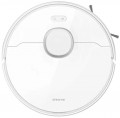 | 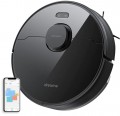 |
|---|---|---|
| Dreame F9 Pro | Dreame D9 Max | |
from £217.99 | from £133.99 | |
| User reviews | ||
| TOP sellers | ||
| Type | robot vacuum cleaner | robot vacuum cleaner |
| Cleaning | dry and wet side brush turbo brush wiping with a cloth | dry and wet side brush turbo brush wiping with a cloth |
| Water supply adjustment |  | |
Robot vacuum cleaner | ||
| Suction power | 2500 Pa | 4000 Pa |
| Dust container capacity | 570 ml | 570 ml |
| Water tank capacity | 240 ml | 270 ml |
| Power auto-adjustment | | |
| Fine filter | HEPA | HEPA |
| Building a room map | rangefinder (laser) | rangefinder (laser) |
| Cleaning area limitation | via the app | via the app |
Features | ||
| Control via smartphone | | |
| Voice assistant | Google Assistant, Amazon Alexa, Apple Siri | Amazon Alexa |
| Scheduled cleaning | | |
Battery | ||
| Battery capacity | 3.2 Ah | 5.2 Ah |
| Operating time | 150 min | 150 min |
General | ||
| Cleaning area | 160 m² | 250 m² |
| Threshold clearance | 20 mm | |
| Noise level | 68 dB | 65 dB |
| Dimensions (HxWxD) | 9.7x35x35 cm | 9.7x35x35 cm |
| Weight | 3.11 kg | 3.8 kg |
| Color | ||
| Added to E-Catalog | november 2023 | september 2021 |


Compare Dreame F9 Pro and D9 Max
Both robot vacuum cleaners, Dreame F9 Pro and Dreame D9 Max, offer dry and wet cleaning functions using a cyclonic dust collection system and a HEPA filter. However, D9 Max stands out with higher suction power (4000 Pa) compared with 2500 Pa for the F9 Pro, making it more effective for deep cleaning. The water tank capacity of the D9 Max is also slightly larger (0.27 l) compared with 0.24 l for the F9 Pro. Both devices have similar dimensions and runtime (150 minutes), but D9 Max can clean a larger area (250 m²) compared with 160 m² for the F9 Pro. In terms of smartphone connectivity and voice assistants, F9 Pro supports more options, including Google Assistant and Apple Siri, while D9 Max is limited to Amazon Alexa. Users note that both devices perform well at cleaning, but D9 Max receives higher ratings for power and efficiency.
You may be interested in
My comparisons
Dreame F9 Pro often compared


Dreame D9 Max often compared


Glossary
Suction power
Measured in Pa, this indicator describes the robot vacuum cleaner's suction pressure: the higher it is, the easier it is for the device to pick up heavy debris and clean carpet pile. Values around 2,000–4,000 Pa are usually sufficient for regular cleaning of smooth floors, while 6,000–10,000 Pa and above are better suited for collecting hair, sand, and dirt from carpets or floor joints.
Water tank capacity
The tank capacity determines the water supply for moistening the pad, rotating mops, or cleaning roller. Compact tanks of around 200 ml are suitable for regular wiping of small areas, while 300–500 ml tanks allow fewer interruptions for refilling during cleaning.
Voice assistant
Voice assistant lets you control the robot vacuum cleaner with short commands via a compatible smart speaker, smartphone, or smart home system. You can use your voice to start and stop cleaning, return the device to the docking station, and on some models, select a room or operating mode. This feature is especially convenient when your phone is not nearby, but the set of available commands depends on the robot model and the supported platform.
Battery capacity
Battery capacity indicates the amount of charge available to the robot vacuum for navigation, motor operation, brushes, and the mopping system. A higher-capacity battery can potentially provide longer runtime, but it does not allow the exact cleaning time to be determined without considering the device's power consumption. Operating time is more strongly affected by the selected mode, suction power, floor type, use of mopping pads, and frequency of returns to the docking station.
Cleaning area
The cleaning area refers to the approximate room size the robot can cover on a single battery charge. In Eco mode, the device will cover more space than at maximum suction power or during intensive floor mopping. The value stated by the manufacturer is usually calculated for a relatively uncluttered room and may be lower in real conditions.
Threshold clearance
Threshold climbing indicates the maximum height of an obstacle that the robot vacuum can climb over on its own. A 15 mm level is usually sufficient for small floor covering joints, while 20 mm is better suited for standard interior door thresholds and carpets with a noticeable edge.
Noise level
The dB rating helps assess how noticeable the robot vacuum will be during cleaning. A level of 55–60 dB is typical of quiet robots, 60–70 dB is considered standard, and values above 70 dB are typical of the most powerful modes. The lower the rating, the less the device interferes with conversations, rest, or work.