
Comparison Gogen RC212 BT vs Blaupunkt PP6
Add to comparison | 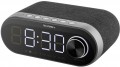 | 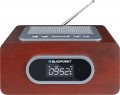 |
|---|---|---|
| Gogen RC212 BT | Blaupunkt PP6 | |
| Outdated Product | from $36.63 up to $66.63 | |
| TOP sellers | ||
Built-in Bluetooth. | Remote control | |
| Device type | clock radio | clock radio |
| Dial type | digital | digital |
| Dial shape | rectangular | rectangular |
Specs | ||
| Tuner type | digital | digital |
| Radio | FM | FM |
| Playback | Bluetooth USB-A card reader line input | USB-A card reader line input |
| Speaker power | 8 W | 5 W |
| Headphone output |  |  |
| Time format | 24-hour | 24-hour |
| Features | alarm Snooze | |
General | ||
| Power source | cordless | mains cordless |
| Battery capacity | 4400 mAh | |
| Radio charging connector | microUSB | |
| Symbols colour | white | white |
| Size | 190x117x80 mm | 115x168x83 mm |
| Weight | 790 g | 550 g |
| Color | ||
| Added to E-Catalog | april 2023 | november 2018 |


Compare Gogen RC212 BT and Blaupunkt PP6
You may be interested in
Glossary
Playback
— Bluetooth. Wireless technology for transmitting sound from mobile phones, tablets, etc. Allows you to connect a device wirelessly at a short distance from the signal source. The quality and overall capabilities of Bluetooth depend on its version:
— Bluetooth 4. Each version brings improvements over the previous one. In version 4.0, three standards were effectively combined: traditional Bluetooth, high-speed channel, and energy-saving mode for small amounts of data. This allowed for optimized channel use and battery consumption. Version 4.1 enhanced resistance to interference when working near 4G LTE modules. Version 4.2 mainly introduced general improvements in speed and security.
— Bluetooth 5.0. One of the most important innovations of the Bluetooth 5.0 standard was the expansion of BLE ("Bluetooth Low Energy") capabilities: if necessary, the device can increase range by reducing speed, or speed up transmission by reducing range. Moreover, several improvements related to simultaneous operation with multiple connected devices were introduced.
— Bluetooth 5.1. A significant upgrade in version 5.1 was the ability to precisely position the signal transmitter (receiver). Whereas previous versions could only determine distance, version 5.1 can also determine direction. This improved navigation function, which enhanced the operation of smart home systems, connected device search, etc. Additionally, improvements a...gain touched on energy consumption savings and simultaneous operation with multiple connected devices.
— Bluetooth 5.2. The next update after 5.1 in the Bluetooth 5 generation. The main innovations in this version were several security improvements, additional energy consumption optimization in LE mode, and a new audio signal format for synchronizing parallel playback on multiple devices.
— Bluetooth 5.3. The Bluetooth v 5.3 wireless communication protocol was introduced at the beginning of 2022. Innovations sped up the channel negotiation process between the controller and the device, implemented a quick switch function between low-duty cycle and high-speed mode, improved bandwidth and connection stability by reducing susceptibility to interference. In the event of unexpected interference in Low Energy mode, the channel selection procedure for switching was accelerated. The 5.3 protocol does not present fundamental innovations, but a number of qualitative improvements are apparent.
— Bluetooth 5.4. Introduced at the start of 2023, this version increased the range and data exchange speed. Also, improvements were made to the BLE energy-saving mode in Bluetooth v 5.4. This protocol uses new security features to protect data from unauthorized access, offers increased connection reliability by selecting the best communication channel, and prevents connection losses due to interference.
— USB-A. The presence of a USB-A port allows connecting USB drives, mobile phones, MP3 players, and other similar peripherals. Accordingly, such models have a built-in player and allow connected gadgets to be used solely as storage devices.
— Card Reader. Like the above-mentioned USB-A, this item implies the presence of a built-in player. And a card reader allows using memory cards as storage on which songs will be recorded.
— Line Input. An input for transmitting sound in analog format. Through such an input, you can connect an external signal source — for example, an MP3 player — to a radio receiver and listen to music through the receiver's speakers. Despite the development of digital standards, the line input remains one of the most popular connection interfaces.
— Bluetooth 4. Each version brings improvements over the previous one. In version 4.0, three standards were effectively combined: traditional Bluetooth, high-speed channel, and energy-saving mode for small amounts of data. This allowed for optimized channel use and battery consumption. Version 4.1 enhanced resistance to interference when working near 4G LTE modules. Version 4.2 mainly introduced general improvements in speed and security.
— Bluetooth 5.0. One of the most important innovations of the Bluetooth 5.0 standard was the expansion of BLE ("Bluetooth Low Energy") capabilities: if necessary, the device can increase range by reducing speed, or speed up transmission by reducing range. Moreover, several improvements related to simultaneous operation with multiple connected devices were introduced.
— Bluetooth 5.1. A significant upgrade in version 5.1 was the ability to precisely position the signal transmitter (receiver). Whereas previous versions could only determine distance, version 5.1 can also determine direction. This improved navigation function, which enhanced the operation of smart home systems, connected device search, etc. Additionally, improvements a...gain touched on energy consumption savings and simultaneous operation with multiple connected devices.
— Bluetooth 5.2. The next update after 5.1 in the Bluetooth 5 generation. The main innovations in this version were several security improvements, additional energy consumption optimization in LE mode, and a new audio signal format for synchronizing parallel playback on multiple devices.
— Bluetooth 5.3. The Bluetooth v 5.3 wireless communication protocol was introduced at the beginning of 2022. Innovations sped up the channel negotiation process between the controller and the device, implemented a quick switch function between low-duty cycle and high-speed mode, improved bandwidth and connection stability by reducing susceptibility to interference. In the event of unexpected interference in Low Energy mode, the channel selection procedure for switching was accelerated. The 5.3 protocol does not present fundamental innovations, but a number of qualitative improvements are apparent.
— Bluetooth 5.4. Introduced at the start of 2023, this version increased the range and data exchange speed. Also, improvements were made to the BLE energy-saving mode in Bluetooth v 5.4. This protocol uses new security features to protect data from unauthorized access, offers increased connection reliability by selecting the best communication channel, and prevents connection losses due to interference.
— USB-A. The presence of a USB-A port allows connecting USB drives, mobile phones, MP3 players, and other similar peripherals. Accordingly, such models have a built-in player and allow connected gadgets to be used solely as storage devices.
— Card Reader. Like the above-mentioned USB-A, this item implies the presence of a built-in player. And a card reader allows using memory cards as storage on which songs will be recorded.
— Line Input. An input for transmitting sound in analog format. Through such an input, you can connect an external signal source — for example, an MP3 player — to a radio receiver and listen to music through the receiver's speakers. Despite the development of digital standards, the line input remains one of the most popular connection interfaces.
Speaker power
The maximum power output of the receiver speaker(s) in normal operation, without overload. The higher the rated power, the higher the sound volume, but louder devices and energy require more.
Headphone output
A connector for connecting headphones in radio receivers, most often a standard 3.5 mm mini-jack. Headphones can come in handy when the sound from the main speaker might disturb others, or in noisy environments where an external speaker doesn't do well.
Features
Among the functions in the table clock and radio you can find: alarm clock, snooze, voice notification, calendar, thermometer, world time, radio auto-off timer, time projection, dial backlight, case backlight, USB charging port, wireless charging gadgets, flashlight. More details about them:
- Alarm. The watch has a classic alarm clock that provides a sound signal at a customer-specified time. Of course, this function can be used not only for morning wake-up, but also for other warnings. However, the most popular way to use an alarm clock is to wake you up in the morning. In light of this, some models may provide a very specific way of disabling the alarm - for example, by installing a propeller in place that takes off from the clock when the alarm goes off; and some models begin to move at the same time as the signal, and you have to catch them. There can be many similar options, but they all follow the same principle: to push the customer to take active action and reduce the likelihood of falling asleep after the sound has been...turned off. Watches with original alarm clocks will be especially useful for tech who tend to wake up when they wake up, turning off the alarm and falling asleep again.
— Delay of the alarm signal (Snooze). As the name suggests, this function is designed to reschedule the alarm to a later time. Its meaning is that when a signal is triggered, the customer can literally move the alarm time by several minutes with just one click of a button. Snooze is intended primarily for tech who prefer to lie in bed for a while after the alarm goes off before getting up: it minimizes the risk of falling back to sleep and missing the time to wake up, while pressing the Snooze button is much easier than changing alarm clock manually. In some models, the delay time is fixed (usually about 5 - 10 minutes), in others it can be adjusted at will.
— Voice notification. The watch has a voice warning system. One of the most popular uses of such a system is to announce the current time at the press of a button; in some situations, this method of finding out the time can be more convenient than trying to look at the dial. Theoretically, other types of alerts could be provided - for example, a low battery warning; however, for a number of reasons they are rarely used.
- Calendar. The watch has a calendar function. This feature requires, at a minimum, the display of the current day of the month, but the matter is not limited to this: even in watches with pointer dials (see “Movement type”), the calendar can also cover the day of the week or even the current month, and in digital devices - also the year, the number of the week in the year and a lot of other information, including displaying calendar tables for each individual month. The calendar can also provide other functions, such as setting an alarm for certain days of the week.
- Thermometer. The presence of a thermometer function in the watch allows you to use it to determine the air temperature in the number. This function may be useful in cases where you need to maintain a certain microclimate - for example, if there is a baby in the house. Built-in thermometers, as a rule, are made electronic, which provides more than sufficient accuracy for domestic use. And in some models, the digital temperature display can be supplemented with a color one - for example, by changing the color of the housing backlight (see below for the backlight itself).
- World time. The presence of a world time function in the watch allows you to determine the current time in other regions. Most often, an additional dial is used for this, which is set in advance for the time of the time zone of interest and constantly displays this time; and in the most advanced models there may be several such dials. There are other ways to implement this function - for example, models with LCD screens (see “Dial type”) can provide quick switching between local time and a specified time zone. In any case, watches with a world time function are useful in cases where you regularly communicate with people from other time zones - in particular, they minimize the risk of being in an inconvenient situation by calling your interlocutor in the middle of the night or at another inopportune moment. On the other hand, today there are more practical ways to monitor standard time than desk clocks (for example, smartphones are equipped with similar tools); therefore, this function is rarely found, mainly in luxury models.
— Radio auto-off timer. A timer that turns off the receiver after a specified time. This way, you don't have to worry about turning off the device manually - just set the desired time and the receiver will turn off automatically. This can be useful, for example, if you like to fall asleep to music: by setting a timer, you can calmly fall asleep without worrying about wasting energy on “all-night” broadcasting (which is especially critical for self-powered devices, see “Power”).
— Time projection. The watch has a projector function. Thanks to it, the device is able to display various data not only on the dial, but also on various surfaces - for example, projecting information onto the ceiling or wall. In some cases, the projector mark is more convenient and better visible than the main dial. As the name of this feature suggests, the projector is primarily designed to display the time; technically, nothing prevents other data from being displayed in this way, however, for a number of reasons, such a possibility is rarely provided. As a rule, the projector unit is made rotating, which allows you to adjust it to different environments.
— Dial backlight. The watch has a dial illumination system. This backlight is convenient in low light conditions: it allows you to see the dial without using additional lighting sources (in other words, you can look at the watch even in complete darkness). Note that in this case we are talking about systems that turn on for a short time - usually for a few seconds while the customer holds the button; Constantly glowing symbols on the dial do not count as backlighting, although they can also be seen in the dark without any problems. And in some models, the dial illumination can be combined with the case illumination (see below).
— Case lighting. The watch has a case lighting system. Unlike the dial backlight described above, this function is usually not associated with the main functionality of the watch - it plays a decorative role and also allows the device to be used as a night light.
- Flashlight. The built-in flashlight allows you to use the receiver as a light source. Moreover, the power of such sources can be quite high, providing an effective range of several tens of meters. Usually this function involves a directional beam, but there are also diffused light flashlights.
— USB port for charging. The presence of a port for connecting a third-party gadget and replenishing its energy. Naturally, this solution is applicable when connecting a table clock to a 230 V power supply, and the speed itself will be mediocre.
- Wireless charger. Ability to work in Power Bank mode without using a cable. The gadget is charged wirelessly by placing the desired device on the charging area.
— Pencil stand. The presence of a pencil stand in the watch design. By design, such a stand usually represents a characteristic “glass”; its shape can be varied, but the dimensions are usually large enough to accommodate several fairly large stationery items. Therefore, despite the name, the stand can be used not only for pencils, but also for other items - pens, markers, scissors, etc.
- Alarm. The watch has a classic alarm clock that provides a sound signal at a customer-specified time. Of course, this function can be used not only for morning wake-up, but also for other warnings. However, the most popular way to use an alarm clock is to wake you up in the morning. In light of this, some models may provide a very specific way of disabling the alarm - for example, by installing a propeller in place that takes off from the clock when the alarm goes off; and some models begin to move at the same time as the signal, and you have to catch them. There can be many similar options, but they all follow the same principle: to push the customer to take active action and reduce the likelihood of falling asleep after the sound has been...turned off. Watches with original alarm clocks will be especially useful for tech who tend to wake up when they wake up, turning off the alarm and falling asleep again.
— Delay of the alarm signal (Snooze). As the name suggests, this function is designed to reschedule the alarm to a later time. Its meaning is that when a signal is triggered, the customer can literally move the alarm time by several minutes with just one click of a button. Snooze is intended primarily for tech who prefer to lie in bed for a while after the alarm goes off before getting up: it minimizes the risk of falling back to sleep and missing the time to wake up, while pressing the Snooze button is much easier than changing alarm clock manually. In some models, the delay time is fixed (usually about 5 - 10 minutes), in others it can be adjusted at will.
— Voice notification. The watch has a voice warning system. One of the most popular uses of such a system is to announce the current time at the press of a button; in some situations, this method of finding out the time can be more convenient than trying to look at the dial. Theoretically, other types of alerts could be provided - for example, a low battery warning; however, for a number of reasons they are rarely used.
- Calendar. The watch has a calendar function. This feature requires, at a minimum, the display of the current day of the month, but the matter is not limited to this: even in watches with pointer dials (see “Movement type”), the calendar can also cover the day of the week or even the current month, and in digital devices - also the year, the number of the week in the year and a lot of other information, including displaying calendar tables for each individual month. The calendar can also provide other functions, such as setting an alarm for certain days of the week.
- Thermometer. The presence of a thermometer function in the watch allows you to use it to determine the air temperature in the number. This function may be useful in cases where you need to maintain a certain microclimate - for example, if there is a baby in the house. Built-in thermometers, as a rule, are made electronic, which provides more than sufficient accuracy for domestic use. And in some models, the digital temperature display can be supplemented with a color one - for example, by changing the color of the housing backlight (see below for the backlight itself).
- World time. The presence of a world time function in the watch allows you to determine the current time in other regions. Most often, an additional dial is used for this, which is set in advance for the time of the time zone of interest and constantly displays this time; and in the most advanced models there may be several such dials. There are other ways to implement this function - for example, models with LCD screens (see “Dial type”) can provide quick switching between local time and a specified time zone. In any case, watches with a world time function are useful in cases where you regularly communicate with people from other time zones - in particular, they minimize the risk of being in an inconvenient situation by calling your interlocutor in the middle of the night or at another inopportune moment. On the other hand, today there are more practical ways to monitor standard time than desk clocks (for example, smartphones are equipped with similar tools); therefore, this function is rarely found, mainly in luxury models.
— Radio auto-off timer. A timer that turns off the receiver after a specified time. This way, you don't have to worry about turning off the device manually - just set the desired time and the receiver will turn off automatically. This can be useful, for example, if you like to fall asleep to music: by setting a timer, you can calmly fall asleep without worrying about wasting energy on “all-night” broadcasting (which is especially critical for self-powered devices, see “Power”).
— Time projection. The watch has a projector function. Thanks to it, the device is able to display various data not only on the dial, but also on various surfaces - for example, projecting information onto the ceiling or wall. In some cases, the projector mark is more convenient and better visible than the main dial. As the name of this feature suggests, the projector is primarily designed to display the time; technically, nothing prevents other data from being displayed in this way, however, for a number of reasons, such a possibility is rarely provided. As a rule, the projector unit is made rotating, which allows you to adjust it to different environments.
— Dial backlight. The watch has a dial illumination system. This backlight is convenient in low light conditions: it allows you to see the dial without using additional lighting sources (in other words, you can look at the watch even in complete darkness). Note that in this case we are talking about systems that turn on for a short time - usually for a few seconds while the customer holds the button; Constantly glowing symbols on the dial do not count as backlighting, although they can also be seen in the dark without any problems. And in some models, the dial illumination can be combined with the case illumination (see below).
— Case lighting. The watch has a case lighting system. Unlike the dial backlight described above, this function is usually not associated with the main functionality of the watch - it plays a decorative role and also allows the device to be used as a night light.
- Flashlight. The built-in flashlight allows you to use the receiver as a light source. Moreover, the power of such sources can be quite high, providing an effective range of several tens of meters. Usually this function involves a directional beam, but there are also diffused light flashlights.
— USB port for charging. The presence of a port for connecting a third-party gadget and replenishing its energy. Naturally, this solution is applicable when connecting a table clock to a 230 V power supply, and the speed itself will be mediocre.
- Wireless charger. Ability to work in Power Bank mode without using a cable. The gadget is charged wirelessly by placing the desired device on the charging area.
— Pencil stand. The presence of a pencil stand in the watch design. By design, such a stand usually represents a characteristic “glass”; its shape can be varied, but the dimensions are usually large enough to accommodate several fairly large stationery items. Therefore, despite the name, the stand can be used not only for pencils, but also for other items - pens, markers, scissors, etc.
Power source
Power supply methods provided in the design of radio receivers and table clocks.
- Batteries. Powered by standard replaceable batteries ( AA, AAA, type C, LR44, PP3, etc.). There are two main advantages to this diet. Firstly, a shrunken element can be quickly replaced; for this, of course, you need to have fresh batteries in stock, but it’s easy to take care of this in advance. Secondly, consumer devices are independent of outlets; this allows you to install them on almost any suitable surface, easily move from place to place, without worrying about the length and placement of the mains cable. Batteries, of course, need to be purchased separately, which slightly increases spending. However, many replacement batteries are also available as rechargeable batteries. Thanks to all this, battery-powered models are very popular today.
- Network. Powered by a standard 230 V network. On the one hand, this option eliminates the hassle of batteries, and on the other hand, connecting to the network is associated with a number of inconveniences: the power cord limits the ability to install a radio or clock in places where there are sockets nearby, moreover the device may interfere or simply not fit into the overall environment. Mai...ns power in watches is quite rare in its pure form - much more often it is used as a fallback option for battery-powered models: if the situation allows, you can plug the watch into an outlet and not waste the charge.
- Battery. Powered by an original battery that is not related to standard sizes. Like the batteries described above, this option provides the device with autonomy. However, the key difference is that the battery, as a rule, does not provide for quick replacement: a non-standard format makes it difficult to purchase a spare battery, and more often than not, it is generally made non-removable. Therefore, the main, if not the only, option for discharging is charging, which requires a connection to the network and takes quite a long time. As a result, rechargeable batteries are considered a less suitable power option than replacement batteries and are rarely used.
- Batteries. Powered by standard replaceable batteries ( AA, AAA, type C, LR44, PP3, etc.). There are two main advantages to this diet. Firstly, a shrunken element can be quickly replaced; for this, of course, you need to have fresh batteries in stock, but it’s easy to take care of this in advance. Secondly, consumer devices are independent of outlets; this allows you to install them on almost any suitable surface, easily move from place to place, without worrying about the length and placement of the mains cable. Batteries, of course, need to be purchased separately, which slightly increases spending. However, many replacement batteries are also available as rechargeable batteries. Thanks to all this, battery-powered models are very popular today.
- Network. Powered by a standard 230 V network. On the one hand, this option eliminates the hassle of batteries, and on the other hand, connecting to the network is associated with a number of inconveniences: the power cord limits the ability to install a radio or clock in places where there are sockets nearby, moreover the device may interfere or simply not fit into the overall environment. Mai...ns power in watches is quite rare in its pure form - much more often it is used as a fallback option for battery-powered models: if the situation allows, you can plug the watch into an outlet and not waste the charge.
- Battery. Powered by an original battery that is not related to standard sizes. Like the batteries described above, this option provides the device with autonomy. However, the key difference is that the battery, as a rule, does not provide for quick replacement: a non-standard format makes it difficult to purchase a spare battery, and more often than not, it is generally made non-removable. Therefore, the main, if not the only, option for discharging is charging, which requires a connection to the network and takes quite a long time. As a result, rechargeable batteries are considered a less suitable power option than replacement batteries and are rarely used.
Battery capacity
Theoretically, a higher capacity allows for greater autonomy, but in practice, operating time also depends on power consumption - and it can be very different, depending on the characteristics and design features.
Radio charging connector
Type of connector used for charging the built-in battery, specifically for connecting an external charger. Such a device can be a mains or car adapter, power bank, or even a PC or laptop USB port (with the appropriate cable).
— microUSB. A smaller version of the USB connector created for portable devices. It appeared quite a while ago but has not lost its popularity and is still used by the vast majority of manufacturers.
— USB-C. A miniature USB connector positioned as, among other things, a potential successor to microUSB. Unlike its predecessor, it has a reversible design, allowing the plug to be inserted into the socket in either direction. It is still relatively rare, but it is likely that this will change in the coming years.
— microUSB. A smaller version of the USB connector created for portable devices. It appeared quite a while ago but has not lost its popularity and is still used by the vast majority of manufacturers.
— USB-C. A miniature USB connector positioned as, among other things, a potential successor to microUSB. Unlike its predecessor, it has a reversible design, allowing the plug to be inserted into the socket in either direction. It is still relatively rare, but it is likely that this will change in the coming years.