
Comparison Gigabyte GS27F 27 " black vs Gigabyte G27FC 27 " black
Add to comparison | 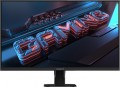 | 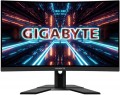 |
|---|---|---|
| Gigabyte GS27F 27 " black | Gigabyte G27FC 27 " black | |
| Compare prices 3 | Compare prices 1 | |
| TOP sellers | ||
| Product type | gaming | gaming |
| Size | 27 " | 27 " |
Screen | ||
| Curved screen | 1500R | |
| Panel type | IPS | *VA |
| Surface treatment | anti-glare | anti-glare |
| Resolution | 1920x1080 (16:9) | 1920x1080 (16:9) |
| FPS | 170 Hz | 165 Hz |
| Pixel size | 0.31 mm | 0.31 mm |
| Response time (GtG) | 4 ms | |
| Response time (MPRT) | 1 ms | |
| Vertical viewing angle | 178 ° | 178 ° |
| Horizontal viewing angle | 178 ° | 178 ° |
| Brightness | 300 cd/m² | 250 cd/m² |
| Static contrast | 1 000:1 | 3 000:1 |
| Dynamic Contrast | 12 000 000:1 | |
| Colour depth | 8-bit (16.7M Colors) | |
| Colour space (sRGB) | 105 % | 120 % |
| Colour gamut (DCI-P3) | 90 % | |
| HDR | + | |
Connection | ||
| Video transmission | DisplayPort v1.4 2xHDMI v2.0 | DisplayPort v1.2 2xHDMI v1.4 |
| USB-A hub | 2x5Gbps | |
| Fast charge |  |  |
| Connectors (optional) | mini-Jack output (3.5 mm) | mini-Jack output (3.5 mm) |
Features | ||
| Features | Flicker-Free AMD FreeSync Premium | Flicker-Free AMD FreeSync Premium |
| Height adjustment | | |
| Speakers | | |
| Sound power | 4 W | |
| Game Features | aim timer FPS display brighten darker areas | aim brighten darker areas |
General | ||
| Wall mount | VESA 100x100mm | VESA 100x100mm |
| Power consumption | 32 W | 55 W |
| Dimensions (WxHxD) | 619x447x172 mm | 610x531x203 mm |
| Weight | 5.02 kg | 6.4 kg |
| Color | ||
| Added to E-Catalog | november 2023 | june 2020 |



Compare Gigabyte GS27F and G27FC
Price comparison
You may be interested in
Gigabyte GS27F often compared

Glossary
Curved screen
The presence of a curved screen in the monitor design.
Such a screen has the left and right edges curved forward - it is believed that this shape significantly improves perception compared to a flat surface. At the same time, it makes sense to provide this feature only on fairly large diagonals - at least 30"; therefore, it is typical mainly for high-end models. It is also worth noting that in order to take advantage of all the advantages of a curved screen, you need to look at it from a certain point - at the optimal distance, strictly in the center; however, for computer monitors this is usually not a problem.
The main parameter of a curved screen is the radius of curvature. It is indicated in millimeters along the radius of a circle, the bend of which corresponds to the bend of the monitor: for example, the designation 1800R indicates a radius of 1.8 m.
The smaller the number in this designation, the more curved the screen (all other things being equal). At the same time, some manufacturers claim that the ideal curvature value is 1000R: supposedly, it is with this curvature of the screen that the image on it turns out to be as close as possible to a person’s natural field of vision, and the closer the curvature of the monitor is to 1000R, the better the viewing experience. However, in practice a lot depends on personal preference; and when viewed from a long distance (exceeding the radius of curvature by one a...nd a half times or more), all the advantages of a curved screen are lost.
Such a screen has the left and right edges curved forward - it is believed that this shape significantly improves perception compared to a flat surface. At the same time, it makes sense to provide this feature only on fairly large diagonals - at least 30"; therefore, it is typical mainly for high-end models. It is also worth noting that in order to take advantage of all the advantages of a curved screen, you need to look at it from a certain point - at the optimal distance, strictly in the center; however, for computer monitors this is usually not a problem.
The main parameter of a curved screen is the radius of curvature. It is indicated in millimeters along the radius of a circle, the bend of which corresponds to the bend of the monitor: for example, the designation 1800R indicates a radius of 1.8 m.
The smaller the number in this designation, the more curved the screen (all other things being equal). At the same time, some manufacturers claim that the ideal curvature value is 1000R: supposedly, it is with this curvature of the screen that the image on it turns out to be as close as possible to a person’s natural field of vision, and the closer the curvature of the monitor is to 1000R, the better the viewing experience. However, in practice a lot depends on personal preference; and when viewed from a long distance (exceeding the radius of curvature by one a...nd a half times or more), all the advantages of a curved screen are lost.
Panel type
The panel type determines the technology used to build a monitor’s screen and how it renders color, contrast, viewing angles, black levels, and response time. This parameter has a noticeable impact on how the monitor is used.
— TN+film. A TN+film panel is designed for fast pixel response and is found in inexpensive or older gaming monitors. It is chosen when minimal latency is important, for example in fast-paced online games, but it falls behind IPS, VA, and OLED in color reproduction and viewing angles.
— *VA. A VA panel is characterized by high static contrast, so dark scenes look deeper than on most IPS monitors. This is a good choice for movies, gaming, evening work, and multimedia, especially if rich black levels are important without switching to OLED. The main drawback of VA is possible smearing of dark objects in motion, so for shooters and fast-paced games, it is better to consider not only the stated milliseconds but also real-world reviews of the specific model.
— IPS. An IPS panel maintains color and brightness well when viewed from different angles, making it suitable for workspaces, study, gaming, and amateur image editing. It is one of the most balanced options when you need an everyday monitor without a clear bias toward movies or esports. In terms of black depth, IPS usually loses to VA and OLED, so in a dark room, black may look...more like dark gray.
— OLED .An OLED panel consists of self-emissive pixels that can switch off completely to display black. As a result, the monitor delivers maximum contrast, very fast response, and expressive HDR, which is especially noticeable in games, movies, and dark scenes. The limitation of OLED is the risk of burn-in from static elements such as taskbars, logos, and software interfaces, so these models require more careful use for continuous office work.
In addition, the main panel types can be enhanced, namely by being equipped with miniature LEDs or an additional quantum-dot layer.
— Mini LED. An enhanced backlighting system for LCD monitors in which a large number of small LEDs are used instead of conventional LEDs. This backlighting allows individual areas of the screen to be dimmed more precisely, so HDR scenes look more contrast-rich and blacks appear deeper than on ordinary IPS or VA monitors with basic backlighting. For example, Mini LED is especially useful for gaming, movies, and HDR content, but quality depends heavily on the number of dimming zones and the settings of the specific model.
— Quantum dots (QD). Quantum-dot technology adds a special color layer to the screen, making red, green, and other saturated shades purer. It can be found in different types of monitors: QD-IPS, QD-VA, QD-OLED. In practice, this is useful for HDR, gaming, movies, and image editing where a wide color gamut is important, but the QD label itself does not guarantee accurate factory calibration.
— TN+film. A TN+film panel is designed for fast pixel response and is found in inexpensive or older gaming monitors. It is chosen when minimal latency is important, for example in fast-paced online games, but it falls behind IPS, VA, and OLED in color reproduction and viewing angles.
— *VA. A VA panel is characterized by high static contrast, so dark scenes look deeper than on most IPS monitors. This is a good choice for movies, gaming, evening work, and multimedia, especially if rich black levels are important without switching to OLED. The main drawback of VA is possible smearing of dark objects in motion, so for shooters and fast-paced games, it is better to consider not only the stated milliseconds but also real-world reviews of the specific model.
— IPS. An IPS panel maintains color and brightness well when viewed from different angles, making it suitable for workspaces, study, gaming, and amateur image editing. It is one of the most balanced options when you need an everyday monitor without a clear bias toward movies or esports. In terms of black depth, IPS usually loses to VA and OLED, so in a dark room, black may look...more like dark gray.
— OLED .An OLED panel consists of self-emissive pixels that can switch off completely to display black. As a result, the monitor delivers maximum contrast, very fast response, and expressive HDR, which is especially noticeable in games, movies, and dark scenes. The limitation of OLED is the risk of burn-in from static elements such as taskbars, logos, and software interfaces, so these models require more careful use for continuous office work.
In addition, the main panel types can be enhanced, namely by being equipped with miniature LEDs or an additional quantum-dot layer.
— Mini LED. An enhanced backlighting system for LCD monitors in which a large number of small LEDs are used instead of conventional LEDs. This backlighting allows individual areas of the screen to be dimmed more precisely, so HDR scenes look more contrast-rich and blacks appear deeper than on ordinary IPS or VA monitors with basic backlighting. For example, Mini LED is especially useful for gaming, movies, and HDR content, but quality depends heavily on the number of dimming zones and the settings of the specific model.
— Quantum dots (QD). Quantum-dot technology adds a special color layer to the screen, making red, green, and other saturated shades purer. It can be found in different types of monitors: QD-IPS, QD-VA, QD-OLED. In practice, this is useful for HDR, gaming, movies, and image editing where a wide color gamut is important, but the QD label itself does not guarantee accurate factory calibration.
FPS
The maximum frame rate supported by the monitor at the recommended (maximum) resolution.
The higher the frame rate, the smoother the movement on the screen will look, the less noticeable jerks and blurring will be on it. Of course, the actual image quality also depends on the video signal, but for normal viewing of video at a high frame rate, the monitor must also support it.
When choosing this option, keep in mind that at lower resolutions than the maximum, the supported frame rate may be higher. For example, a model with a 1920x1080 matrix and a claimed frame rate of 60 Hz at a reduced resolution can give 75 Hz; but the 75Hz frame rate is only listed in the specs if it is supported at the monitor's native (maximum) resolution.
Also note that a high frame rate is especially important for gaming models (see "Type"). In most of them, this figure is 120 Hz and higher; monitors with a frequency of 144 Hz are considered the best option in terms of price and quality, however, there are also higher values — 165 Hz, 180 Hz and 240 Hz. And monitors at 100 Hz can be both inexpensive gaming models and advanced home ones.
You can evaluate all the frame rates at which this...monitor is capable of operating by the vertical frequency claimed in the specifications (see below).
The higher the frame rate, the smoother the movement on the screen will look, the less noticeable jerks and blurring will be on it. Of course, the actual image quality also depends on the video signal, but for normal viewing of video at a high frame rate, the monitor must also support it.
When choosing this option, keep in mind that at lower resolutions than the maximum, the supported frame rate may be higher. For example, a model with a 1920x1080 matrix and a claimed frame rate of 60 Hz at a reduced resolution can give 75 Hz; but the 75Hz frame rate is only listed in the specs if it is supported at the monitor's native (maximum) resolution.
Also note that a high frame rate is especially important for gaming models (see "Type"). In most of them, this figure is 120 Hz and higher; monitors with a frequency of 144 Hz are considered the best option in terms of price and quality, however, there are also higher values — 165 Hz, 180 Hz and 240 Hz. And monitors at 100 Hz can be both inexpensive gaming models and advanced home ones.
You can evaluate all the frame rates at which this...monitor is capable of operating by the vertical frequency claimed in the specifications (see below).
Response time (GtG)
The time each individual pixel on the monitor takes to switch from one state to another. The lower the response time, the faster the matrix responds to the control signal, resulting in less delay and better image quality in dynamic scenes.
Note that in this case, the gray-to-gray method is used (the time it takes to switch from 10% gray to 90% gray). Pay attention to this parameter if the monitor is specifically purchased for fast-paced games, movie watching, or other applications involving quick screen movements. However, there’s no need to chase the fastest models. It’s not often possible to discern the difference between 1 ms and 5 ms. For most scenarios, monitors with a 4 ms response time will suffice. In any case, it’s best to rely on live impressions for a true comparison.
Note that in this case, the gray-to-gray method is used (the time it takes to switch from 10% gray to 90% gray). Pay attention to this parameter if the monitor is specifically purchased for fast-paced games, movie watching, or other applications involving quick screen movements. However, there’s no need to chase the fastest models. It’s not often possible to discern the difference between 1 ms and 5 ms. For most scenarios, monitors with a 4 ms response time will suffice. In any case, it’s best to rely on live impressions for a true comparison.
Response time (MPRT)
The parameter expresses how long an object moving in the frame is displayed on the screen until it completely disappears. The lower this indicator, the more realistic dynamic scenes look on the monitor. The reaction of the matrix to movements clearly shows the time of existence of the trail from the changing picture. The MPRT parameter is more dependent on the refresh rate of the monitor screen than on the pixel response time. To reduce its value, the Motion Blur Reduction (MBR) function is often used, which briefly turns off the backlight at the end of the time of dynamic frames in order to increase the clarity of dynamic scenes.
Brightness
The maximum brightness provided by the monitor screen.
Choosing a monitor with high brightness is especially important if the device is going to be used in bright ambient light — for example, if the workplace is exposed to sunlight. A dim image can be "dampened" by such lighting, making work uncomfortable. In other conditions, the high brightness of the screen is very tiring for the eyes.
Most modern monitors give out about 200 – 400 cd / m2 — this is usually quite enough even in the sun. However, there are also higher values: for example, in LCD panels (see "Type") the brightness can reach several thousand cd/m2. This is necessary taking into account the specifics of such devices — the image must be clearly visible from a long distance.
Choosing a monitor with high brightness is especially important if the device is going to be used in bright ambient light — for example, if the workplace is exposed to sunlight. A dim image can be "dampened" by such lighting, making work uncomfortable. In other conditions, the high brightness of the screen is very tiring for the eyes.
Most modern monitors give out about 200 – 400 cd / m2 — this is usually quite enough even in the sun. However, there are also higher values: for example, in LCD panels (see "Type") the brightness can reach several thousand cd/m2. This is necessary taking into account the specifics of such devices — the image must be clearly visible from a long distance.
Static contrast
Static contrast provided by the monitor screen.
This value describes the difference between the brightest whites and darkest blacks that the screen is capable of producing. In this case, unlike dynamic contrast (see below), the difference is indicated on the condition that the brightness of the screen backlight remains unchanged. In other words, this is the contrast that is guaranteed to be achievable within one frame. Static contrast is inevitably lower than dynamic. However, it is she who describes the basic capabilities of the screen.
The minimum static contrast ratio for tolerable image quality is considered to be 250:1, but even the most modest modern monitors give out about 400:1 (and a value of 1000:1 is not the highest class), and in high-end models this figure can reach 2000:1 and even more. .
This value describes the difference between the brightest whites and darkest blacks that the screen is capable of producing. In this case, unlike dynamic contrast (see below), the difference is indicated on the condition that the brightness of the screen backlight remains unchanged. In other words, this is the contrast that is guaranteed to be achievable within one frame. Static contrast is inevitably lower than dynamic. However, it is she who describes the basic capabilities of the screen.
The minimum static contrast ratio for tolerable image quality is considered to be 250:1, but even the most modest modern monitors give out about 400:1 (and a value of 1000:1 is not the highest class), and in high-end models this figure can reach 2000:1 and even more. .
Dynamic Contrast
Dynamic contrast provided by the monitor screen.
Dynamic contrast refers to the difference between the brightest white at maximum backlight intensity and the deepest black at minimum backlight. In this way, this indicator differs from static contrast, which is indicated with a constant backlight level (see above). Dynamic contrast ratio can be expressed in very impressive numbers (in some models — more than 100,000,000: 1). However, in fact, these figures are poorly correlated with what the viewer sees: it is almost impossible to achieve such a difference within one frame. Therefore, dynamic contrast is most often more of an advertising than a practically significant indicator, it is often indicated precisely in order to impress an inexperienced buyer. At the same time, we note that there are "smart" backlight technologies that allow you to change its brightness in certain areas of the screen and achieve a higher contrast in one frame than the claimed static one; these technologies are found mostly in premium monitors.
Dynamic contrast refers to the difference between the brightest white at maximum backlight intensity and the deepest black at minimum backlight. In this way, this indicator differs from static contrast, which is indicated with a constant backlight level (see above). Dynamic contrast ratio can be expressed in very impressive numbers (in some models — more than 100,000,000: 1). However, in fact, these figures are poorly correlated with what the viewer sees: it is almost impossible to achieve such a difference within one frame. Therefore, dynamic contrast is most often more of an advertising than a practically significant indicator, it is often indicated precisely in order to impress an inexperienced buyer. At the same time, we note that there are "smart" backlight technologies that allow you to change its brightness in certain areas of the screen and achieve a higher contrast in one frame than the claimed static one; these technologies are found mostly in premium monitors.
Colour depth
The colour depth supported by the monitor.
This parameter characterizes the number of shades that the screen can display. And here it is worth recalling that the image in modern monitors is based on 3 basic colours — red, green, blue (RGB scheme). And the number of bits is indicated not for the entire screen, but for each base colour. For example, 6 bits (the minimum colour depth for modern monitors) means that the screen is capable of producing 2 ^ 6, that is, 64 shades of red, green and blue; the total number of shades will be 64 * 64 * 64 = 262,144 (0.26 million). An 8-bit colour depth (256 shades for each base colour) already gives a total of 16.7 million colours; and the most advanced modern monitors support 10-bit colour, allowing you to work with more than a billion shades.
Screens with support for FRC technology are worth a special mention; nowadays, you can find models marked " 6 bit + FRC " and " 8 bit + FRC ". This technology was developed to improve picture quality in situations where the incoming video signal has a greater colour depth than the screen, such as when 10-bit video is fed to an 8-bit matrix. If such a screen supports FRC, the picture on it will be noticeably better than on a regular 8-bit monitor (although somewhat worse than on a full-fledged 10-bit monitor, but “8 bit + FRC” screens are much...cheaper).
High colour depth is important primarily for professional graphics and other tasks that require high colour fidelity. On the other hand, such features significantly affect the cost of the monitor. In addition, it is worth remembering that the quality of colour reproduction depends not only on the colour depth, but also on other parameters — in particular, colour gamut (see below).
This parameter characterizes the number of shades that the screen can display. And here it is worth recalling that the image in modern monitors is based on 3 basic colours — red, green, blue (RGB scheme). And the number of bits is indicated not for the entire screen, but for each base colour. For example, 6 bits (the minimum colour depth for modern monitors) means that the screen is capable of producing 2 ^ 6, that is, 64 shades of red, green and blue; the total number of shades will be 64 * 64 * 64 = 262,144 (0.26 million). An 8-bit colour depth (256 shades for each base colour) already gives a total of 16.7 million colours; and the most advanced modern monitors support 10-bit colour, allowing you to work with more than a billion shades.
Screens with support for FRC technology are worth a special mention; nowadays, you can find models marked " 6 bit + FRC " and " 8 bit + FRC ". This technology was developed to improve picture quality in situations where the incoming video signal has a greater colour depth than the screen, such as when 10-bit video is fed to an 8-bit matrix. If such a screen supports FRC, the picture on it will be noticeably better than on a regular 8-bit monitor (although somewhat worse than on a full-fledged 10-bit monitor, but “8 bit + FRC” screens are much...cheaper).
High colour depth is important primarily for professional graphics and other tasks that require high colour fidelity. On the other hand, such features significantly affect the cost of the monitor. In addition, it is worth remembering that the quality of colour reproduction depends not only on the colour depth, but also on other parameters — in particular, colour gamut (see below).