
Comparison Philips 65OLED807 vs Philips 65OLED707
Add to comparison | 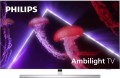 | 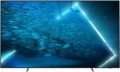 |
|---|---|---|
| Philips 65OLED807 | Philips 65OLED707 | |
from £1,999.00 | from £1,399.00 | |
| User reviews | ||
| TOP sellers | ||
| Size | 65 " | 65 " |
| Operating system | Android TV 11 | Android TV 11 |
| CPU | Philips P5 Perfect Picture | Philips P5 Perfect Picture |
Display | ||
| Matrix | OLED | OLED |
| Screen surface | anti-glare | anti-glare |
| Resolution | 3840x2160 px | 3840x2160 px |
| Upscaling | up to 4K | up to 4K |
| Frame rate | 100/120 Hz | 100/120 Hz |
| HDR support | HDR10+, Dolby Vision | HDR10+, Dolby Vision |
| AMD compatible | AMD FreeSync Premium | AMD FreeSync Premium |
| NVIDIA compatible | G-Sync Compatible | G-Sync Compatible |
Multimedia | ||
| Sound power | 70 W | 70 W |
| Number of speakers | 4 | 4 |
| Subwoofer |  | |
| Audio decoders | Dolby Atmos, DTS | Dolby Atmos, DTS |
| Digital tuner | DVB-T2 (terrestrial) DVB-C (cable) DVB-S (satellite) DVB-S2 (satellite) | DVB-T2 (terrestrial) DVB-C (cable) DVB-S (satellite) DVB-S2 (satellite) |
| Picture-in-picture | | |
Features | ||
| Features | Wi-Fi 5 (802.11ac) Google Cast (Chromecast) Bluetooth v5.0 Ambilight voice control Amazon Alexa Google Assistant | Wi-Fi 5 (802.11ac) Google Cast (Chromecast) Bluetooth v5.0 Ambilight voice control Amazon Alexa Google Assistant |
Connectors | ||
| HDMI | 4 | 4 |
| HDMI version | v 2.1 | v 2.1 |
| HDMI technologies | VRR, ALLM | VRR, ALLM |
| Additional inputs | USB-A 3 pcs LAN | USB-A 3 pcs LAN |
| Outputs | mini-Jack (3.5 mm) headphones optical | mini-Jack (3.5 mm) headphones optical |
General | ||
| Built-in memory | 16 GB | 16 GB |
| Wall mount | VESA 300x300 mm | VESA 300x300 mm |
| Stand shape | 1 leg with supports | 2 separate legs |
| Power consumption | 112 W | |
| Energy efficiency class (new) | G | |
| Dimensions (WxHxD) | 1444x895x287 mm | 1449x846x280 mm |
| Dimensions without stand (WxHxD) | 1444x824x68 mm | 1449x830x58 mm |
| Weight | 26.8 kg | 24.3 kg |
| Color | ||
| Added to E-Catalog | september 2022 | august 2022 |


Compare Philips 65OLED807 and 65OLED707
You may be interested in
My comparisons
Philips 65OLED707 often compared


Glossary
Stand shape
— 2 separate legs. Two legs as support are usually located on different sides of the lower face of the TV panel body. Such a design involves placing the TV on a large flat surface that extends along the entire lower side of the device. The TV is often more stable on two "legs" than on one leg.
— 1 leg on the platform. A support for the TV with a round or rectangular platform, which is in contact with the surface of the TV panel (table, stand, etc.) with its entire plane.
— 1 leg with supports. Stands of this kind consist of a single leg and a base of various geometric shapes that holds the TV. This solution ensures reliable stability of the TV panel, and in terms of design, it is a stylish element of the design of the structure.
— Monolithic. A solid stand with two or more attachment points to the bottom of the TV and monolithic frames as a solid support for installing the TV panel on a flat surface of a table or stand.
— 1 leg on the platform. A support for the TV with a round or rectangular platform, which is in contact with the surface of the TV panel (table, stand, etc.) with its entire plane.
— 1 leg with supports. Stands of this kind consist of a single leg and a base of various geometric shapes that holds the TV. This solution ensures reliable stability of the TV panel, and in terms of design, it is a stylish element of the design of the structure.
— Monolithic. A solid stand with two or more attachment points to the bottom of the TV and monolithic frames as a solid support for installing the TV panel on a flat surface of a table or stand.
Power consumption
The electrical power normally consumed by the TV. This parameter strongly depends on the screen size and sound power (see above), however, it can be determined by other parameters — primarily additional features and technologies implemented in the design. It is worth noting that most modern LCD TVs are quite economical, and most often this parameter does not play a significant role — in most cases, power consumption is about several tens of watts. And even large models with a diagonal of 70 – 90" consume about 200 – 300 W — this can be compared with the system unit of a low-power desktop PC.
Energy efficiency class (new)
This parameter characterizes the efficiency of electricity consumption. Classes are designated in Latin letters from A to G, in ascending order of energy consumption. Actually, this was originally conceived, until more energy-efficient models pulled up to class A, which eventually received the marking A +, A ++, A +++. Further development of technology has made it possible to go even further, and in order not to produce pluses in energy efficiency labeling, in March 2021, manufacturers returned to the previous indices from G to A, where A is the most energy efficient TV. Accordingly, the 2021 models will have modern markings, while older models will be marked in the same way. Accordingly, now energy efficiency G, F, E has become the most popular, and models with energy efficiency A, D, C are rare.