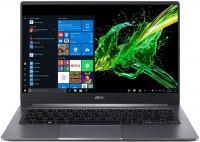
Acer Swift 3 SF314-57G
 | Outdated Product |

| This model is out of stock |
Thin and impressively light ultrabooks with matte 14-inch FullHD-resolution displays based on high-quality IPS panels with wide viewing angles for comfortable viewing. Made in durable and elegant metal cases made of a special aluminium-magnesium alloy. With power-efficient 10th Gen Intel Core i3/i5/i7 (Ice Lake, 10nm) processors, these models can handle any home, office, and moderately resource-intensive professional applications without any problems.
Thanks to its light weight (1.2 kg) and high-capacity 3-cell battery (50 Wh), they are able to demonstrate outstanding mobility and excellent battery life (up to 10 hours in economy mode). Good weight and size characteristics make Acer Swift 3 SF314-57G laptops an excellent choice for carrying, traveling, business trips and travel. All models in the line are equipped with fast NVMe SSDs, a multifunctional Thunderbolt v3 interface, a fingerprint scanner for fast biometric identification, an LED backlit keyboard and a high-speed dual-band Wi-Fi 6 (802.11n/ac/ax) adapter. It is worth paying attention to the fact that the preinstalled amount of DDR4 RAM is soldered on the board and cannot be expanded in the future.

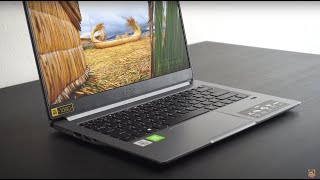


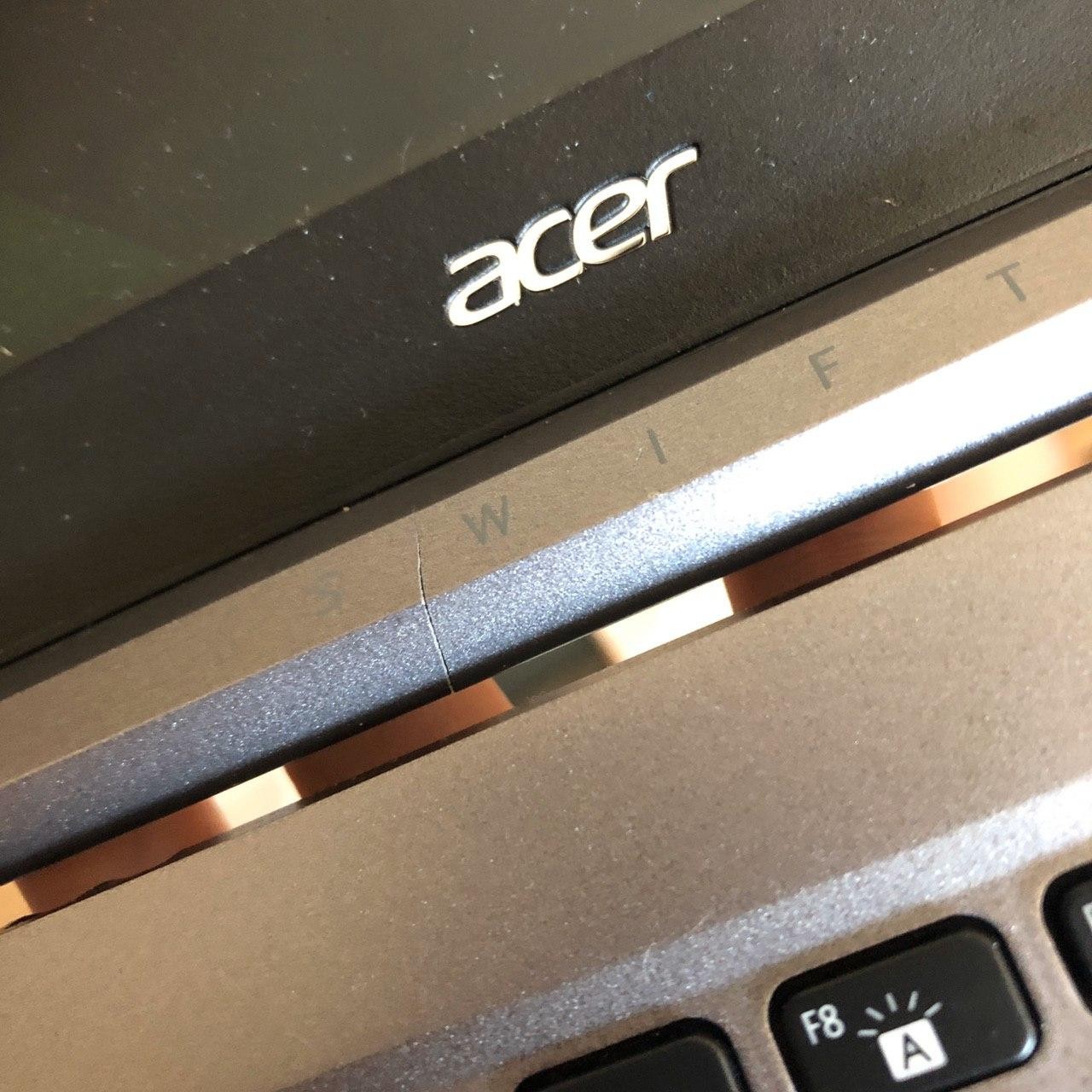
The laptop is terrible, I'm very disappointed with the purchase. I have the SF314-57G-72RC (i7, MX250, 16Gb, 1Tb). Take your i7 with you in a compact and lightweight case You have to pay for lightness. After five minutes of serious load, the laptop starts throttling significantly. It may even reach base frequencies (1.3Ghz), and what are such frequencies needed for anyway? The BIOS in Swift laptops is complete [censored]. You can't configure anything properly in it. It's the worst BIOS ever. To change the disk from OptainWithoutraid to AHCI, you had to somehow guess to press the CTRL+S key combination in the BIOS, which is just trash (this is not written anywhere). Deception awaited right after opening the laptop. The manufacturer claimed that the laptop was supplied with Linux. In the end, it was just a UEFI BIOS shell, which does not match the description at all. Installing drivers even for Windows is a challenging task. It was difficult to get all the drivers to work in the system (in real Linux, the sound, fingerprint, camera, microphones didn't work at all). The case seems quite weak. After a week of use, the lid was already scratched. And after a month, a crack appeared under the monitor (see photo), and it's completely unclear how they appeared.  Evgeniy: use Acer Swift 3 SF314-57G few months Evgeniy: use Acer Swift 3 SF314-57G few months |