Celestron NexStar 127SLT
 | Compare prices 3 → When you make a purchase through links on our site, we may receive a affiliate commission.
|

Celestron NexStar 127SLT | |||||||||||||||||||||||||||||||||||||||||
| |||||||||||||||||||||||||||||||||||||||||

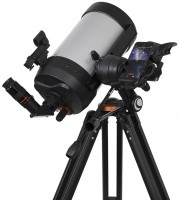
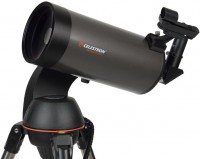
A telescope from the category of amateur computerized mid-level models. This model is suitable for users who want to gain a more advanced observing experience but are not yet ready to deal with complex professional systems. One of the strengths of the Celestron NexStar 127SLT telescope is its fully automated azimuth mount with the SkyAlign system, which simplifies initial alignment and device positioning. Features of this model also include easy setup, high image contrast, and compatibility with additional modules such as SkyPortal WiFi or the StarSense automatic alignment system, making the telescope appealing not only to beginners but also to those planning to develop in this hobby.
The information in the model description is for reference purposes.
Always clarify the specifications and configuration of the product with the online store manager before purchasing.
Catalog Celestron 2026 - new arrivals, bestsellers, and the most relevant models Celestron.
Always clarify the specifications and configuration of the product with the online store manager before purchasing.
Catalog Celestron 2026 - new arrivals, bestsellers, and the most relevant models Celestron.
Buy Celestron NexStar 127SLT
When you make a purchase through links on our site, we may receive a affiliate commission.
Celestron NexStar 127SLT Computerised Telescope 22097-CGL | £575.99 |  | |||
Celestron NexStar 127SLT 127mm f/12 Maksutov-Cassegrain GoTo Telescope 22097 | £605.99 |  | |||
Celestron Nexstar 127 Slt Mak Telescope | £693.99 |  | |||
I bought a telescope in May 2016. This is my first telescope. Excellent picture quality. Everyone who watched it was happy. The clarity is excellent, as is the brightness. I looked at the Moon, Jupiter, Venus and Mars. It is better to view Jupiter and the Moon with a lunar filter; the picture is too bright at maximum magnification. When viewing Venus, its phases are visible (looks approximately like the Moon to the naked eye) Mars looks like a red plum from a distance of 0.5 meters, if you look closely you can see small details. Jupiter is visible as an average apple from a distance of 0.5 meters (at maximum magnification). The BKP of Jupiter and its 4 satellites are very clearly visible. I didn’t look at Saturn because it always appeared in the morning (summer 2016) and I fell asleep earlier. The best object to observe is the Moon. The telescope's field of view at maximum magnification covers 1/16 of the Moon. Luna looks great. It is very convenient to point at terrestrial objects + this model can be controlled from the remote control without looking up from observation at the required speed (it has 9 of them). Another huge plus of this telescope is that it has automatic tracking of the planet, the Moon and the stars (convenient for observation and astrophotography for those who do astrophotography). You can point at the planet or the Moon, give it the name of the object, choose to follow the object and the object will always be in the center. Very convenient to transport: 1 person can load it into the back seat of the car and go to any place for use. Quickly assembles and disassembles. Requires either batteries or A/M cord Compact, lightweight, easy to transport in a passenger car: fits freely in the back seat of a passenger car, closed tube (dust ingress), high clarity and brightness, folds out quickly (if slowly, 10-15 minutes), there is a shelf on the tripod for eyepieces , remote control, tracking speeds: lunar planetary star (without this function at maximum magnification, the object passes the entire field of view of the telescope in 5 seconds and needs to be searched again) The telescope's control system was disappointing: It supposedly features an automatic star tracking system. In simple terms: You can align an object using two or three bright stars. You input the coordinates of the location, time zone, time (standard, daylight saving, and exact local time), then select 2 or 3 bright stars, point the telescope at them, and input the names of these stars into the telescope (Vega, Arcturus, Capella, Polaris for the northern hemisphere, at least those were the ones I used), and then, according to the manufacturer, you can choose a name from the list on the remote (let’s say Jupiter) and it should automatically align to it. However, it did not work. Four people with higher technical education attempted alignment about 10 times. It never aligned to Jupiter. The closest it got was about 10 degrees off, and once it even turned in the opposite direction and ended up pointing at the ground. I contacted tech support where I bought the telescope from but they never responded to me http://celestron.ru/. They only replied after two years when I bought a solar filter from them, with just an excuse about improper leveling of the telescope. I resolved the issue as follows: I manually point the telescope at the desired object, input it, then search for it in the catalog and track it. The eyepieces were also disappointing: the field of view is too small, so it’s better to replace the eyepieces. The 25 mm was passable, but the 9 mm was problematic. I ordered an 8-24 with enhanced zoom from AliExpress for around 5 thousand rubles. The quality is excellent.  Aleksey: use Celestron NexStar 127SLT more than year Aleksey: use Celestron NexStar 127SLT more than year |
Add Review
We recommendCompare using chart →