
Comparison TCL 55C745 vs TCL 55P635
Add to comparison |  | 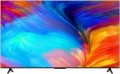 |
|---|---|---|
| TCL 55C745 | TCL 55P635 | |
from £449.00 | from £542.54 | |
| User reviews | ||
| TOP sellers | ||
QLED matrix. Google TV OS. Game panel Game Bar 2.0. Acoustics with Dolby Atmos and DTS:X. | ||
| Size | 55 " | 55 " |
| Operating system | Google TV (Android TV) | Google TV (Android TV) |
Display | ||
| Matrix | QLED | |
| Screen surface | anti-glare | anti-glare |
| Resolution | 3840x2160 px | 3840x2160 px |
| Upscaling | up to 4K | up to 4K |
| Brightness | 1000 cd/m² | 330 cd/m² |
| Static contrast | 6 000:1 | 5 000:1 |
| Frame rate | 100/120 Hz | 50/60 Hz |
| HDR support | HDR10, Dolby Vision | HDR10 |
| Colour enhancement |  |  |
| AMD compatible | AMD FreeSync Premium Pro | |
Multimedia | ||
| Sound power | 30 W | 20 W |
| Number of speakers | 2 | 2 |
| Audio decoders | Dolby Atmos, DTS | Dolby Digital |
| Digital tuner | DVB-T2 (terrestrial) DVB-C (cable) DVB-S (satellite) DVB-S2 (satellite) | |
| Picture-in-picture | | |
Features | ||
| Features | AirPlay 2 Wi-Fi 5 (802.11ac) Miracast Google Cast (Chromecast) Bluetooth v5.0 voice control Amazon Alexa Google Assistant | Wi-Fi 5 (802.11ac) Google Cast (Chromecast) Bluetooth v5.0 voice control Amazon Alexa Google Assistant |
Connectors | ||
| HDMI | 4 | 3 |
| HDMI version | v 2.1 | v 2.1 |
| HDMI technologies | VRR, ALLM | eARC, CEC |
| Additional inputs | USB-A LAN composite AV input | USB-A 2 pcs LAN |
| Outputs | mini-Jack (3.5 mm) headphones optical | mini-Jack (3.5 mm) headphones optical |
General | ||
| Wall mount | VESA 300x300 mm | VESA 200x200 mm |
| Stand shape | monolithic | 2 separate legs |
| Dimensions (WxHxD) | 1224x770x315 mm | 1226x765x267 mm |
| Dimensions without stand (WxHxD) | 1224x710x70 mm | 1226x715x55 mm |
| Weight | 14.3 kg | |
| Color | ||
| Added to E-Catalog | may 2023 | september 2022 |


Compare TCL 55C745 and 55P635
You may be interested in
TCL 55C745 often compared


TCL 55P635 often compared


Glossary
Matrix
The type of matrix used in the TV. Among them, OLED, QLED, QD-OLED and NanoCell deserve the most attention, which are found in TVs of the relevant price category. Now more about each of them and other more classic options:
— OLED. TVs with screens that use organic light-emitting diodes — OLED. Such LEDs can be used both to illuminate a traditional LCD matrix, and as elements from which a screen is built. In the first case, the advantages of OLED over traditional LED are compactness, extremely low power consumption, backlight uniformity, as well as excellent brightness and contrast ratios. And in matrices, consisting entirely of OLED, these advantages are even more pronounced. The main disadvantages of OLED TVs are the high price (which, however, is constantly decreasing as the technology develops and improves), as well as the susceptibility of organic pixels to burn-in during long-term broadcast of static images or pictures with static elements (TV channel logo, information panel, etc.).
— QLED. TVs with screens using "quantum dot" technology — QLED. Such screens differ from conventional LED matrices in the design of the backlight: multilayer colour filters in such a backlight are replaced with a thin-film light-transmitting coating based on nanoparticles, and traditional white LEDs are replaced with blue ones. This a...llows to achieve a significant increase in brightness and colour saturation at the same time as improving the quality of colour reproduction, besides, it reduces the thickness and reduces the power consumption of the screen. The disadvantage of QLED matrices is traditional — the high price.
— QD-OLED. A kind of hybrid version of matrices that combine “quantum dots” (Quantum Dot) and organic light-emitting diodes (OLED) in one bottle. The QD-OLED modification was introduced by Samsung at the end of 2021 in response to advanced OLED panels from LG. The technology takes the best from QLED and OLED: it is based on blue LEDs, self-luminous pixels (instead of external backlighting) and “quantum dots”, which play the role of colour filters, but at the same time practically do not attenuate the light (unlike traditional filters) . Thanks to the use of a number of advanced solutions, the creators managed to achieve very impressive characteristics, significantly superior to many other OLED matrices. Among them are high peak brightness from 1000 nits (cd/m²), excellent contrast and black depth, as well as colour coverage of over 90% according to the BT.2020 standard and more than 120% according to DCI-P3. Such matrices are found mainly in flagship TV panels.
— IPS. A type of matrix originally designed for high quality colour rendering. Indeed, IPS screens produce bright and rich colours, have a good colour gamut, and demonstrate wide viewing angles. The initial disadvantage of this technology was the low response time, but in modern modifications of IPS this point has been practically eliminated. Matrices of this type are very popular in the advanced budget and mid-price segment of TV panels.
— *VA. In this case, we mean one of the varieties of VA (Vertical Alignment) type matrices - MVA, PVA, Super PVA, etc. Specific varieties may vary slightly in properties, but they all have common features. In fact, *VA matrices are a more affordable alternative to IPS panels: they are relatively inexpensive, provide fairly good colour reproduction and viewing angles of up to 178°. The main disadvantage of such screens is the long response time, but in modern models this has been practically eliminated thanks to the constant improvement of technology. *VA matrices are used in TVs that are positioned as functional and at the same time affordable models.
— NanoCell. Matrix based on quantum dots. This type of matrix is used in LG TVs and was first introduced in 2017. NanoCell matrices use the structure of classic LCD displays. But unlike the latter, they use so-called quantum dots instead of the classic general backlight, which provide monochromatic light. NanoCell technology reduces power consumption while increasing colour gamut and viewing angle. It is worth noting separately that NanoCell matrices are not the only ones using quantum dot technology. Similar solutions are offered by: Samsung (QLED matrix), Sony (Triluminos matrix), Hisense (ULED).
— OLED. TVs with screens that use organic light-emitting diodes — OLED. Such LEDs can be used both to illuminate a traditional LCD matrix, and as elements from which a screen is built. In the first case, the advantages of OLED over traditional LED are compactness, extremely low power consumption, backlight uniformity, as well as excellent brightness and contrast ratios. And in matrices, consisting entirely of OLED, these advantages are even more pronounced. The main disadvantages of OLED TVs are the high price (which, however, is constantly decreasing as the technology develops and improves), as well as the susceptibility of organic pixels to burn-in during long-term broadcast of static images or pictures with static elements (TV channel logo, information panel, etc.).
— QLED. TVs with screens using "quantum dot" technology — QLED. Such screens differ from conventional LED matrices in the design of the backlight: multilayer colour filters in such a backlight are replaced with a thin-film light-transmitting coating based on nanoparticles, and traditional white LEDs are replaced with blue ones. This a...llows to achieve a significant increase in brightness and colour saturation at the same time as improving the quality of colour reproduction, besides, it reduces the thickness and reduces the power consumption of the screen. The disadvantage of QLED matrices is traditional — the high price.
— QD-OLED. A kind of hybrid version of matrices that combine “quantum dots” (Quantum Dot) and organic light-emitting diodes (OLED) in one bottle. The QD-OLED modification was introduced by Samsung at the end of 2021 in response to advanced OLED panels from LG. The technology takes the best from QLED and OLED: it is based on blue LEDs, self-luminous pixels (instead of external backlighting) and “quantum dots”, which play the role of colour filters, but at the same time practically do not attenuate the light (unlike traditional filters) . Thanks to the use of a number of advanced solutions, the creators managed to achieve very impressive characteristics, significantly superior to many other OLED matrices. Among them are high peak brightness from 1000 nits (cd/m²), excellent contrast and black depth, as well as colour coverage of over 90% according to the BT.2020 standard and more than 120% according to DCI-P3. Such matrices are found mainly in flagship TV panels.
— IPS. A type of matrix originally designed for high quality colour rendering. Indeed, IPS screens produce bright and rich colours, have a good colour gamut, and demonstrate wide viewing angles. The initial disadvantage of this technology was the low response time, but in modern modifications of IPS this point has been practically eliminated. Matrices of this type are very popular in the advanced budget and mid-price segment of TV panels.
— *VA. In this case, we mean one of the varieties of VA (Vertical Alignment) type matrices - MVA, PVA, Super PVA, etc. Specific varieties may vary slightly in properties, but they all have common features. In fact, *VA matrices are a more affordable alternative to IPS panels: they are relatively inexpensive, provide fairly good colour reproduction and viewing angles of up to 178°. The main disadvantage of such screens is the long response time, but in modern models this has been practically eliminated thanks to the constant improvement of technology. *VA matrices are used in TVs that are positioned as functional and at the same time affordable models.
— NanoCell. Matrix based on quantum dots. This type of matrix is used in LG TVs and was first introduced in 2017. NanoCell matrices use the structure of classic LCD displays. But unlike the latter, they use so-called quantum dots instead of the classic general backlight, which provide monochromatic light. NanoCell technology reduces power consumption while increasing colour gamut and viewing angle. It is worth noting separately that NanoCell matrices are not the only ones using quantum dot technology. Similar solutions are offered by: Samsung (QLED matrix), Sony (Triluminos matrix), Hisense (ULED).
Brightness
The maximum brightness of the image provided by the TV screen.
The image on the screen should be bright enough so that you do not have to strain your eyes unnecessarily to view it. However, too high brightness is undesirable — it will also lead to fatigue. The optimal brightness level depends on the surrounding conditions: the more intense the ambient light, the brighter the TV screen should be. So, on a sunny day, the screen may have to be “turned up” to the maximum, and in the evening, in dimmed light, a relatively dim image will be more comfortable. In addition note that large screens require higher brightness, since they are designed for a greater distance from the viewer.
Thus, the higher the number in this paragraph, the greater the margin of brightness this model has, the better it will show itself in intense ambient light. The lowest indicator sufficient for more or less comfortable viewing in any conditions is 300 cd/m² for models with a diagonal of up to 32", 400 cd/m² for models in the range of 32 – 55" and 600 cd/m² for large screens of 60" and more. In this case, the brightness margin anyway will not be superfluous. But with lower indicators, you may have to darken the room somewhat for comfortable viewing.
The image on the screen should be bright enough so that you do not have to strain your eyes unnecessarily to view it. However, too high brightness is undesirable — it will also lead to fatigue. The optimal brightness level depends on the surrounding conditions: the more intense the ambient light, the brighter the TV screen should be. So, on a sunny day, the screen may have to be “turned up” to the maximum, and in the evening, in dimmed light, a relatively dim image will be more comfortable. In addition note that large screens require higher brightness, since they are designed for a greater distance from the viewer.
Thus, the higher the number in this paragraph, the greater the margin of brightness this model has, the better it will show itself in intense ambient light. The lowest indicator sufficient for more or less comfortable viewing in any conditions is 300 cd/m² for models with a diagonal of up to 32", 400 cd/m² for models in the range of 32 – 55" and 600 cd/m² for large screens of 60" and more. In this case, the brightness margin anyway will not be superfluous. But with lower indicators, you may have to darken the room somewhat for comfortable viewing.
Static contrast
The level of static contrast provided by the TV screen.
Contrast in a general sense is the ratio in brightness between the brightest whites and the darkest blacks that the screen can produce. Other things being equal, the higher the screen contrast, the better the quality of colour reproduction and detail, the lower the likelihood that it will be impossible to see details in too bright or too dark areas of the image. Static contrast, on the other hand, describes the maximum difference in brightness that can be achieved within one frame without changing the brightness of the image — this is its difference from dynamic contrast (see below).
The values of static contrast are much lower than those of dynamic, but this characteristic is the most "honest". It is on it that the properties of the image seen on the screen at a particular moment depend, it is describes the basic properties of the screen, without taking into account the software tricks provided by the manufacturer in the hardware of the TV.
Contrast in a general sense is the ratio in brightness between the brightest whites and the darkest blacks that the screen can produce. Other things being equal, the higher the screen contrast, the better the quality of colour reproduction and detail, the lower the likelihood that it will be impossible to see details in too bright or too dark areas of the image. Static contrast, on the other hand, describes the maximum difference in brightness that can be achieved within one frame without changing the brightness of the image — this is its difference from dynamic contrast (see below).
The values of static contrast are much lower than those of dynamic, but this characteristic is the most "honest". It is on it that the properties of the image seen on the screen at a particular moment depend, it is describes the basic properties of the screen, without taking into account the software tricks provided by the manufacturer in the hardware of the TV.
Frame rate
The true panel frequency of a TV without marketing enhancements and interpolation; today there are two classes: 50/60 Hz and 100/120 Hz. The pair of 50 and 60 Hz exists due to historical video signal standards (Europe 25/50, USA/Asia 30/60), with modern TVs typically accepting both. It is reasonable to consider the 100/120 Hz pair as one: it is the same high-end hardware platform, simply operating in multiples of its "native" content (100 Hz for 50 Hz sources, 120 Hz for 60 Hz). This class provides smoother motion in sports and 24p movies (at 120 Hz — in a multiple of 5:5 without stuttering) and unlocks 4K@120 Hz/VRR for gaming; 50/60 Hz remains the basic option for TV and streaming without gaming ambitions.
HDR support
TV support for high dynamic range technology — HDR.
This technology is designed to expand the range of brightness reproduced by the TV; Simply put, an HDR model will display brighter whites and darker blacks than a regular TV. In fact, this means a significant improvement in colour quality. On the one hand, HDR provides a very "live" image, close to what the human eye sees, with an abundance of shades and tones that a normal screen cannot convey; on the other hand, this technology allows to achieve very bright and rich colours.
However for the full use of this feature, you need not only an HDR TV, but also content (movies, TV broadcasts, etc.) that was originally created for HDR. Also note that there are several different HDR technologies that are not compatible with each other. Therefore, when buying a TV with this feature, it is highly advisable to clarify which version of HDR it supports (HDR10, HDR10 + or Dolby Vision). And the following are found:
— HDR10. Historically the first of the consumer HDR formats, less advanced than the options described below but extremely widespread. In particular, HDR10 is supported by almost all streaming services that provide HDR content, and it is also common for Blu-ray discs. Allows to work with a colour depth of 10 bits (hence the name). At the same time, devices of this format are also compatible wi...th content in HDR10+, although its quality will be limited by the capabilities of the original HDR10.
— HDR10+. An improved version of HDR10. With the same colour depth (10 bits), it uses the so-called dynamic metadata, which allows transmitting information about the colour depth not only for groups of several frames, but also for individual frames. This results in an additional improvement in colour reproduction.
– Dolby Vision. An advanced standard used particularly in professional cinematography. Allows to achieve a colour depth of 12 bits, uses the dynamic metadata described above, and also makes it possible to transmit two image options at once in one video stream — HDR and standard (SDR). At the same time, Dolby Vision is based on the same technology as HDR10, so in modern video technology this format is usually combined with HDR10 or HDR10+.
This technology is designed to expand the range of brightness reproduced by the TV; Simply put, an HDR model will display brighter whites and darker blacks than a regular TV. In fact, this means a significant improvement in colour quality. On the one hand, HDR provides a very "live" image, close to what the human eye sees, with an abundance of shades and tones that a normal screen cannot convey; on the other hand, this technology allows to achieve very bright and rich colours.
However for the full use of this feature, you need not only an HDR TV, but also content (movies, TV broadcasts, etc.) that was originally created for HDR. Also note that there are several different HDR technologies that are not compatible with each other. Therefore, when buying a TV with this feature, it is highly advisable to clarify which version of HDR it supports (HDR10, HDR10 + or Dolby Vision). And the following are found:
— HDR10. Historically the first of the consumer HDR formats, less advanced than the options described below but extremely widespread. In particular, HDR10 is supported by almost all streaming services that provide HDR content, and it is also common for Blu-ray discs. Allows to work with a colour depth of 10 bits (hence the name). At the same time, devices of this format are also compatible wi...th content in HDR10+, although its quality will be limited by the capabilities of the original HDR10.
— HDR10+. An improved version of HDR10. With the same colour depth (10 bits), it uses the so-called dynamic metadata, which allows transmitting information about the colour depth not only for groups of several frames, but also for individual frames. This results in an additional improvement in colour reproduction.
– Dolby Vision. An advanced standard used particularly in professional cinematography. Allows to achieve a colour depth of 12 bits, uses the dynamic metadata described above, and also makes it possible to transmit two image options at once in one video stream — HDR and standard (SDR). At the same time, Dolby Vision is based on the same technology as HDR10, so in modern video technology this format is usually combined with HDR10 or HDR10+.
Colour enhancement
The TV's support of one or the other colour enhancement technology.
Such technologies usually involve image processing in software to provide brighter and/or more accurate colours. Specific processing methods may be different, some manufacturers do not specify technical details at all, limiting themselves to advertising statements. The effect of using such technologies can also vary: in some cases it is clearly visible, in others it is almost absent, depending on the features of the picture. It is also worth saying that this feature, usually, needs to be turned on manually in the TV menu (accordingly, it can be turned off if desired).
Such technologies usually involve image processing in software to provide brighter and/or more accurate colours. Specific processing methods may be different, some manufacturers do not specify technical details at all, limiting themselves to advertising statements. The effect of using such technologies can also vary: in some cases it is clearly visible, in others it is almost absent, depending on the features of the picture. It is also worth saying that this feature, usually, needs to be turned on manually in the TV menu (accordingly, it can be turned off if desired).
AMD compatible
TV compatibility with special frame synchronization technologies used in AMD graphics cards.
You should pay attention to this parameter if you plan to use the TV as a gaming monitor for a PC or laptop with an AMD graphics adapter. Special timing technologies are used to match the screen refresh rate to the frame rate of the incoming video signal. Such a need arises for the reason that the frame rate issued by the graphics card can “float” when the load on the video adapter changes (this is especially true for demanding games); and if this frequency does not match the screen refresh rate – tears and other unwanted artifacts appear on the image.
The AMD technology used to eliminate this effect is called FreeSync. Nowadays, it is presented on the market in three versions — the original FreeSync and two extended ones:
– AMD FreeSync Premium Pro. The most advanced and functional version, formerly known as AMD FreeSync 2 HDR. In addition to refresh rate sync, it also includes support for HDR (see above), output at a frame rate of at least 120 Hz at Full HD resolution, as well as low frame rate compensation (LFC). The essence of LFC is that when the frame rate of the original video signal falls below the minimum frequency supported by the screen, the same frame is displayed on the screen several times, which allows to maintain the maximum smoothness of the “picture”.
— AMD FreeSync Premium. A somewhat s...implified version compared to FreeSync Premium Pro. It does not provide working with HDR, otherwise it is completely similar.
You should pay attention to this parameter if you plan to use the TV as a gaming monitor for a PC or laptop with an AMD graphics adapter. Special timing technologies are used to match the screen refresh rate to the frame rate of the incoming video signal. Such a need arises for the reason that the frame rate issued by the graphics card can “float” when the load on the video adapter changes (this is especially true for demanding games); and if this frequency does not match the screen refresh rate – tears and other unwanted artifacts appear on the image.
The AMD technology used to eliminate this effect is called FreeSync. Nowadays, it is presented on the market in three versions — the original FreeSync and two extended ones:
– AMD FreeSync Premium Pro. The most advanced and functional version, formerly known as AMD FreeSync 2 HDR. In addition to refresh rate sync, it also includes support for HDR (see above), output at a frame rate of at least 120 Hz at Full HD resolution, as well as low frame rate compensation (LFC). The essence of LFC is that when the frame rate of the original video signal falls below the minimum frequency supported by the screen, the same frame is displayed on the screen several times, which allows to maintain the maximum smoothness of the “picture”.
— AMD FreeSync Premium. A somewhat s...implified version compared to FreeSync Premium Pro. It does not provide working with HDR, otherwise it is completely similar.
Sound power
The nominal power of the sound produced by the TV's sound system.
The larger the screen and the greater the estimated distance to the viewer, the more powerful the sound system must be in order to be heard normally. Manufacturers take this moment into account, moreover, most often they also provide a solid volume margin. So if a TV is bought for home viewing in a quiet, calm environment, you can not pay much attention to the sound power: it is guaranteed to be enough for such a usage. It makes sense to specifically look for models with high-power speakers for a noisy environment — for example, a cafe or other public space. Detailed recommendations on this matter can be found in special sources, but here we note that even in such cases, connecting external speakers can be a good alternative.
The larger the screen and the greater the estimated distance to the viewer, the more powerful the sound system must be in order to be heard normally. Manufacturers take this moment into account, moreover, most often they also provide a solid volume margin. So if a TV is bought for home viewing in a quiet, calm environment, you can not pay much attention to the sound power: it is guaranteed to be enough for such a usage. It makes sense to specifically look for models with high-power speakers for a noisy environment — for example, a cafe or other public space. Detailed recommendations on this matter can be found in special sources, but here we note that even in such cases, connecting external speakers can be a good alternative.
Audio decoders
A decoder can be broadly described as a standard in which digital audio (often multi-channel) is recorded. For normal playback of such sound, it is necessary that the corresponding decoder is supported by the device. Dolby Digital and DTS were the first in multi-channel decoding, gradually improving and introducing new features. The final stage for 2020 is Dolby Atmos and DTS X decoders.
– Dolby Atmos. A decoder that uses not a rigid distribution of sound across channels, but the processing of audio objects, due to which it can be used with almost any number of channels on a reproducing system — the sound will be divided between channels so that each audio object is heard as close as possible to its proper place. When using Dolby Atmos, ceiling speakers (or speakers facing the ceiling) are highly desirable. However, in extreme cases, you can do without them.
— DTS X. An analogue of the Dolby Atmos described above, when the sound is distributed not through individual channels, but through audio objects. The digital signal contains information about where (according to the director's intention) the object audible to the user should be and how it should move, and the processor of the reproducing device processes this information and determines exactly how the sound should be distributed over the available channels in order to achieve the required localization. Thanks to this, DTS X is not tied to a specific number of audi...o channels — there can be as many as you like, the system will automatically divide the sound into them, achieving the desired sound. Also note that this decoder allows you to separately adjust the volume of dialogues.
– Dolby Atmos. A decoder that uses not a rigid distribution of sound across channels, but the processing of audio objects, due to which it can be used with almost any number of channels on a reproducing system — the sound will be divided between channels so that each audio object is heard as close as possible to its proper place. When using Dolby Atmos, ceiling speakers (or speakers facing the ceiling) are highly desirable. However, in extreme cases, you can do without them.
— DTS X. An analogue of the Dolby Atmos described above, when the sound is distributed not through individual channels, but through audio objects. The digital signal contains information about where (according to the director's intention) the object audible to the user should be and how it should move, and the processor of the reproducing device processes this information and determines exactly how the sound should be distributed over the available channels in order to achieve the required localization. Thanks to this, DTS X is not tied to a specific number of audi...o channels — there can be as many as you like, the system will automatically divide the sound into them, achieving the desired sound. Also note that this decoder allows you to separately adjust the volume of dialogues.