
Comparison Xerox B230 vs Xerox Phaser 3020
Add to comparison | 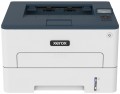 | 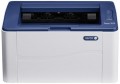 |
|---|---|---|
| Xerox B230 | Xerox Phaser 3020 | |
| Compare prices 7 | from £96.44 | |
| User reviews | ||
| TOP sellers | ||
Support for wireless technologies. Automatic two-sided printing. | ||
| Print formats | A4 | A4 |
| Print type | laser | laser |
| Output type | monochrome | monochrome |
Print | ||
| Max. resolution | 2400x600 dpi | 1200x1200 dpi |
| First page print time | 7 с | 9 с |
| Mono print | 34 ppm | 20 ppm |
| Duplex printing |  |  |
Printing supplies | ||
| Monthly resource | 30 K pages | 15 K pages |
| Mono cartridge resource | 3000 page | 1500 page |
| OPC drum resource | 12 K pages | |
| Cartridges | 1 | 1 |
| Cartridge model | 006R04402, 006R04403, 006R04404 | 106R02773, 106R03048 |
| High-capacity cartridge support | | |
Features | ||
| Data transfer | PC connection (USB-B) network connection (LAN) Wi-Fi 4 (802.11n) Wi-Fi Direct AirPrint | PC connection (USB-B) |
| Cloud print | Mopria | |
| Screen | monochrome | no display |
Hardware | ||
| Grammage (min) | 60 g/m² | 60 g/m² |
| Grammage (max) | 200 g/m² | 163 g/m² |
| RAM | 256 MB | 128 MB |
| Clock Speed | 1000 MHz | 600 MHz |
General | ||
| Feed tray | 250 sheets | 150 sheets |
| Output tray | 150 sheets | 100 sheets |
| Power consumption | 313 W | |
| Dimensions (WxDxH) | 355x333x215 mm | 331x215x188 mm |
| Weight | 6.8 kg | 4.1 kg |
| Color | ||
| Added to E-Catalog | july 2022 | december 2014 |





Compare Xerox B230 and Phaser 3020
Price comparison
You may be interested in
Xerox B230 often compared


Xerox Phaser 3020 often compared


Glossary
Max. resolution
The maximum resolution of the image to be printed. It is usually indicated by two numbers denoting the number of dpi (DPI) horizontally and vertical: 600x600, 1200x600, 1200x1200, 2400x600, 2400x1200, 4800x600, 4800x1200, 4800x2400, 5760x1440, 9600x600, 9600x2400. The detail of the image depends on this parameter - the higher the resolution, the more fine details the printer is able to convey and the better their image will be. High print resolution is important, first of all, when working with graphic material; low resolution is sufficient for high-quality text display. So
First page print time
The time from the receipt of a print command to the exit from the printer of the first page printed in black and white, in other words, how long after pressing the "Print" button, the user will receive the first page. Most often indicated for draft (fastest) print mode, higher quality will take longer. You should pay attention to this parameter if you often need to print small documents (on one or several pages) on the printer.
Mono print
The black and white print speed provided by the printer. It should be noted that this parameter is often indicated for low quality when the device is running at maximum performance; at a higher quality (even at standard), the actual speed can be noticeably lower, so you should choose with a certain margin. Also note that high speed significantly affects the price, power consumption and noise level. Therefore, it does not always make sense to chase maximum performance — for simple applications (for example, at home or in a small office), a relatively slow and inexpensive device may be the best choice.
As for specific values, speeds up to 20 ppm are considered relatively low, 20 – 30 ppm — average, 31 – 40 ppm — decent, and the fastest models are capable of delivering more than 40 pages per minute.
As for specific values, speeds up to 20 ppm are considered relatively low, 20 – 30 ppm — average, 31 – 40 ppm — decent, and the fastest models are capable of delivering more than 40 pages per minute.
Duplex printing
Automatic duplex printing function .
In this mode, the user does not need to manually turn over each sheet and send it to print on the second side — this will be done by the printer mechanism, and materials printed on both sides will immediately enter the output tray. This not only saves time, but also eliminates confusion: a person can make a mistake and print one of the sides “upside down”, automation does not allow such errors.
In this mode, the user does not need to manually turn over each sheet and send it to print on the second side — this will be done by the printer mechanism, and materials printed on both sides will immediately enter the output tray. This not only saves time, but also eliminates confusion: a person can make a mistake and print one of the sides “upside down”, automation does not allow such errors.
Monthly resource
The maximum number of pages the printer can print in a month while still operating at full capacity.
Mono cartridge resource
The maximum number of pages that the printer's ink (toner) can print. The value is rather conditional, in reality the deviations from the norm are very large (up or down). In inkjet printers, the cartridge life is relatively small and amounts to several hundred prints. In laser and LED devices, the bill is already in the thousands.
OPC drum resource
The photoconductor is used in laser and LED printers (see Printing technology); during use, due to constant contact with paper, scratches and abrasions appear on it, which significantly affect print quality. In some printers, the photoconductor is part of the cartridge — in this case, its resource is equal to the resource of the cartridge, the drum is installed and changed along with it. In other models, the drum is installed separately.
The drum yield is the maximum number of pages that a printer with a drum unit can print without any noticeable loss in quality. It is usually specified for printers with a separate drum. The resource is a rather approximate value, because depends on the specific conditions of using the printer, and in fact it may differ from the claimed value both in one direction and in the other.
The drum yield is the maximum number of pages that a printer with a drum unit can print without any noticeable loss in quality. It is usually specified for printers with a separate drum. The resource is a rather approximate value, because depends on the specific conditions of using the printer, and in fact it may differ from the claimed value both in one direction and in the other.
Cartridge model
The types of cartridges (both black and white and colour) used in the printer. Some printer models are able to work with "non-native" cartridges, but this feature usually refers to undocumented features, and the manufacturer's warranty covers only specific types of cartridges. So use "non-native" models with caution.
High-capacity cartridge support
The printer cartridge is designed for a certain service life (resource). However, the machine's compatibility with different cartridges sometimes allows you to install a higher capacity cartridge, which can result in more pages being printed. It is these models that have the option to expand the print resource that are included in this paragraph.