
Comparison EcoFlow RIVER 2 Pro vs EcoFlow RIVER 2 Max
Add to comparison | 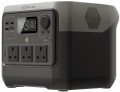 | 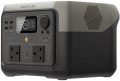 |
|---|---|---|
| EcoFlow RIVER 2 Pro | EcoFlow RIVER 2 Max | |
| Compare prices 10 | Compare prices 10 | |
| User reviews | ||
| TOP sellers | ||
3 USB A ports, 1 USB-C port. Car cigarette lighter, DC5521 port, XT60 port. Surges up to 1600 W are allowed. LFP (LiFePO4) – lithium iron phosphate battery. | 3 USB A ports, 1 USB-C port. Car cigarette lighter, DC5521 port, XT60 port. Surges up to 1000 W are allowed. LFP (LiFePO4) – lithium iron phosphate battery. | |
| In box | charging station | charging station |
| Rated power | 800 W | 500 W |
| Peak power | 1600 W | 1000 W |
| Output waveform | sinusoid (PSW) | sinusoid (PSW) |
| UPS function |  | |
| Switchover time to battery | 30 ms | 30 ms |
Outputs | ||
| Sockets (230 V) | 3 | 2 |
| USB-A | 3 pcs 5В/2.4А 12 W | 3 pcs 5В/2.4А 12 W |
| USB-C | 1 pcs 5 A 100 W | 1 pcs 5 A 100 W |
| Car cigarette lighter | | |
| DC output | 2x DC5521 (12.6 V / 3 A / 36 W) | 2x DC5521 (12.6 V / 3 A / 36 W) |
Inputs (station charging) | ||
| From solar panels | | |
| Via USB-C port | | |
| Input port XT60 | | |
Battery and charging time | ||
| Battery type | LiFePO4 | LiFePO4 |
| Battery capacity | 768 Wh | 512 Wh |
| Charging cycles | 3000 | 3000 |
| Charging time (socket) ≈ | 70 min | 60 min |
| Charging time (solar panel) ≈ | 210 min | 180 min |
| Charging time (cigarette lighter) ≈ | 461 min | 307 min |
| Charging power (socket) | 940 W | 660 W |
| Charging power (solar panel) | 220 W | 220 W |
| Charging power (cigarette lighter) | 100 W | 100 W |
General | ||
| Smartphone synchronization | Bluetooth and WiFi | Bluetooth and WiFi |
| PSU | built into the body | built into the body |
| Display | | |
| Carrying handle | | |
| Operating temperature | 0 °C ~ +45 °C | 0 °C ~ +45 °C |
| Dimensions (LxWxH) | 270x260x226 mm | 270x260x196 mm |
| Weight | 7.8 kg | 6 kg |
| Warranty | 5 years | 5 years |
| Added to E-Catalog | november 2022 | november 2022 |




Compare EcoFlow RIVER 2 Pro and RIVER 2 Max
When comparing EcoFlow RIVER 2 Pro and EcoFlow RIVER 2 Max charging stations, several key aspects can be highlighted. The EcoFlow RIVER 2 Pro has a higher rated power of 800 W and a peak value of 1600 W, allowing for the connection of more powerful devices. In contrast, the RIVER 2 Max has a rated power of 500 W and peak power of 1000 W, which may not be sufficient for some high-consumption appliances. Both devices have a similar configuration with multiple outputs, including USB and AC, but the RIVER 2 Pro offers more outputs and a larger battery capacity (40 Ah versus 20 Ah for the Max). Users note that the RIVER 2 Pro charges faster (70 minutes compared to 60 minutes for the Max), although both devices have their advantages in terms of portability and ease of use. Overall, the RIVER 2 Pro is better suited for more demanding tasks, while the RIVER 2 Max might be a good choice for less intensive use.
Price comparison
You may be interested in
EcoFlow RIVER 2 Pro often compared


EcoFlow RIVER 2 Max often compared


Glossary
Rated power
Power that a device can consistently produce for an indefinitely long time without any unpleasant consequences. For normal operation of the charging station, the rated power must be at least 15 - 20% higher than the total power of all devices simultaneously connected to it.
Peak power
Some electrical appliances (in particular, units with electric motors - refrigerators, air conditioners, etc.) consume significantly more energy at startup than after reaching the operating mode. For such a load, the peak power of the charging station must be taken into account - its indicator must be higher than the starting power of the load.
Sockets (230 V)
Total number of outlets with output voltage. This is, in fact, the number of devices that can be simultaneously connected to the charging station without the use of splitters, extension cords and carriers. Accordingly, weaker charging stations have one or two sockets in their submission. Powerful charging stations already have three or more sockets “on board”.
Battery capacity
Nominal battery capacity, in fact - the amount of energy that is supposed to be stored. The larger it is, the longer the battery life of the charging station will be, all other things being equal. On the other hand, this parameter also affects the dimensions, weight and price of the battery, despite the fact that an energy-intensive battery is not always required. By the indicator of capacity in watt-hours, you can compare batteries with each other.
Charging time (socket) ≈
Time to charge the portable power station from a fully discharged state to 100% charge when using the power adapter from a household outlet. This refers to the original battery and standard charger.
Charging time (solar panel) ≈
Time spent on a full charge when using the original panel in bright sunlight. In cloudy weather, the charging time of the device from the solar panel can be strikingly different downwards.
Charging time (cigarette lighter) ≈
The time required to fully (from zero to 100%) charge the battery, provided that power is supplied to the charging station from the car's cigarette lighter socket (12 V).
Charging power (socket)
The power at which, in normal mode, the portable power station is charged from a household outlet when using the original power supply.