
Comparison Bosch ErgoMaster MSM4B623 black vs Bosch ErgoMaster MSM4B621 black
Add to comparison | 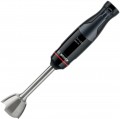 | 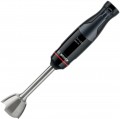 |
|---|---|---|
| Bosch ErgoMaster MSM4B623 black | Bosch ErgoMaster MSM4B621 black | |
from £487.76 | Compare prices 6 | |
| TOP sellers | ||
| Device type | immersion (hand) blender | immersion (hand) blender |
Specs | ||
| Grinding bowl | 500 ml | 500 ml |
| Power | 1000 W | 1000 W |
| Smooth speed control |  | |
| One button control | | |
| Pulse mode | | |
| Capacities | grinding bowl measuring cup | grinding bowl measuring cup |
| Nozzles | blending arm whisk chopper knife mashing | blending arm whisk chopper knife |
General | ||
| Power source | mains | mains |
| Blending arm material | metal | metal |
| Cable length | 1.4 m | 1.4 m |
| Dimensions | 38.5x5.7x7.8 cm | 38.5x5.7x7.8 cm |
| Weight | 1.5 kg | 1.3 kg |
| Color | ||
| Added to E-Catalog | august 2023 | november 2022 |




Compare Bosch ErgoMaster MSM4B623 and MSM4B621
Price comparison
You may be interested in
Bosch ErgoMaster MSM4B623 often compared


Bosch ErgoMaster MSM4B621 often compared


Glossary
Nozzles
— Blending arm. A blending nozzle is a long rod-like attachment with a protective cap at one end, containing a bladed knife. It can be attached to a conventional mixer, essentially turning it into a blender.
— Wide blending arm. A blending nozzle, or blending arm, is a long rod-shaped attachment with a protective cap at one end, housing a bladed knife. The wider width of the blending arm allows for faster blending and easier processing of larger quantities of food products.
— Beaters for whisking. Whisking nozzles for liquids such as cream, eggs, and batter, are commonly found in modern mixers as a standard attachment.
— Kneading hook. Special nozzles in the form of thick wire spirals, designed for kneading thick dough.
— Knife for chopper. A cutting-type attachment with blade knives attached to the bottom of a cylindrical shaft and turned at a 180-degree angle to each other. It is used for grinding ingredients of different hardness in the blender jar. The cutting elements of such knives can have both straight and serrated blades.
— An ice pick. An ice pick is a specialized tool for crushing ice, nuts, and frozen fruits/berries. Its serrated blades make it easier to break the solid structure of ice without dulling the blades. I...t is commonly used with powerful blenders that come with a glass or metal chopper bowl. Although not all blenders include an ice pick, it can be purchased separately along with a heavy-duty chopper bowl main function crushing ice and other hard ingredients.
— Knife for kneading dough. The kneading knife is ideal for making yeast dough with a less dense structure in small quantities. It can also be used for mixing and whipping creams. Typically, this type of knife is made from durable plastic that pulls the mass rather than cutting it like steel. For larger volumes of dough, it is recommended to use a specialized hook attachment instead.
— Disc for shredding/slicing. A slicing disk is a circular attachment with slots that function as blades when rotated. This feature enables it to rapidly and uniformly slice fruits and vegetables into thin pieces, making it particularly useful for processing large quantities of food.
— For dicing. This attachment is designed to cut fruits and vegetables into small, uniform cubes. It is particularly useful for preparing salads and traditional soups.
— For puree. This is a plastic attachment typically used for creating smooth purees and thick blends from fruits and vegetables.
The presence of a sieve in the delivery set of the device.
— Pulp sieve. Typically found in conventional blenders, this device is a vertical tube with fine mesh walls that fits into the bowl and sits atop the blade. Its primary function is to separate pulp from fruit and vegetable juices: produce is placed inside the tube, the blade crushes it, and the juice is filtered through the mesh into the bowl while the pulp remains inside the tube.
— Cappuccinatore (frother). This device is specifically designed for creating milk foam and is used only with specific appliances (refer to "Device type - Foamer"). It typically consists of a bowl with a foaming mechanism at the bottom, rather than a nozzle, and is often not detachable.
Other types of nozzles, in addition to those described above, can be supplied in the kit.
— Wide blending arm. A blending nozzle, or blending arm, is a long rod-shaped attachment with a protective cap at one end, housing a bladed knife. The wider width of the blending arm allows for faster blending and easier processing of larger quantities of food products.
— Beaters for whisking. Whisking nozzles for liquids such as cream, eggs, and batter, are commonly found in modern mixers as a standard attachment.
— Kneading hook. Special nozzles in the form of thick wire spirals, designed for kneading thick dough.
— Knife for chopper. A cutting-type attachment with blade knives attached to the bottom of a cylindrical shaft and turned at a 180-degree angle to each other. It is used for grinding ingredients of different hardness in the blender jar. The cutting elements of such knives can have both straight and serrated blades.
— An ice pick. An ice pick is a specialized tool for crushing ice, nuts, and frozen fruits/berries. Its serrated blades make it easier to break the solid structure of ice without dulling the blades. I...t is commonly used with powerful blenders that come with a glass or metal chopper bowl. Although not all blenders include an ice pick, it can be purchased separately along with a heavy-duty chopper bowl main function crushing ice and other hard ingredients.
— Knife for kneading dough. The kneading knife is ideal for making yeast dough with a less dense structure in small quantities. It can also be used for mixing and whipping creams. Typically, this type of knife is made from durable plastic that pulls the mass rather than cutting it like steel. For larger volumes of dough, it is recommended to use a specialized hook attachment instead.
— Disc for shredding/slicing. A slicing disk is a circular attachment with slots that function as blades when rotated. This feature enables it to rapidly and uniformly slice fruits and vegetables into thin pieces, making it particularly useful for processing large quantities of food.
— For dicing. This attachment is designed to cut fruits and vegetables into small, uniform cubes. It is particularly useful for preparing salads and traditional soups.
— For puree. This is a plastic attachment typically used for creating smooth purees and thick blends from fruits and vegetables.
The presence of a sieve in the delivery set of the device.
— Pulp sieve. Typically found in conventional blenders, this device is a vertical tube with fine mesh walls that fits into the bowl and sits atop the blade. Its primary function is to separate pulp from fruit and vegetable juices: produce is placed inside the tube, the blade crushes it, and the juice is filtered through the mesh into the bowl while the pulp remains inside the tube.
— Cappuccinatore (frother). This device is specifically designed for creating milk foam and is used only with specific appliances (refer to "Device type - Foamer"). It typically consists of a bowl with a foaming mechanism at the bottom, rather than a nozzle, and is often not detachable.
Other types of nozzles, in addition to those described above, can be supplied in the kit.
Weight
The weight in this section can be confusing, since manufacturers do not indicate the mass of the main working tools of the equipment. Accordingly, the greater the number of accessories in the kit, the greater the total weight and this parameter will be necessary only at the time of purchase in order to understand how many extra kilograms you will have to carry home.