
Comparison XGIMI H2 vs Epson EB-685W
Add to comparison | 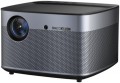 |  |
|---|---|---|
| XGIMI H2 | Epson EB-685W | |
from £1,080.29 | Compare prices 11 | |
| TOP sellers | ||
Harman/Kardon sound, HDR10 support. Advanced smart functionality. Motorized autofocus drive. Extensive wireless connectivity options. Automatic lens shutter. The main differences from the H1 model are: increased brightness of 1350 lm instead of 900, glass optics instead of plastic in H1, automatic lens shutter. It also has HDR support. | The difference between the EB-685Wi models and the EB-685W is the presence of a built-in Wi-Fi module in the EB-685Wi model | |
| Main function | home | presentations |
| Operating system | Android 6.0 | |
Lamp and image | ||
| Lamp type | LED | UHE |
| Service life | 5000 h | |
| Service life (energy-saving) | 10000 h | |
| Lamp power | 250 W | |
| Brightness | 1350 lm | 3500 lm |
| Dynamic contrast | 10 000:1 | 14 000:1 |
| Colour rendering | 1.07 billion colours | 1.07 billion colours |
| Colour space | 120 % | |
| Horizontal frequency | 15 – 92 kHz | |
| Frame rate | 50 – 85 Hz | |
Projection system | ||
| Technology | DLP | 3LCD |
| Size | 0.47" | 0.59" |
| Real resolution | 1920x1080 px | 1280x800 px |
| Max. video resolution | 1600x1200 px | |
| Image format support | 4:3, 16:9, 16:10 | 4:3, 16:9, 16:10 |
| HDR support | + | |
Projecting | ||
| Rear projection |  |  |
| Throw distance, min | 1.22 m | |
| Throw distance, max | 9.14 m | |
| Image size | 40 – 300 " | 55 – 94.5 " |
| Throw ratio | 1.2: | 0.28:1 – 0.37:1 |
| Optical zoom | 1.1 x | |
| Digital zoom | 1.35 x | |
| Zoom and focus | motorized (remote-controlled) | manual |
| Autofocus | | |
| Auto keystone correction | | |
| Keystone correction (vert), ± | 45 ° | 3 ° |
| Keystone correction (horizontal), ± | 45 ° | 3 ° |
Features | ||
| Features | DLNA support MHL support 3D support | MHL support |
| Bluetooth | v 4.0 | |
| Wi-Fi | Wi-Fi 5 (802.11ac) | |
Hardware | ||
| CPU | Mstar 6A838 Cortex-A53 | |
| RAM | 2 GB | |
| Built-in memory | 16 GB | |
| USB-A 2.0 | 2 pcs | 1 pcs |
| Speaker system | Harman Kardon | |
| Number of speakers | 2 | 1 |
| Subwoofer | | |
| Sound power | 16 W | 16 W |
| Video connectors | VGA composite AV-input | |
| HDMI inputs | 2 | 3 |
| HDMI version | v 1.4 | |
| Audio connectors | 3.5 mm output (mini-Jack) optical | microphone input 3.5 mm input (mini-Jack) |
| Service connectors | LAN (RJ-45) | COM port (RS-232) USB (slave) LAN (RJ-45) |
General | ||
| Noise level (nominal) | 30 dB | 30 dB |
| Power source | mains | mains |
| Power consumption | 130 W | 354 W |
| Size (HxWxD) | 128x200x200 mm | 149x367x400 mm |
| Weight | 2.1 kg | 5.8 kg |
| Color | ||
| Added to E-Catalog | january 2019 | april 2017 |





Compare XGIMI H2 and Epson EB-685W
The XGIMI H2 and Epson EB-685W projectors are designed for different purposes: the first is optimal for a home theater, while the second is for presentations. The XGIMI H2 stands out with a brightness of 1350 lm and HDR support, providing excellent image quality with a dynamic contrast of 10,000:1 and a wide color gamut. Meanwhile, the Epson EB-685W offers higher brightness at 3500 lm, making it more suitable for bright rooms, and also features a long lamp life of up to 10,000 hours in economy mode. Both projectors have similar sound power of 16 W, but the XGIMI H2 is equipped with Harman Kardon acoustics, which can provide better sound quality. In terms of connectivity, the XGIMI H2 offers more modern features such as Wi-Fi 5 and Bluetooth, while the Epson EB-685W has more HDMI inputs (3 compared to 2 in the XGIMI). Overall, the choice between them depends on your needs: for movies and gaming, the XGIMI H2 is more suitable, and for business presentations, the Epson EB-685W is recommended.
Price comparison
You may be interested in
My comparisons
XGIMI H2 often compared


Glossary
Main function
Main purpose of the projector.
This parameter is somewhat subjective and largely depends on how the device is positioned by the manufacturer; nevertheless, for the most comfortable use, it is best to follow the stated purpose. The options may include: universal, for presentations, for home theater, professional, portable, gaming. Here is a more detailed description of each option:
— Universal. The simplest type of projector, roughly speaking—any model that does not belong to one of the specializations described below. Most have fixed optics, a projection distance of 1 – 12 m, an image diagonal of approximately 1 – 7 m (see below), and a relatively low price.
— For presentations. Projectors primarily intended for business use, particularly for giving presentations. They generally have a short projection distance with a fairly large image diagonal, allowing them to be used in small rooms; they can work with both widescreen and standard image formats (see below), and support resolutions typical of computer graphics cards—for example, 1280х800. At the same time, the native resolution itself (see below) may be quite low. In addition, an almost mandatory feature of this type of projector—with rare exceptions—is a 15-pin D-Sub...input (see “Connectors”).
— For home theater. Projectors intended primarily for watching films. The main criterion for assigning a particular model to this category is how the projector is positioned by the manufacturer itself (in other words, whether this purpose is specified in the official documentation). However, there are also some common features: cinema-oriented models generally support widescreen image formats, have a high native resolution (see below), allowing them to work with HD video, and are equipped with the appropriate interfaces (see “Connectors”).
— Professional. High-end projectors with advanced specifications, numerous features and, accordingly, a considerable price. They are characterized by high image contrast ratios, support high-resolution video (including cinematic image formats), feature optical zoom for scaling the image without loss of quality, allow the connection of multichannel audio systems, and much more. The specific set of options in professional projectors may vary depending on the model, but in any case, these are fully loaded devices with top-tier specifications.
— Portable projector. An ultra-compact type of projector: most models are small enough to be carried in a pocket. These devices are primarily intended for giving impromptu presentations. Their form factor and power supply can vary. Some models are standalone devices with their own built-in storage and batteries (and sometimes even a full-fledged mobile OS such as Android on board). Others are designed like external cases or add-ons and, when in use, are attached directly to a mobile phone, using it as the signal and power source. However, in all cases, portable projectors have rather modest specifications due to their small size—for example, they have neither high brightness nor high image contrast. Battery life (in models with their own batteries) generally ranges from 40 minutes to an hour and a half. Energy-efficient LED lamps are also characteristic of this type (see below).
— Gaming. Specialized projectors intended for use with video games. Externally, they often feature a distinctive “aggressive” design, which may follow the style of a particular line of gaming PCs or laptops. As the name suggests, their practical specifications are primarily geared toward delivering a high-quality gaming image. To this end, projectors for this purpose typically offer, among other things, high native resolution (at least 1920х720, and more often 1920х1080 or higher), color reproduction of 1 billion colors, support for refresh rates (see below) of up to 120 Hz inclusive, and at least one HDMI input for receiving a digital signal from a computer graphics card. In addition, such models often support 3D. The maximum image diagonal may reach 7.5 m or more; this category also includes ultra-wide-angle devices capable of providing an image diagonal of about 3 m from a distance of about half a meter.
This parameter is somewhat subjective and largely depends on how the device is positioned by the manufacturer; nevertheless, for the most comfortable use, it is best to follow the stated purpose. The options may include: universal, for presentations, for home theater, professional, portable, gaming. Here is a more detailed description of each option:
— Universal. The simplest type of projector, roughly speaking—any model that does not belong to one of the specializations described below. Most have fixed optics, a projection distance of 1 – 12 m, an image diagonal of approximately 1 – 7 m (see below), and a relatively low price.
— For presentations. Projectors primarily intended for business use, particularly for giving presentations. They generally have a short projection distance with a fairly large image diagonal, allowing them to be used in small rooms; they can work with both widescreen and standard image formats (see below), and support resolutions typical of computer graphics cards—for example, 1280х800. At the same time, the native resolution itself (see below) may be quite low. In addition, an almost mandatory feature of this type of projector—with rare exceptions—is a 15-pin D-Sub...input (see “Connectors”).
— For home theater. Projectors intended primarily for watching films. The main criterion for assigning a particular model to this category is how the projector is positioned by the manufacturer itself (in other words, whether this purpose is specified in the official documentation). However, there are also some common features: cinema-oriented models generally support widescreen image formats, have a high native resolution (see below), allowing them to work with HD video, and are equipped with the appropriate interfaces (see “Connectors”).
— Professional. High-end projectors with advanced specifications, numerous features and, accordingly, a considerable price. They are characterized by high image contrast ratios, support high-resolution video (including cinematic image formats), feature optical zoom for scaling the image without loss of quality, allow the connection of multichannel audio systems, and much more. The specific set of options in professional projectors may vary depending on the model, but in any case, these are fully loaded devices with top-tier specifications.
— Portable projector. An ultra-compact type of projector: most models are small enough to be carried in a pocket. These devices are primarily intended for giving impromptu presentations. Their form factor and power supply can vary. Some models are standalone devices with their own built-in storage and batteries (and sometimes even a full-fledged mobile OS such as Android on board). Others are designed like external cases or add-ons and, when in use, are attached directly to a mobile phone, using it as the signal and power source. However, in all cases, portable projectors have rather modest specifications due to their small size—for example, they have neither high brightness nor high image contrast. Battery life (in models with their own batteries) generally ranges from 40 minutes to an hour and a half. Energy-efficient LED lamps are also characteristic of this type (see below).
— Gaming. Specialized projectors intended for use with video games. Externally, they often feature a distinctive “aggressive” design, which may follow the style of a particular line of gaming PCs or laptops. As the name suggests, their practical specifications are primarily geared toward delivering a high-quality gaming image. To this end, projectors for this purpose typically offer, among other things, high native resolution (at least 1920х720, and more often 1920х1080 or higher), color reproduction of 1 billion colors, support for refresh rates (see below) of up to 120 Hz inclusive, and at least one HDMI input for receiving a digital signal from a computer graphics card. In addition, such models often support 3D. The maximum image diagonal may reach 7.5 m or more; this category also includes ultra-wide-angle devices capable of providing an image diagonal of about 3 m from a distance of about half a meter.
Operating system
— Smart TV (proprietary system). The operating system of the projector is represented by the proprietary software shell of the manufacturer. Usually such operating systems have an attractive and convenient menu, similar to a traditional Smart TV. A proprietary operating system is developed by the manufacturer for the hardware resources of a particular projector model or a whole line. But, as practice shows, compared to the classic Smart TV, the functionality of proprietary system often has significant limitations, and the system itself, in fact, is a stripped-down version of a full-fledged Smart TV.
— Smart TV (Android AOSP). This type of operating system is a modification of the popular Android OS, mainly notable for being open source. It is a versatile operating system that gives the user much more freedom to create changes and customizations within the system. At the same time, the installation and work stability of certain applications on this platform are not guaranteed, and the overall system management was not specially “tailored” for large screens, which may cause some inconvenience. First of all, such solutions will will generate interest among users who understand the features of the Android OS, like to customize and control everything, and have time for this.
— Android TV. This type of projector has full-fledged Android TV software, spec...ially adapted to work on large screens. In accordance with the name, it is a type of Android OS, specially designed for projectors/TVs, etc. In addition to the common features of all “Androids” (such as the ability to install additional applications, including even games), it has a number of special features: optimized interface, integration with smartphones (including the ability to use them as a remote control), voice search, etc. Thanks to this, TVs with this feature are significantly superior in functionality to models with a Smart TV. Of course, a dedicated processor, graphics subsystem and memory are provided for the operation of a multifunctional OS, and the presence of such hardware resources is reflected in the total cost of the projector. Given the same optical design, models with Android TV will cost more than classic projectors with a simple multi-line menu.
Lamp type
— HD (High-intensity discharge). General name for gas discharge lamps, i.e. lamps in which the light flow is created by an electrical discharge between the electrodes inside the bulb. In the case of projectors, such lamps can be mercury, metal-halide, and xenon (see above for more details).
— LED. LEDs are used as a light source. They provide high brightness with low power consumption.
— Laser-LED. Light source based on laser LEDs. It has even greater brightness than classic LED, with relatively low power consumption.
— UHP (Ultra-high performance) — a high-pressure mercury lamp, developed by Philips. Compared to other lamps, it consumes less power, while not inferior in brightness. Projectors on such lamps are smaller and lighter than conventional ones due to a smaller power supply, the cooler operates with a lower noise level. The creators claimed a service life of up to 10,000 hours. One of the most popular types of lamps for projectors today
– UHE (Ultra-High Energy). Variety of UHP lamps (see above).
— UHB (Ultra-high brightness). Another kind of UHP lamps (see above).
— NSH (New Super High Pressure). Also applies to high pressure mercury lamps manufactured by Ushio. Somewhat less popular than UHP and its peers, but also widespread. Estimated operating time is about...2000 hours.
— SHP. High pressure mercury lamps manufactured by Phoenix.
— P-VIP (Video Projector) — a high-pressure mercury lamp from OSRAM. High brightness lamps, service life — 4000 — 6000 hours.
—UHM (Ultra High Performance Lamp of Matsushita) is a high pressure mercury lamp manufactured by Panasonic. Сan be easily changed, operating time, depending on type — 2000 — 5000 hours.
— Xenon. The design and principle of operation of such lamps are similar to high-pressure mercury lamps — light is created due to a discharge in a gaseous medium. However, instead of mercury vapor, in this case, an inert xenon gas under high pressure is used. This allows to create high power lamps (from 2 kW) with the appropriate light flow. Xenon lamps are used primarily in professional models.
— HPM. High-pressure mercury lamp technology developed by Sony and used primarily in its projectors (although other brands are also available). Combines compact size and relatively low cost with high brightness.
— DC. Abbreviation for "direct current". In the case of projector lamps, this designation usually refers to mercury lamps powered by direct current. The operating voltage of such lamps in different models of projectors may be different. Their design usually uses various tricks to improve performance compared to conventional lamps of this type — in particular, increase service life and reduce power consumption without sacrificing brightness.
— AC. This abbreviation stands for "alternating current". Such lamps are similar in almost everything to the DC ones described above, differing from them only in the type of power supply.
— LED. LEDs are used as a light source. They provide high brightness with low power consumption.
— Laser-LED. Light source based on laser LEDs. It has even greater brightness than classic LED, with relatively low power consumption.
— UHP (Ultra-high performance) — a high-pressure mercury lamp, developed by Philips. Compared to other lamps, it consumes less power, while not inferior in brightness. Projectors on such lamps are smaller and lighter than conventional ones due to a smaller power supply, the cooler operates with a lower noise level. The creators claimed a service life of up to 10,000 hours. One of the most popular types of lamps for projectors today
– UHE (Ultra-High Energy). Variety of UHP lamps (see above).
— UHB (Ultra-high brightness). Another kind of UHP lamps (see above).
— NSH (New Super High Pressure). Also applies to high pressure mercury lamps manufactured by Ushio. Somewhat less popular than UHP and its peers, but also widespread. Estimated operating time is about...2000 hours.
— SHP. High pressure mercury lamps manufactured by Phoenix.
— P-VIP (Video Projector) — a high-pressure mercury lamp from OSRAM. High brightness lamps, service life — 4000 — 6000 hours.
—UHM (Ultra High Performance Lamp of Matsushita) is a high pressure mercury lamp manufactured by Panasonic. Сan be easily changed, operating time, depending on type — 2000 — 5000 hours.
— Xenon. The design and principle of operation of such lamps are similar to high-pressure mercury lamps — light is created due to a discharge in a gaseous medium. However, instead of mercury vapor, in this case, an inert xenon gas under high pressure is used. This allows to create high power lamps (from 2 kW) with the appropriate light flow. Xenon lamps are used primarily in professional models.
— HPM. High-pressure mercury lamp technology developed by Sony and used primarily in its projectors (although other brands are also available). Combines compact size and relatively low cost with high brightness.
— DC. Abbreviation for "direct current". In the case of projector lamps, this designation usually refers to mercury lamps powered by direct current. The operating voltage of such lamps in different models of projectors may be different. Their design usually uses various tricks to improve performance compared to conventional lamps of this type — in particular, increase service life and reduce power consumption without sacrificing brightness.
— AC. This abbreviation stands for "alternating current". Such lamps are similar in almost everything to the DC ones described above, differing from them only in the type of power supply.
Service life
Minimum projector lamp life as stated by the manufacturer. Specified by the total time of continuous operation. Note that if the projector was operated without violations, then upon reaching this time, the lamp will not necessarily fail — on the contrary, it can work for quite a long time. However, when evaluating durability, it is best to focus on the claimed service life.
Service life (energy-saving)
When working in economy mode, the brightness of the backlight is noticeably reduced, on average by 30-50%. With a decrease in brightness, heat dissipation also decreases, which saves the working life of the illuminator, thereby increasing the lamp life. Thus, the ECO mode allows you to extend the lamp life by an average of 30%. If the typical projector lamp life is 4000 hours, regular use of the ECO mode will extend the backlight life to approximately 5500 hours.
Lamp power
The power consumption of the backlight lamp installed in the projector.
Theoretically, the more powerful the lamp, the brighter it is. However, this is only true when comparing lamps of the same type (see above); and even in this case, the brightness may also depend on the nuances of the design. Therefore, when evaluating the capabilities of a lamp, it is worth focus not so much on power, but on the directly claimed brightness in lumens (see below).
But what this parameter directly affects is the total power consumption of the projector: the lamp is the most “greedy” component of the device, compared to it, the power consumption of the rest of the electronics is very small. Also note that many powerful lamps have high heat dissipation and require cooling systems, which affects the size and weight of the projector.
Theoretically, the more powerful the lamp, the brighter it is. However, this is only true when comparing lamps of the same type (see above); and even in this case, the brightness may also depend on the nuances of the design. Therefore, when evaluating the capabilities of a lamp, it is worth focus not so much on power, but on the directly claimed brightness in lumens (see below).
But what this parameter directly affects is the total power consumption of the projector: the lamp is the most “greedy” component of the device, compared to it, the power consumption of the rest of the electronics is very small. Also note that many powerful lamps have high heat dissipation and require cooling systems, which affects the size and weight of the projector.
Brightness
The brightness of the image produced by the projector at maximum backlight brightness. Usually, the average brightness of the screen, derived from a special formula, is indicated. The higher it is, the less the image depends on ambient light: a bright projector can provide a clearly visible image even in daylight, but a dim one will require dimming. On the other hand, increasing brightness reduces contrast and accuracy of colour reproduction.
Accordingly, when choosing this parameter, you need to consider the conditions in which you plan to use the projector. So, for office or school/university use, a brightness of at least 3000 lm is desirable — this allows you to get normal visibility without obscuring the room. In turn, among the top models a very low brightness can be found, because. such projectors are usually installed in rooms specially designed for them with good darkness level. And in ultra-compact devices it is impossible to achieve high brightness for technical reasons.
Detailed recommendations on the optimal brightness for certain conditions can be found in special sources. Here we note that anyway, it is worth choosing according to this indicator with some margin. As mentioned above, as brightness increases, contrast and colour quality decrease, and you may need to use the projector at a reduced brightness to achieve the desired picture quality.
Accordingly, when choosing this parameter, you need to consider the conditions in which you plan to use the projector. So, for office or school/university use, a brightness of at least 3000 lm is desirable — this allows you to get normal visibility without obscuring the room. In turn, among the top models a very low brightness can be found, because. such projectors are usually installed in rooms specially designed for them with good darkness level. And in ultra-compact devices it is impossible to achieve high brightness for technical reasons.
Detailed recommendations on the optimal brightness for certain conditions can be found in special sources. Here we note that anyway, it is worth choosing according to this indicator with some margin. As mentioned above, as brightness increases, contrast and colour quality decrease, and you may need to use the projector at a reduced brightness to achieve the desired picture quality.
Dynamic contrast
The dynamic image contrast provided by the projector.
Dynamic contrast ratio is the ratio between the brightest white and darkest black colour that a projector can produce. Recall that the quality of colour reproduction and detailing depend on contrast, the higher this indicator, the lower the likelihood that details will be indistinguishable in bright or dark areas. However, dynamic contrast is a rather specific parameter. The fact is that when it is calculated, the brightest white at the maximum brightness settings and the darkest black at the minimum are taken into account. As a result, the figures in this column can be very impressive, but it is impossible to achieve such a contrast within one frame.
By introducing this parameter, the manufacturers went to a certain trick. However, this is not to say that dynamic contrast has nothing to do with image quality at all. Projectors can use automatic brightness control, in which the overall brightness, depending on the "picture" on the screen, can increase or decrease. This format of work is based on the fact that the human eye does not need too bright areas on a general dark background and very dark areas on a bright one, the image is normally perceived even without it. The maximum brightness difference achievable in this mode of operation is exactly what described by dynamic contrast.
Dynamic contrast ratio is the ratio between the brightest white and darkest black colour that a projector can produce. Recall that the quality of colour reproduction and detailing depend on contrast, the higher this indicator, the lower the likelihood that details will be indistinguishable in bright or dark areas. However, dynamic contrast is a rather specific parameter. The fact is that when it is calculated, the brightest white at the maximum brightness settings and the darkest black at the minimum are taken into account. As a result, the figures in this column can be very impressive, but it is impossible to achieve such a contrast within one frame.
By introducing this parameter, the manufacturers went to a certain trick. However, this is not to say that dynamic contrast has nothing to do with image quality at all. Projectors can use automatic brightness control, in which the overall brightness, depending on the "picture" on the screen, can increase or decrease. This format of work is based on the fact that the human eye does not need too bright areas on a general dark background and very dark areas on a bright one, the image is normally perceived even without it. The maximum brightness difference achievable in this mode of operation is exactly what described by dynamic contrast.
Colour space
The color gamut characterizes the range of colors that a projector can reproduce.
This parameter is specified in percentages, but not relative to the entire variety of visible colors, rather to a specific color space (color model). This is because no modern screen can display all the colors visible to the human eye. The projector's specifications may specify which color model the gamut is based on. The larger the color gamut (100% and above), the more accurately the colors will match those originally intended. A too small color gamut results in a dull, faded image, while a too large one results in unnatural and oversaturated colors. However, in practice, values from 90% to 110% are considered quite acceptable for most cases and do not lead to noticeable image degradation.
This parameter is specified in percentages, but not relative to the entire variety of visible colors, rather to a specific color space (color model). This is because no modern screen can display all the colors visible to the human eye. The projector's specifications may specify which color model the gamut is based on. The larger the color gamut (100% and above), the more accurately the colors will match those originally intended. A too small color gamut results in a dull, faded image, while a too large one results in unnatural and oversaturated colors. However, in practice, values from 90% to 110% are considered quite acceptable for most cases and do not lead to noticeable image degradation.