
Comparison Edifier R1850DB vs Edifier Luna E235
Add to comparison | 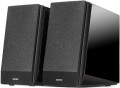 | 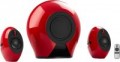 |
|---|---|---|
| Edifier R1850DB | Edifier Luna E235 | |
from £179.99 | from £403.99 | |
| User reviews | ||
| TOP sellers | ||
| Speakers | kit 2.0 | kit 2.1 |
| Lines | 2 | 2 |
Specs | ||
| Signal-to-noise ratio | 85 dB | 85 dB |
| Frequency range | 60 – 20000 Hz | 30 – 20000 Hz |
| Impedance | 6 Ohm | 6 Ohm |
| Speaker output | 70 W | 174 W |
| Front | 35 W/channel | 37 W/channel |
| Subwoofer | 100 W | |
| Speaker port tube |  |  |
| Passive emitter | | |
Features | ||
| Functions | Bluetooth treble control bass control | Bluetooth |
| Connection | RCA optical input coaxial input subwoofer output | mini-Jack (3.5 mm) optical input |
General | ||
| Remote control | wireless | wireless |
| Volume control | behind and on the remote | side and remote |
| Inclined design | | |
| Speaker material | MDF | plastic |
| Subwoofer material | plastic | |
| Front speaker size (WxHxD) | 154x254x224 mm | 122x212x222 mm |
| Subwoofer size | 384x379x232 mm | |
| Weight | 6.63 kg | |
| Color | ||
| Added to E-Catalog | september 2017 | october 2016 |


Compare Edifier R1850DB and Luna E235
You may be interested in
My comparisons
Edifier R1850DB often compared


Glossary
Speakers
The number of individual speakers included in the package. In most cases, here, in fact, the sound format supported by the kit is indicated, and the actual number of speakers also corresponds to it. For example, the 2.0 kit includes a regular pair of stereo speakers (no subwoofer); this is most often considered quite sufficient for listening to music. 2.1 is two main speakers plus a subwoofer, 5.1 is five speakers (centre, front pair, rear pair) and a subwoofer. It is worth noting here that 5.1 is the most advanced format found in modern computer acoustics. It already allows you to achieve the effect of surround sound "from all sides" and at the same time is relatively inexpensive. More extensive sets — 7.1, etc. — should be looked for already in general-purpose acoustics.
A specific case is models in the form of a single column. Usually, they are stereo systems (2.0), made in the format of "soundbars" — two speakers (or two sets of speakers) in one common housing. In some situations, such devices are more convenient than separate speakers; on the other hand, soundbars are more bulky and do not allow you to change the relative position of the speakers, adjusting the sound. Therefore, this option is rare nowadays.
A specific case is models in the form of a single column. Usually, they are stereo systems (2.0), made in the format of "soundbars" — two speakers (or two sets of speakers) in one common housing. In some situations, such devices are more convenient than separate speakers; on the other hand, soundbars are more bulky and do not allow you to change the relative position of the speakers, adjusting the sound. Therefore, this option is rare nowadays.
Frequency range
The range of audio frequencies supported by acoustics. The wider this range — the fuller the reproduced sound, the lower the likelihood that some of these details at low or high frequencies will remain “behind the scenes”. At the same time, the human ear is able to hear frequencies of the order of 16 – 22,000 Hz, and with age, this range narrows even more. In modern audio equipment, especially at the top level, there may be more extensive ranges, but from a practical point of view, this does not make much sense. In addition, it is worth noting that a wide frequency range in itself does not guarantee high-quality sound — a lot also depends on the frequency response.
Speaker output
Total speaker power rating — the sum of the power ratings of all components (front, rear, centre, etc.)
Rated usually means the highest average sound power that the speakers can produce without overloading and damage. Individual peaks of sound can significantly exceed this figure, but it is the average value that is key — in particular, it is it that determines the overall loudness of the acoustics. However it should be borne in mind here that in sets with a subwoofer, the latter can account for about half of the total power of the entire system, while the actual volume is determined mainly by the main speakers. In fact, this means that with equal total power, acoustics with a subwoofer can sound noticeably quieter than a model without a subwoofer: for example, a 2.0 system at 20 W will have 10 W per main channel, while in a 2.1 model at 20 W with 10- watt subwoofer on the main speakers will have only 5 watts.
As for specific values, in the quietest modern PC speakers, the power does not exceed 10 watts. An indicator of 10 – 25 W can be called relatively modest, 25 – 50 W — average, and values of 50 – 100 W and above are found mainly in sets with subwoofers, where a significant part of the power falls on the bass speaker (although there are also ordinary stereo speakers with similar features)....
Theoretically, the power of acoustics also affects its compatibility with a specific amplifier: speakers should not be inferior to it in terms of rated power, otherwise sound distortion and even equipment damage are possible. However, computer acoustics in the vast majority of cases are used with their own amplifiers, optimally matched to the speakers installed in the speakers. So this moment becomes relevant only in some very specific cases — for example, when replacing a complete external amplifier (see below) with another one.
Rated usually means the highest average sound power that the speakers can produce without overloading and damage. Individual peaks of sound can significantly exceed this figure, but it is the average value that is key — in particular, it is it that determines the overall loudness of the acoustics. However it should be borne in mind here that in sets with a subwoofer, the latter can account for about half of the total power of the entire system, while the actual volume is determined mainly by the main speakers. In fact, this means that with equal total power, acoustics with a subwoofer can sound noticeably quieter than a model without a subwoofer: for example, a 2.0 system at 20 W will have 10 W per main channel, while in a 2.1 model at 20 W with 10- watt subwoofer on the main speakers will have only 5 watts.
As for specific values, in the quietest modern PC speakers, the power does not exceed 10 watts. An indicator of 10 – 25 W can be called relatively modest, 25 – 50 W — average, and values of 50 – 100 W and above are found mainly in sets with subwoofers, where a significant part of the power falls on the bass speaker (although there are also ordinary stereo speakers with similar features)....
Theoretically, the power of acoustics also affects its compatibility with a specific amplifier: speakers should not be inferior to it in terms of rated power, otherwise sound distortion and even equipment damage are possible. However, computer acoustics in the vast majority of cases are used with their own amplifiers, optimally matched to the speakers installed in the speakers. So this moment becomes relevant only in some very specific cases — for example, when replacing a complete external amplifier (see below) with another one.
Front
The power rating of each individual front speaker provided in the speaker system. This parameter can be specified for a system with any number of speakers (see above) — all sound formats used in computer acoustics provide a pair of front speakers.
In the most general terms, the higher the power, the louder the speaker is capable of sounding. For more information about this parameter, see "Total power" above. Also note here that for stereo systems without a subwoofer, the power of one front channel is half of the total power; in more advanced acoustics, the power ratio between the channels may be different.
In the most general terms, the higher the power, the louder the speaker is capable of sounding. For more information about this parameter, see "Total power" above. Also note here that for stereo systems without a subwoofer, the power of one front channel is half of the total power; in more advanced acoustics, the power ratio between the channels may be different.
Subwoofer
Rated power of the complete subwoofer of the acoustic system.
Recall that a subwoofer is a specialized speaker for low and ultra-low frequencies; such a speaker is especially useful for games and movies, it is for such content that well-defined bass is most important. Accordingly, the saturation and (to a certain extent) the overall sound quality of low frequencies depends on the power of such a speaker. "Subs" are usually matched to the power of the rest of the system components, however, sets with a similar total power of the main channels may still differ in the characteristics of the subwoofers.
It is also worth noting that the power of this component can be a very significant part of the total power of all acoustics: in some models, about half of the “total watts” (or even more) falls on the subwoofer. This should be taken into account when comparing; see "Total power" for more details.
Recall that a subwoofer is a specialized speaker for low and ultra-low frequencies; such a speaker is especially useful for games and movies, it is for such content that well-defined bass is most important. Accordingly, the saturation and (to a certain extent) the overall sound quality of low frequencies depends on the power of such a speaker. "Subs" are usually matched to the power of the rest of the system components, however, sets with a similar total power of the main channels may still differ in the characteristics of the subwoofers.
It is also worth noting that the power of this component can be a very significant part of the total power of all acoustics: in some models, about half of the “total watts” (or even more) falls on the subwoofer. This should be taken into account when comparing; see "Total power" for more details.
Speaker port tube
A phase inverter is a tube of a special design that connects the inner volume of the speaker housing with the outer space. Due to the precisely selected length, such a tube improves the sound of low frequencies, making it more saturated and uniform. The main disadvantage of a phase inverter is that a hum may occur due to the movement of air in the tube; however, manufacturers design speakers in such a way as to minimize the likelihood of this phenomenon.
Note that the presence of a phase inverter is especially useful for subwoofers, but this feature can also be found in general-purpose stereo speakers — for the same reasons.
Note that the presence of a phase inverter is especially useful for subwoofers, but this feature can also be found in general-purpose stereo speakers — for the same reasons.
Passive emitter
The presence of a passive radiator in the design of the speakers.
Such a radiator is a diffuser (membrane) without a coil, installed in the column body. Outwardly, it looks like an ordinary speaker, but it does not emit sound, but only vibrates under the influence of the sound of other speakers. Due to this, the sound of low frequencies is noticeably improved; at the same time, the passive radiator is more compact than the phase inverter (see above) and is less prone to extraneous noise.
Such a radiator is a diffuser (membrane) without a coil, installed in the column body. Outwardly, it looks like an ordinary speaker, but it does not emit sound, but only vibrates under the influence of the sound of other speakers. Due to this, the sound of low frequencies is noticeably improved; at the same time, the passive radiator is more compact than the phase inverter (see above) and is less prone to extraneous noise.
Functions
— Bluetooth. A technology used to wirelessly connect various devices. Allows you to transmit an audio signal, for this purpose it is most often used in computer speakers. This feature is especially convenient when using speakers with equipment that has its own Bluetooth modules — primarily with laptops and monoblocks; it is also possible to connect to compact gadgets like a smartphone or tablet (although it is usually more convenient to use specialized self-powered speakers with such devices). And for computers that do not have Bluetooth, separately connected adapters are available. The range of such a connection is at least several metres; the convenience of the lack of extra wires is obvious. However note that a regular Bluetooth connection compresses the sound quite strongly and may degrade its quality. Therefore, if this moment is critical for you, you should choose speakers with support for one of the aptX options or with a higher Bluetooth version. Each next "generation" has additional features.
— Support for aptX. A feature found in Bluetooth speakers (see above). The aptX codec is used to improve the quality of audio transmitted over such a connection; according to the creators, it allows you to achieve quality comparable to Audio CD (16-bit/44.1kHz). Thus, if a regular Bluetooth connection can significantly degrade the sound of even MP3 files with a decent bitrate (not to mention lossless...formats), then when using this codec, the sound quality is often limited not by the properties of the channel, but by the properties of the source file and the acoustics itself . Of course, for aptX to work, it must be supported not only by the speakers, but also by the signal source.
— Support for aptX HD. Support for the aptX HD codec, an updated version of the original aptX (see above). This standard achieves sound clarity comparable to Hi-Res (24-bit/48kHz) audio. On the other hand, its support is more expensive; and the differences from the original aptX only become noticeable on very high-quality audio materials, for which computer speakers are rarely used. Therefore, this function has not received much distribution.
— NFC. Technically, NFC is a universal wireless technology with a range of up to 10 cm, which allows to achieve a very wide range of applications. However, in computer speakers, this technology is mainly used to speed up Bluetooth connection (see above): it is enough to bring another NFC device (for example, a smartphone) to the speaker chip — and the chips will “recognize” each other and automatically set up the connection, the user will only have to confirm his.
— USB-A. USB port, which allows you to connect external peripheral devices to the speakers — primarily drives like "flash drives". Most often, such a connection is used to play music from external drives — in other words, the presence of USB-A turns the speakers into a standalone music centre. Often, it is also possible to charge portable gadgets (for example, smartphones) from this port. On the other hand, note that speakers with this feature are noticeably more expensive than similar models without USB, and they may be inferior in sound quality due to the presence of additional electronics that can interfere.
— Card Reader. Own device for reading memory cards, most often the SD standard. Speakers with a card reader can work like a stand-alone music centre: music from a memory card can be played even without a computer. At the same time, the card reader itself is used only by speakers; the ability to read a memory card by a computer is usually not provided in such models. It is also worth bearing in mind that the memory card slot and the electronics that “serve” it are a potential source of interference, so speakers with this function may be inferior in sound quality to counterparts without a card reader (at a higher cost).
— FM receiver. The presence of a built-in FM tuner allows you to use the speaker system as a radio receiver — to receive and play FM radio broadcasts. It should be noted that for reliable reception, most likely, an external antenna will be required; a cable for connecting it is sometimes included, but the antenna itself must be purchased separately.
— Treble adjustment. The ability to separately change the volume of high frequencies. In fact, it is the most simplified version of the equalizer: it allows you to adjust the overall colour of the sound by changing the HF level relative to the rest of the frequency spectrum. Most often used in combination with bass control (see below), but can also be provided as the only frequency control.
— Bass adjustment. The ability to separately change the volume of high frequencies. Similar to the treble control described above, used to adjust the overall tone of the sound. At the same time, quite a few models with this function have only a LF control (without a HF control). But do not confuse this function with subwoofer level control. In this case, it is precisely the adjustment of the lower frequencies of the entire system that is implied.
— Support for aptX. A feature found in Bluetooth speakers (see above). The aptX codec is used to improve the quality of audio transmitted over such a connection; according to the creators, it allows you to achieve quality comparable to Audio CD (16-bit/44.1kHz). Thus, if a regular Bluetooth connection can significantly degrade the sound of even MP3 files with a decent bitrate (not to mention lossless...formats), then when using this codec, the sound quality is often limited not by the properties of the channel, but by the properties of the source file and the acoustics itself . Of course, for aptX to work, it must be supported not only by the speakers, but also by the signal source.
— Support for aptX HD. Support for the aptX HD codec, an updated version of the original aptX (see above). This standard achieves sound clarity comparable to Hi-Res (24-bit/48kHz) audio. On the other hand, its support is more expensive; and the differences from the original aptX only become noticeable on very high-quality audio materials, for which computer speakers are rarely used. Therefore, this function has not received much distribution.
— NFC. Technically, NFC is a universal wireless technology with a range of up to 10 cm, which allows to achieve a very wide range of applications. However, in computer speakers, this technology is mainly used to speed up Bluetooth connection (see above): it is enough to bring another NFC device (for example, a smartphone) to the speaker chip — and the chips will “recognize” each other and automatically set up the connection, the user will only have to confirm his.
— USB-A. USB port, which allows you to connect external peripheral devices to the speakers — primarily drives like "flash drives". Most often, such a connection is used to play music from external drives — in other words, the presence of USB-A turns the speakers into a standalone music centre. Often, it is also possible to charge portable gadgets (for example, smartphones) from this port. On the other hand, note that speakers with this feature are noticeably more expensive than similar models without USB, and they may be inferior in sound quality due to the presence of additional electronics that can interfere.
— Card Reader. Own device for reading memory cards, most often the SD standard. Speakers with a card reader can work like a stand-alone music centre: music from a memory card can be played even without a computer. At the same time, the card reader itself is used only by speakers; the ability to read a memory card by a computer is usually not provided in such models. It is also worth bearing in mind that the memory card slot and the electronics that “serve” it are a potential source of interference, so speakers with this function may be inferior in sound quality to counterparts without a card reader (at a higher cost).
— FM receiver. The presence of a built-in FM tuner allows you to use the speaker system as a radio receiver — to receive and play FM radio broadcasts. It should be noted that for reliable reception, most likely, an external antenna will be required; a cable for connecting it is sometimes included, but the antenna itself must be purchased separately.
— Treble adjustment. The ability to separately change the volume of high frequencies. In fact, it is the most simplified version of the equalizer: it allows you to adjust the overall colour of the sound by changing the HF level relative to the rest of the frequency spectrum. Most often used in combination with bass control (see below), but can also be provided as the only frequency control.
— Bass adjustment. The ability to separately change the volume of high frequencies. Similar to the treble control described above, used to adjust the overall tone of the sound. At the same time, quite a few models with this function have only a LF control (without a HF control). But do not confuse this function with subwoofer level control. In this case, it is precisely the adjustment of the lower frequencies of the entire system that is implied.
Connection
— mini-Jack (3.5 mm). The 3.5 mm jack is used as a standard analog audio output on almost all modern PCs and laptops. Additionally, it's installed in most smartphones, tablets, and portable players, and is quite common in many other types of equipment. In light of this, the mini-jack plug is equipped on most contemporary computer speakers (except perhaps for Bluetooth models). It can be a plug on a non-removable or removable cable, or an adapter from another connector — for example, "2 RCA — mini-jack".
— RCA. The RCA connector, also colloquially known as "tulip," is used here as a line input for receiving an analog audio signal, similar to the 3.5 mm mini-jack. The differences lie in several important aspects. Firstly, RCA operates on the "one connector per channel" principle, and the number of such connectors will depend on the sound format. For instance, stereo acoustics will require a set of two such connectors, a 5.1 system — six, and so on. Secondly, RCA is quite popular in traditional audio equipment but is relatively uncommon among computers. Therefore, in computer acoustics, this input is relatively rare — mainly found in rather advanced models (including solutions with an external amplifier). Moreover, note that in sets with a subwoofer, an RCA connector may also be provided in the main satellite for connecting the "sub," playing the role of an output in this case.
— USB-A.... Sound transmission from a PC, laptop, monitor, or another device is carried out through a standard USB connector of the USB-A format. In this case, the sound is transmitted digitally, reducing the speakers' dependency on the computer's sound card quality.
— USB-C. Sound is transmitted via the USB-C port, through which the speakers receive a digital audio signal from a compatible device. This format is particularly well-suited for modern electronics, where USB-C has already become one of the main connection interfaces. In practice, this makes the speakers more convenient for new laptops, tablets, and other devices without a separate analog output.
— Optical input. A digital input for transmitting high-quality sound, including multichannel. This connection is notable for being completely immune to electrical interference; however, the fiber optic cable is not well-suited to bends and strong pressure.
— Coaxial input. An input for transmitting sound in digital form, allowing for multichannel sound transmission. It uses the RCA connector (known colloquially as "tulip"), though it is incompatible with the RCA interface described above. Unlike optical connections, coaxial connections are susceptible to electromagnetic interference, but they don't require special delicacy in handling the cable.
— Microphone input. An input for connecting an external microphone, located directly on the speakers' body. The purpose of this function is similar to the headphone output described above: connecting a microphone to a speaker placed on the table is often more convenient than connecting it directly to the system unit. Generally, speakers with this feature have an additional plug connected to the sound card's microphone input.
— Subwoofer output. The availability of a connector for connecting a subwoofer allows further enhancement of the system's lower frequency sound. Naturally, the subwoofer is purchased separately, and the output serves as an option to expand the acoustics as needed.
— Headphone output. An output for connecting headphones, located directly on the body of one of the speakers. This connector is particularly convenient when using headphones with a traditional desktop PC: attaching the headphones to a speaker body located on the table is noticeably more convenient than stretching the cord to the system unit. As a rule, the role of this output is played by a standard mini-Jack 3.5 mm socket, which is exactly what most modern headphones (both for computers and general use) are designed for.
— RCA. The RCA connector, also colloquially known as "tulip," is used here as a line input for receiving an analog audio signal, similar to the 3.5 mm mini-jack. The differences lie in several important aspects. Firstly, RCA operates on the "one connector per channel" principle, and the number of such connectors will depend on the sound format. For instance, stereo acoustics will require a set of two such connectors, a 5.1 system — six, and so on. Secondly, RCA is quite popular in traditional audio equipment but is relatively uncommon among computers. Therefore, in computer acoustics, this input is relatively rare — mainly found in rather advanced models (including solutions with an external amplifier). Moreover, note that in sets with a subwoofer, an RCA connector may also be provided in the main satellite for connecting the "sub," playing the role of an output in this case.
— USB-A.... Sound transmission from a PC, laptop, monitor, or another device is carried out through a standard USB connector of the USB-A format. In this case, the sound is transmitted digitally, reducing the speakers' dependency on the computer's sound card quality.
— USB-C. Sound is transmitted via the USB-C port, through which the speakers receive a digital audio signal from a compatible device. This format is particularly well-suited for modern electronics, where USB-C has already become one of the main connection interfaces. In practice, this makes the speakers more convenient for new laptops, tablets, and other devices without a separate analog output.
— Optical input. A digital input for transmitting high-quality sound, including multichannel. This connection is notable for being completely immune to electrical interference; however, the fiber optic cable is not well-suited to bends and strong pressure.
— Coaxial input. An input for transmitting sound in digital form, allowing for multichannel sound transmission. It uses the RCA connector (known colloquially as "tulip"), though it is incompatible with the RCA interface described above. Unlike optical connections, coaxial connections are susceptible to electromagnetic interference, but they don't require special delicacy in handling the cable.
— Microphone input. An input for connecting an external microphone, located directly on the speakers' body. The purpose of this function is similar to the headphone output described above: connecting a microphone to a speaker placed on the table is often more convenient than connecting it directly to the system unit. Generally, speakers with this feature have an additional plug connected to the sound card's microphone input.
— Subwoofer output. The availability of a connector for connecting a subwoofer allows further enhancement of the system's lower frequency sound. Naturally, the subwoofer is purchased separately, and the output serves as an option to expand the acoustics as needed.
— Headphone output. An output for connecting headphones, located directly on the body of one of the speakers. This connector is particularly convenient when using headphones with a traditional desktop PC: attaching the headphones to a speaker body located on the table is noticeably more convenient than stretching the cord to the system unit. As a rule, the role of this output is played by a standard mini-Jack 3.5 mm socket, which is exactly what most modern headphones (both for computers and general use) are designed for.