
Comparison Exide Excell EB620 vs Centra Plus CB620
Add to comparison | 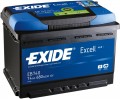 | 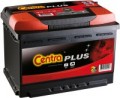 |
|---|---|---|
| Exide Excell EB620 | Centra Plus CB620 | |
| Compare prices 3 | from £82.28 | |
| User reviews | ||
| TOP sellers | ||
| Type | starter | starter |
| Suitable for | car | car |
| Maintenance | maintenance free | maintenance free |
| Standard | DIN | DIN |
Specs | ||
| Electrolyte type | SLA (lead acid) | SLA (lead acid) |
| Plate type | hybrid | |
| Terminals | T1 (cone) | T1 (cone) |
| Terminal placement | long side | long side |
| Polarity | + right | + right |
| Voltage | 12 В | 12 В |
| Battery capacity | 62 Ah | 62 Ah |
| Starting power (EN) | 540 А | 540 А |
| Charge indicator |  | |
General | ||
| Carrying handle | | |
| Dimensions (LxWxH) | 242x175x190 mm | 242x175x190 mm |
| Added to E-Catalog | november 2013 | august 2012 |





Compare Exide Excell and Centra Plus
Price comparison
You may be interested in
My comparisons
Exide Excell often compared


Glossary
Plate type
All types of lead-acid car batteries can use different types of plates. In fact, these are electrodes that are immersed in electrolyte. They are like this:
— Calcium (Ca-Ca). Lead plates that are doped with calcium in a proportion of no more than 0.1% of the total mass of the electrode. Their advantages are long service life, increased strength and thin plate thickness, low-maintenance or maintenance-free design. Ca-Ca batteries can easily tolerate increased voltages up to 14.8 V and are characterized by a low level of self-discharge. Only a deep discharge of the battery can be destructive for such models, during which the resulting calcium sulfate clogs the pores of the plates and is practically insoluble in the electrolyte. Once discharged, a calcium battery loses up to 20% of its original capacity, which cannot be restored.
— Antimony (Sb-Sb). Antimony was often used in the past to strengthen the strength of lead plates, since lead itself is a soft metal. The antimony content in the plates is 5% or more. Today, Sb-Sb batteries are rare. The fact is that the antimony version of the plates has a significant drawback - they speed up the electrolysis process and water begins to quickly boil away from the electrolyte, which entails exposure of the electrodes and their subsequent shedding. Batteries with antimony plates necessarily require maintenance and quickly become unusable if water is n...ot added in time.
- Hybrid. In the hybrid version, the positive electrode is manufactured using one technology, and the negative electrode using another. The following varieties of “hybrids” are found: argentum-calcium, carbon-calcium, carbon-lead, tin-calcium, etc. Different metals are introduced into the battery structure to ensure optimal battery performance. In particular, some of them guarantee the stability of the power source to deep discharge, others are aimed at low self-discharge of the battery. The most widespread are calcium “hybrids”, designated Calcium Plus or Ca+. In general, batteries with hybrid plates carry the Hybrid brand.
— Calcium (Ca-Ca). Lead plates that are doped with calcium in a proportion of no more than 0.1% of the total mass of the electrode. Their advantages are long service life, increased strength and thin plate thickness, low-maintenance or maintenance-free design. Ca-Ca batteries can easily tolerate increased voltages up to 14.8 V and are characterized by a low level of self-discharge. Only a deep discharge of the battery can be destructive for such models, during which the resulting calcium sulfate clogs the pores of the plates and is practically insoluble in the electrolyte. Once discharged, a calcium battery loses up to 20% of its original capacity, which cannot be restored.
— Antimony (Sb-Sb). Antimony was often used in the past to strengthen the strength of lead plates, since lead itself is a soft metal. The antimony content in the plates is 5% or more. Today, Sb-Sb batteries are rare. The fact is that the antimony version of the plates has a significant drawback - they speed up the electrolysis process and water begins to quickly boil away from the electrolyte, which entails exposure of the electrodes and their subsequent shedding. Batteries with antimony plates necessarily require maintenance and quickly become unusable if water is n...ot added in time.
- Hybrid. In the hybrid version, the positive electrode is manufactured using one technology, and the negative electrode using another. The following varieties of “hybrids” are found: argentum-calcium, carbon-calcium, carbon-lead, tin-calcium, etc. Different metals are introduced into the battery structure to ensure optimal battery performance. In particular, some of them guarantee the stability of the power source to deep discharge, others are aimed at low self-discharge of the battery. The most widespread are calcium “hybrids”, designated Calcium Plus or Ca+. In general, batteries with hybrid plates carry the Hybrid brand.