
Comparison Samsung EB-P3000 vs Samsung EB-PG935
Add to comparison | 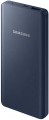 | 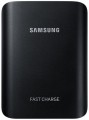 |
|---|---|---|
| Samsung EB-P3000 | Samsung EB-PG935 | |
from £69.00 | from $49.16 up to $59.96 | |
| TOP sellers | ||
Aluminium case. Form factor in the style of Samsung's flagship devices. Two way fast charging. High price. One port for charging. Fast charging does not work for all devices. | ||
| Battery capacity | 10000 mAh | 10200 mAh |
| Battery type | Li-Ion | Li-Ion |
Charging gadgets / outputs | ||
| USB-A | 1 pcs | 1 pcs |
Power bank charging | ||
| Power bank charging inputs | microUSB | microUSB |
Features | ||
| Bundled cables (adapters) | microUSB | microUSB |
General | ||
| Body material | plastic | aluminium |
| Dimensions | 148x71x15 mm | 77.1x104.2x23 mm |
| Weight | 240 g | 290 g |
| Added to E-Catalog | november 2017 | june 2016 |


Compare Samsung EB-P3000 and EB-PG935
You may be interested in
My comparisons
Samsung EB-P3000 often compared


Samsung EB-PG935 often compared


Glossary
Battery capacity
The capacity of a powerbank indicates the amount of energy it can store and is usually specified in two formats in the specifications — mAh and Wh. The mAh value is more familiar to most buyers and helps quickly understand the class of the model, while Wh more accurately reflects the total energy reserve and is more convenient for a more accurate comparison of devices.
For example, a powerbank with 10000 mAh usually has about 37 Wh, a model with 20000 mAh — approximately 74 Wh, and a version with 30000 mAh — about 111 Wh. The higher these values, the more charges for a smartphone, headphones, watch, or other devices can be expected, but the larger, heavier, and usually more expensive the device becomes.
At the same time, it is important to remember that the actual output is always lower than the nominal figures due to energy conversion losses. Therefore, capacity is one of the main parameters that immediately shows whether the powerbank is suitable for a day's backup or for more serious autonomous use.
Body material
The main material used in the the body of a power bank.
In addition to traditional plastic, nowadays, external batteries are produced in cases made of more advanced and/or "prestigious" materials. Of these materials, aluminium is the most widely used; also you can find products made of steel, zinc, leather, fabric and even wood. Here are the main features of each option:
— Plastic. The most popular material for the bodies of modern power banks. Plastic, on the one hand, is inexpensive, on the other hand, it is quite durable and has a small weight, on the third hand, it makes it easy to create cases of any shape and colour, which is especially important for devices with an unusual design. In terms of strength and reliability, ordinary plastic is somewhat inferior to metals; however, in everyday use, this difference is not critical — except that scratches on such a case will appear faster. And for extreme conditions, cases can be produced from special impact-resistant plastic.
— Aluminium. Aluminium alloy housings are highly durable and lightweight; in addition, they look stylish, and the appearance is retained for a long time due to scratch resistance. The main disadvantage of aluminium is that it is more expensive than plastic.
...— Steel. Steel is notable for its high durability and reliability; according to these indicators, it surpasses even aluminium, not to mention plastic. On the other hand, this material has a significant weight, and therefore is used much less frequently.
— Leather. Solid body (plastic or metal) with additional leather cover. Such a coating does not affect the functionality and plays a purely aesthetic role: it gives the device a stylish and eye-catching appearance, allowing you to turn the power bank into a stylish accessory. However, note that in the design of such products (especially inexpensive ones), artificial leather (leatherette) is often used, which is noticeably inferior to natural leather in reliability, durability, and sometimes in appearance. Genuine leather, on the other hand, significantly affects the price — its cost can be more than half of the total price of the entire power bank.
— Fabric. A hard case (usually plastic) with a fabric outer covering. Such a coating not only gives the device a rather original appearance, but also gives some practical advantages: the fabric is pleasant to the touch and does not slip in the hand, which reduces the risk of dropping the power bank. On the other hand, various contaminants are poorly removed from such a surface, it has no fundamental advantages over plastic or metal, but it costs much more. Therefore, fabric cases are not very popular.
— Wood. Another design material used mainly for its original appearance than practical advantages. Nevertheless, wood is not inferior to plastic; and some users also consider the natural origin of this material to be an important advantage. On the other hand, wooden cases do not have noticeable advantages over plastic ones, and they cost much more.
— Zinc. Zinc alloys are similar in most properties to the aluminium alloys described above, however, for a number of reasons (in particular, due to the greater complexity in production), they are used extremely rarely.
In addition to traditional plastic, nowadays, external batteries are produced in cases made of more advanced and/or "prestigious" materials. Of these materials, aluminium is the most widely used; also you can find products made of steel, zinc, leather, fabric and even wood. Here are the main features of each option:
— Plastic. The most popular material for the bodies of modern power banks. Plastic, on the one hand, is inexpensive, on the other hand, it is quite durable and has a small weight, on the third hand, it makes it easy to create cases of any shape and colour, which is especially important for devices with an unusual design. In terms of strength and reliability, ordinary plastic is somewhat inferior to metals; however, in everyday use, this difference is not critical — except that scratches on such a case will appear faster. And for extreme conditions, cases can be produced from special impact-resistant plastic.
— Aluminium. Aluminium alloy housings are highly durable and lightweight; in addition, they look stylish, and the appearance is retained for a long time due to scratch resistance. The main disadvantage of aluminium is that it is more expensive than plastic.
...— Steel. Steel is notable for its high durability and reliability; according to these indicators, it surpasses even aluminium, not to mention plastic. On the other hand, this material has a significant weight, and therefore is used much less frequently.
— Leather. Solid body (plastic or metal) with additional leather cover. Such a coating does not affect the functionality and plays a purely aesthetic role: it gives the device a stylish and eye-catching appearance, allowing you to turn the power bank into a stylish accessory. However, note that in the design of such products (especially inexpensive ones), artificial leather (leatherette) is often used, which is noticeably inferior to natural leather in reliability, durability, and sometimes in appearance. Genuine leather, on the other hand, significantly affects the price — its cost can be more than half of the total price of the entire power bank.
— Fabric. A hard case (usually plastic) with a fabric outer covering. Such a coating not only gives the device a rather original appearance, but also gives some practical advantages: the fabric is pleasant to the touch and does not slip in the hand, which reduces the risk of dropping the power bank. On the other hand, various contaminants are poorly removed from such a surface, it has no fundamental advantages over plastic or metal, but it costs much more. Therefore, fabric cases are not very popular.
— Wood. Another design material used mainly for its original appearance than practical advantages. Nevertheless, wood is not inferior to plastic; and some users also consider the natural origin of this material to be an important advantage. On the other hand, wooden cases do not have noticeable advantages over plastic ones, and they cost much more.
— Zinc. Zinc alloys are similar in most properties to the aluminium alloys described above, however, for a number of reasons (in particular, due to the greater complexity in production), they are used extremely rarely.