
Comparison Samsung EB-PG930 vs Samsung EB-PG935
Add to comparison | 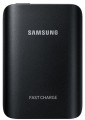 | 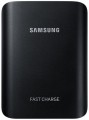 |
|---|---|---|
| Samsung EB-PG930 | Samsung EB-PG935 | |
from $36.76 up to $43.96 | from $49.16 up to $59.96 | |
| TOP sellers | ||
Aluminium case. Form factor in the style of Samsung's flagship devices. Two way fast charging. High price. One port for charging. Fast charging does not work for all devices. | ||
| Battery capacity | 5100 mAh | 10200 mAh |
| Battery type | Li-Ion | Li-Ion |
Charging gadgets / outputs | ||
| USB-A | 1 pcs | 1 pcs |
Power bank charging | ||
| Power bank charging inputs | microUSB | microUSB |
| Power bank charge power | 18 W | |
Features | ||
| Bundled cables (adapters) | microUSB | microUSB |
General | ||
| Body material | aluminium | aluminium |
| Dimensions | 52.8x75.4x23 mm | 77.1x104.2x23 mm |
| Weight | 157 g | 290 g |
| Added to E-Catalog | june 2016 | june 2016 |


Compare Samsung EB-PG930 and EB-PG935
You may be interested in
My comparisons
Samsung EB-PG930 often compared


Samsung EB-PG935 often compared


Glossary
Battery capacity
The capacity of a powerbank indicates the amount of energy it can store and is usually specified in two formats in the specifications — mAh and Wh. The mAh value is more familiar to most buyers and helps quickly understand the class of the model, while Wh more accurately reflects the total energy reserve and is more convenient for a more accurate comparison of devices.
For example, a powerbank with 10000 mAh usually has about 37 Wh, a model with 20000 mAh — approximately 74 Wh, and a version with 30000 mAh — about 111 Wh. The higher these values, the more charges for a smartphone, headphones, watch, or other devices can be expected, but the larger, heavier, and usually more expensive the device becomes.
At the same time, it is important to remember that the actual output is always lower than the nominal figures due to energy conversion losses. Therefore, capacity is one of the main parameters that immediately shows whether the powerbank is suitable for a day's backup or for more serious autonomous use.
Power bank charge power
The power in watts at which the power bank is charged under normal conditions.
The higher the charging power, the less time it takes to charge (given the same battery capacity). For example, fast charging of a power bank typically means a charging power of 30W or more. However, this parameter does not directly affect compatibility with charging devices: modern portable batteries can work with chargers of both higher and lower power. In the first case, the battery controller will automatically limit the charging current, while in the second case, charging will simply take more time.
The higher the charging power, the less time it takes to charge (given the same battery capacity). For example, fast charging of a power bank typically means a charging power of 30W or more. However, this parameter does not directly affect compatibility with charging devices: modern portable batteries can work with chargers of both higher and lower power. In the first case, the battery controller will automatically limit the charging current, while in the second case, charging will simply take more time.